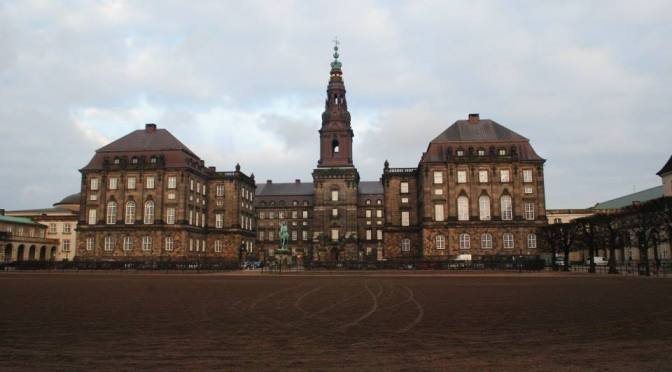
At 530am local time (1230pm PST), Niklas and I arrived at Copenhagen Airport, 30 minutes earlier than our Singapore Airlines ETD of 6am. After completing our immigration check (two minutes!) and being warned of the cold by the lady immigration officer, we set out to pick our luggage and brace ourselves for the freezing cold. It’s 3 degrees, says Merete, Niklas’ mom, as she and Claes, Niklas’ dad, met us. As I prepared myself to cross the revolving door between the airport’s comfortable 22-degree temp and the ear-numbing 3 degree temp outside, I still can’t believe that we finally are here in Copenhagen, in Denmark, in Europe!
I first ‘experienced’ Diwali in 2011, at Little India in Singapore.
Happy Deepavali
I was walking around with two friends when I saw these massive makeshift arcs lining the streets of Little India. Clueless that we were, we thought these were just day-to-day decorations to the community, reflecting the Indians’ colorful way of life.
Lalai and Tetet (and Starbucks?!)
Little did we know that we were right smack in the middle of a full on Festival of Lights and a season of prosperity for Indians, particularly the Hindus.
Massive Deepavali arcs at Little India, Singapore
I celebrated Diwali properly while a VSO volunteer with Yuva Rural in India, assigned in Nagpur, east of the state of Maharashtra where I was based. When I say “properly”, that means we lit up some diyas (oil lamps) and firecrackers (although I don’t really light one these days), made (well, watched how they make it for me) rangoli (colorful and beautiful designs people put by their doors or house surroundings), participated in the community events, performed the puja, and ate Diwali food!
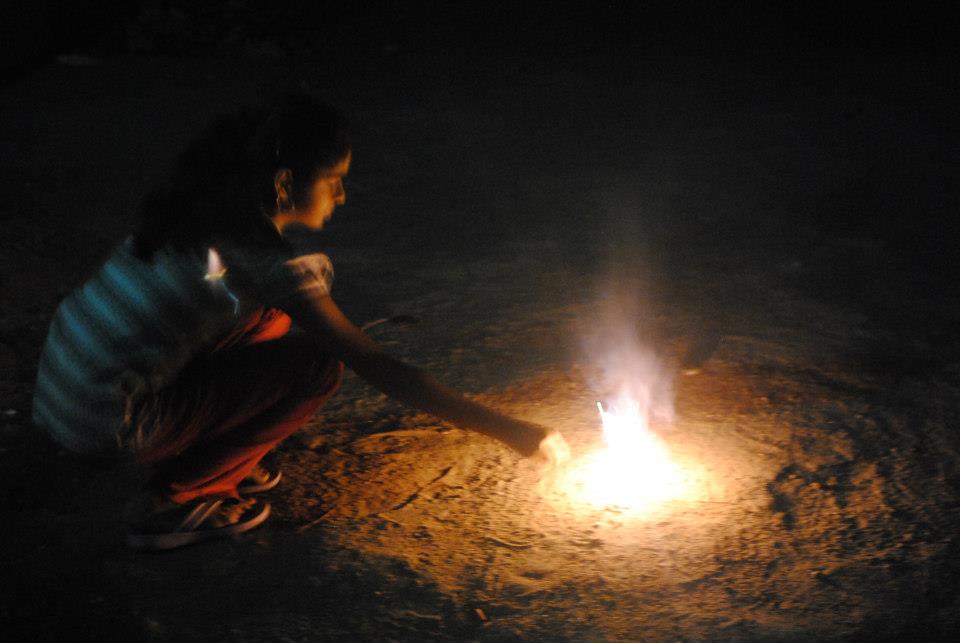
Lights and Firecrackers
Diwali, or the Festival of Lights, is being celebrated in India for several reasons, mostly religious. Most commonly (or at least that I was made aware of), Diwali celebrates the return of Lord Rama to his kingdom in Ayodhya after saving his wife Sita from the Demon god and his exile in Sri Lanka. According to the Ramayana, Lord Rama’s return to Ayodhya was welcomed by his loyal subjects and celebrated through the lighting of diyas or oil lamps, hence the “bursting” of fire crackers and lighting of fireworks.
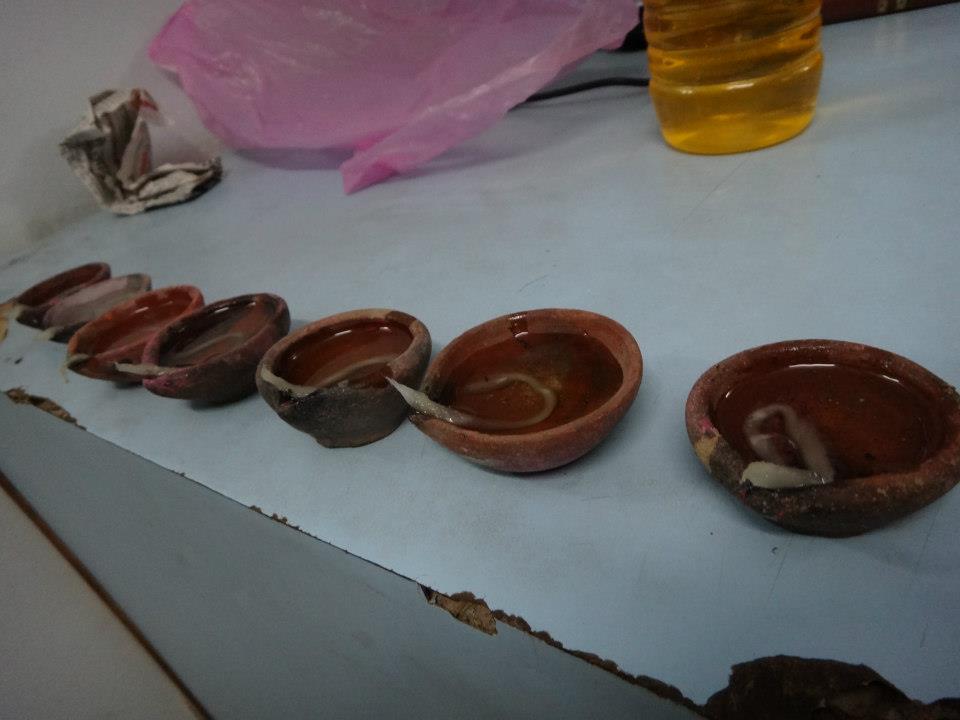
My colleague Ratna was the chief instigator, err, organizer for the simple Diwali celebration at our office. She got this oil lamps. They’re really small!
Unlit diyas ready for Diwali celebrationLit diya at the office (yes, it gets this dark in my area in Nagpur)
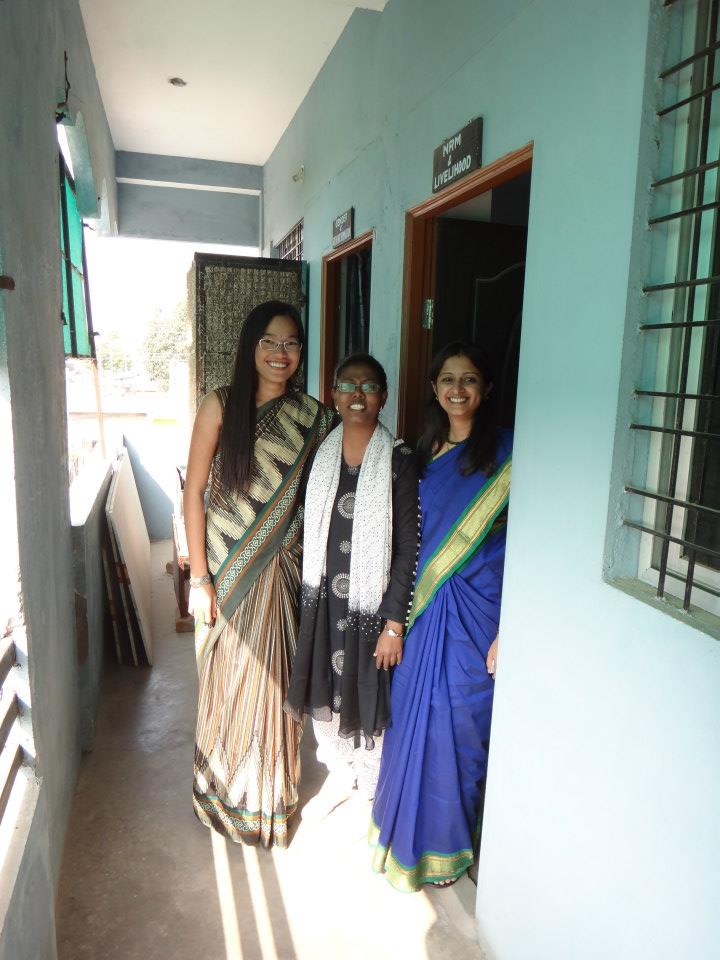
She also played as my fairy godmother and draped me into my first saree ever!
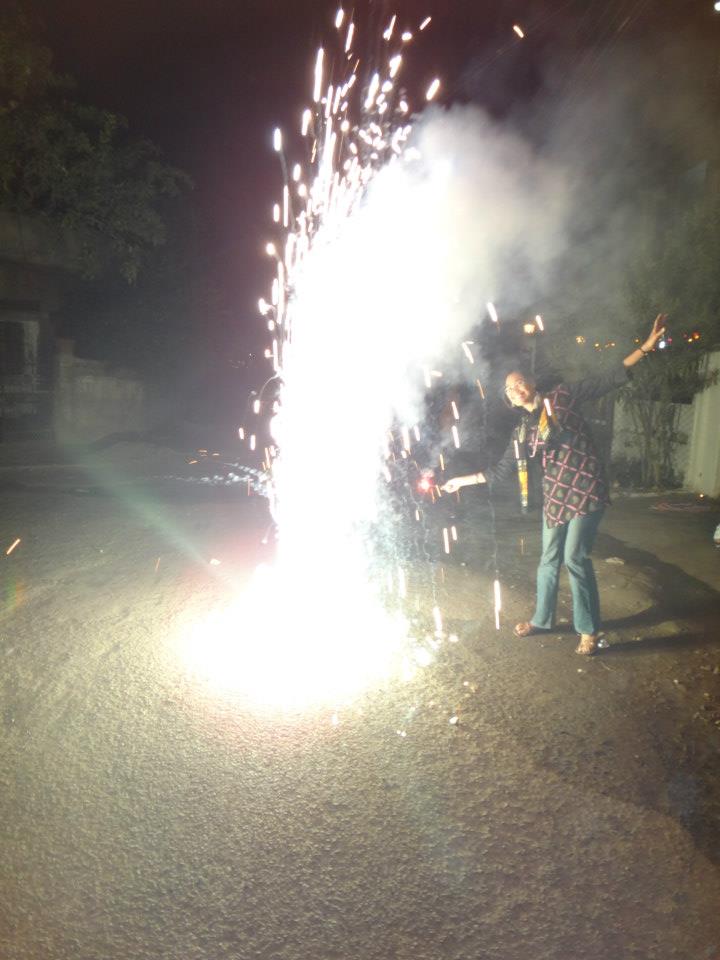
Me in my first saree with Samta and RatnaMy landlady’s daughter Pratiksha lighting firecrackers (Uncle and Auntie were supervising)Me and the fire fountain!
Prayers, songs and dances
The community temple also played songs (and I guess prayers) all the time (and I mean all the time) during Diwali!
The community temple
They also set-up a pandal (like a stage/platform) wherein prayers were sung and performance were, errr, performed.
I especially liked it when they had the cultural performances of several dances! Every song has meaning of course but I was enjoying too much to ask my translators — the Meshram kids and their friends!
Colors and more colors
With Diwali comes not only lights and firecrackers but of course, colorful-than-usual idols, rangoli powders and other decorations!
My friend Rahul, who happens to be from Nagpur, invited me to their home which is on another side of town. The trip was worth the wait meeting his family and seeing all the Diwali action!
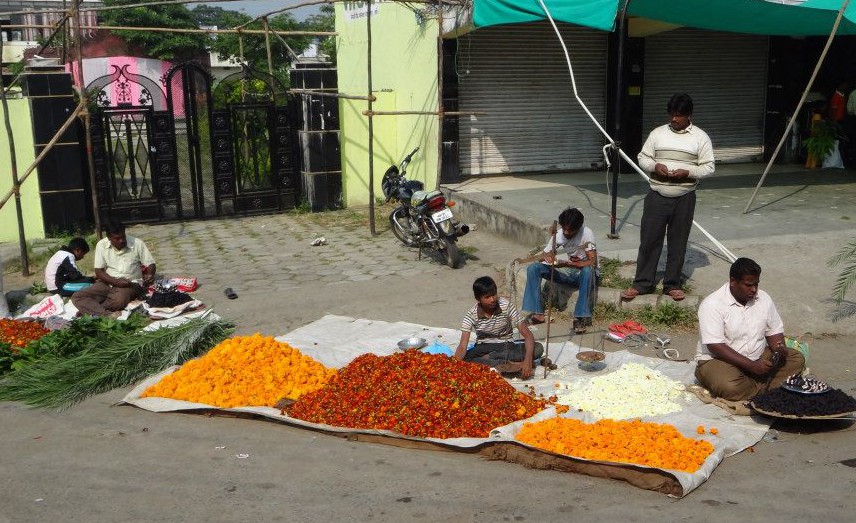
Idols and diyas sold on the streetThis decor store is just so…colorful!Flowers and leaves for idols and pandalsStep 1: Get some colored powder; Step 2: Create your design outline; 3: Steadily “color” the design outline by carefully “pouring” powder; Step 4: Tada!
I liked taking pictures of rangoli so much that I took a picture of almost every rangoli I passed by — on the street, by the gates, in a supermarket! Literally, every rangoli, everywhere!
Rangoli! Rangoli! Rangoli!
The Puja and the Food
Diwali is also the time to perform Lakshmi puja, a prayer ritual to goddess Lakshmi (and other gods too!) for wealth and prosperity.
Ratna’s Neighbor’s Altar – This really isn’t that many considering the 330 million deities of Hinduism!See all that cash? 😀
So, as part of the celebration, I had my fair share of firecracker bursting and fireworks lighting! And, I observed and participated in a family’s Lakshmi puja and aarti!
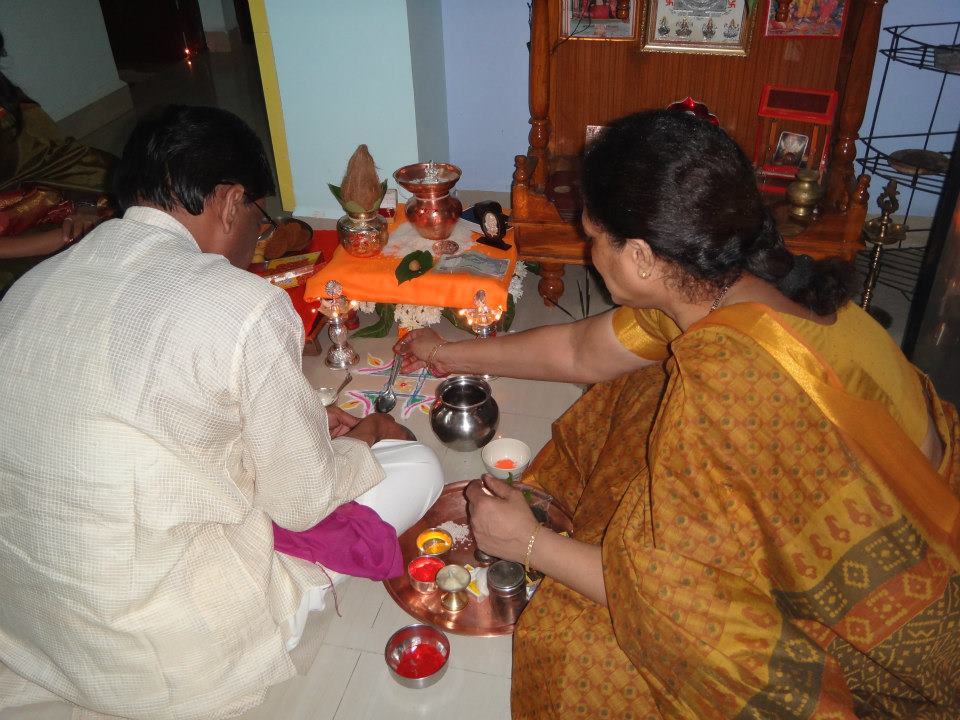
Uncle, as the head of the family, began the PujaMy colleague Ratna performing her partA family that prays together, stays together. Right?!Uncle and Auntie 🙂They had two altars. I think this one is the more permanent in the house.I had to practice several times before I actually performed the puja. I can’t remember what I prayed for but given that I’m pretty happy where I am now, maybe it was granted. Di ba?! 🙂
Of course, an Indian festival, or any other Indian occasion for that matter, is incomplete without food! I got to taste Auntie’s cooking (and Ratna’s too I think!) and that of their neighbor too!
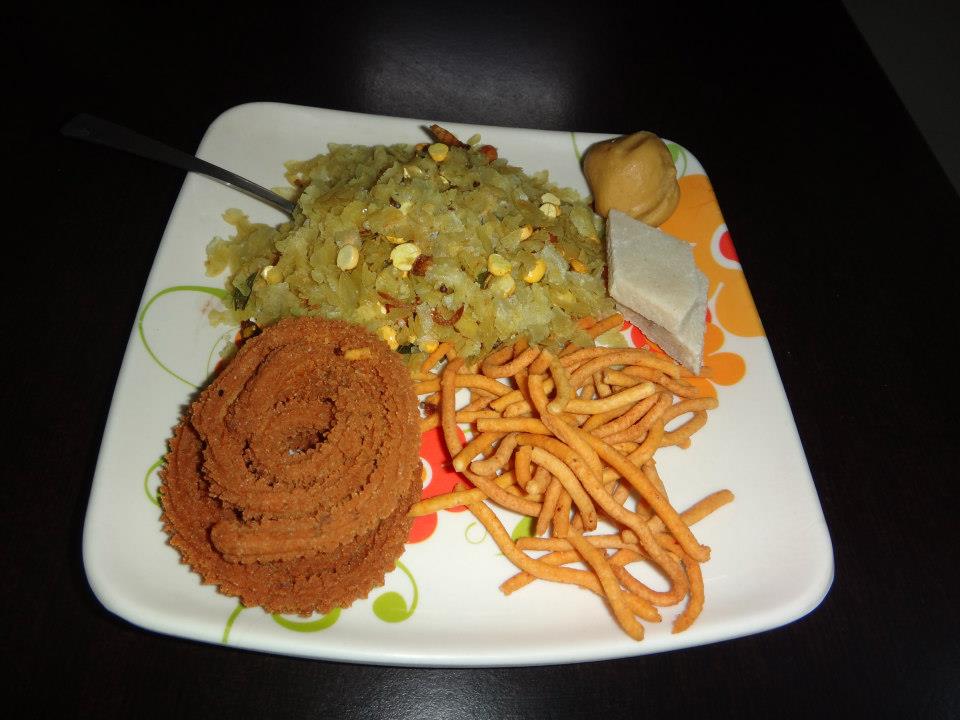
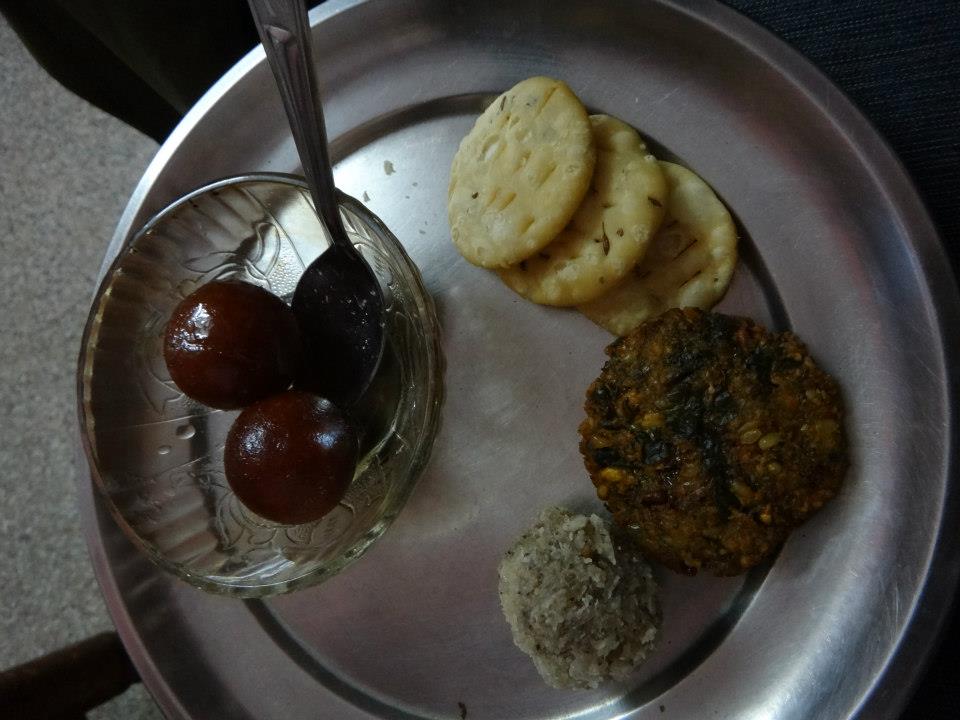
Sweet and savory snacks!Gulab jamun and savory food at the neighbor’s houseAuntie’s sweet paratha!
Being a foreigner who, even after eight months of living in India by that time, remain unknowing of the many facets of Indian and Hindu culture, I consider myself lucky to have experienced Diwali in a truly Indian fashion! I even got Rs. 100 note from Ratna’s neighbor, since I was the youngest of the visiting people! I felt like it’s Christmas and all my aunts and uncles are giving me money! Hehe 🙂
Yes, I think, even without praying for it, I have already been blessed. 🙂
For this, my heartfelt thanks to my adoptive family the Meshrams, to Datta Sir’s family, my colleagues at Yuva Rural, and Ratna’s family. I probably wouldn’t have experienced Diwali the way I did if not for y’all!
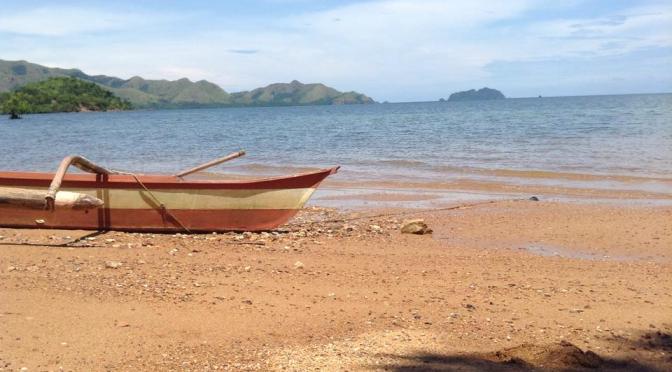
It’s been a while since I last had a long vacation (last ones were in Hong Kong and Macau in January and Baler in April) so when the chance to go to Coron came up, I just couldn’t let it pass. Palawan is known as one of or probably the last frontier here in the Philippines in terms of it’s natural beauty, picturesque landscape and rich marine biodiversity. And, Coron and Busuanga, due to its relatively more difficult (read: tends to be more expensive) accessibility by flights and ferries, remains to be as such.
Unfortunately, typhoon Yolanda (Haiyan) already ravaged a lot of its magnificent corals and fell trees. There were reportedly 6 casualties and some islands’ structures succumbed and totally collapsed. Nevertheless, Busuanga and Coron remain to be a beauty that everyone needs to see. And like what E and I probably said all the time during the trip, we are in our happy place!
So, through this quick Instagram Travel post of our vacay (Aug 22-27, 2014) let us (the self-proclaimed Cool Kids Club, aka CS Weekend Escapists, aka CouchSurfers and friends) take you to our happy place!
IG post: The Cool Kids Club on vacation! Lezgo! #Coron #Palawan #itsmorefuninthephilippines #worklifebalance #yolo ——— L-R from Top: aisle to aisle selfie; inside the 80-seater ATR, seatmates E and G; baldy brothers Niklas and Gustaf; Elizabeth looking out the window amazed with Busuanga’s rich green landscape; E, V and Isa upon arrival; the baldies and the crazy K on vacay; and Kapil of the Cool Kids Club.
Reblogged is a series of blog posts on my life in India coming from the weblogs I set-up. It’s an attempt to put the stories all in one place! The post Bodh Gaya: the journey to Nirvana was originally posted on October 15, 2012, two weeks after the experience. Another post preceded this one, which has more text to tell the story of a full day’s trip to Bodh Gaya with VSO co-volunteers Julie and Amanda. This was part of the vacation I called “The Pilgrimage” as we visited the holy cities of Bodh Gaya and Varanasi.
Ok. Actually, I just can’t think of an apt title at this moment that I am writing this. Hahaha 🙂 But, yeah, you can pretty much say that this post indeed is about the journey of Buddha, not necessarily into Nirvana but in the achievement of enlightenment. Also, this will be about the journey of me, Juls and Amanda as we tried to understand what Buddhism is and how it has began here in India.
my favorite of the snaps at Bodh Gaya: the “pilgrims” with the Giant Buddha
Reblogged is a series of blog posts on my life in India coming from the weblogs I set-up. It’s an attempt to put the stories all in one place! The post Bodh Gaya: the land of Buddha’s enlightenment was originally posted on September 30, 2012, written on the day things happened. Another post will follow after, which has more photos and videos as the way to tell the partial story about a full-week’s trip to North India with VSO co-volunteers Julie and Amanda, with their friend Laura. This was part of the vacation I called “The Pilgrimage” as we visited the holy cities of Bodh Gaya and Varanasi.
Oh yes! The stuff I used to hear from my history teachers is now coming into life! I am, at present, in Bodh Gaya, where prince Siddharta Gautama, later popularly known as Lord Buddha, was said to have achieved full enlightenment.














 The Diarist Wanders