Category Archives: Activities and Itineraries

FotoFolio: Kailash Temple, Ellora Caves, Aurangabad

I spent the weekend on top of the world—well, on top of cliffs and mountain-plateaus to have better viewpoints of the Ajanta and Ellora caves, with the Kailash Temple as one of the highlights of my Aurangabad cave exploration!

Kailash Temple
View from the Top: Kailash Temple and its ornate designs and carvings, surrounded by the cliff from which it was made from (see the people climbing up?) and the garden/park

Here’s a basic description of the Kailash Temple, according to Wikipedia: Kailashnath Temple, also Kailash Temple or Kailasanath Temple is a famous temple, one of the 34 monasteries and temples, known collectively as the Ellora Caves, extending over more than 2 km, that were dug side by side in the wall of a high basalt cliff in the complex located at Ellora, Maharashtra, India. Of these 34 monasteries and temples, the Kailasa (cave 16) is a remarkable example of Dravidian architecture on account of its striking proportion; elaborate workmanship architectural content and sculptural ornamentation of rock-cut architecture.[1] It is designed to recall Mount Kailash, the abode of Lord Shiva.[2] It is a megalith carved out of one single rock. It was built in the 8th century by the Rashtrakuta king Krishna I.

Elephant and Pillar at Kailash
View from the left-side terrace (second level): massive elephant rock sculpture, towering pillar, and temple areas containing the Shiva lingam and Nandi (Shiva’s bull), adorned by carvings of deities, celestial nymphs, elephants, lion, dragons (and the mix of three creatures in one!)

And, according to me, the Kailash Temple is a magnificent symbol of millennium-old awesomeness of Indian architecture, religion and culture. The entire complex of Ellora Caves actually! Whenever you are in Aurangabad, a visit to the Ajanta caves (totally different area) and Ellora Caves is a must and marveling at the Kailash Temple is a delight. Now, climbing on top of the high basalt cliff from which the Kailashnath Temple is carved from? That is another experience altogether. If you can do that, you’ll see the Kailash Temple from a different angle and really, maybe you’d feel like Shiva looking over his worshippers!

Intimate Couples at Kailash Temple
If you are observant enough, or not yet overwhelmed by the number of carvings waiting to be admired, you will notice sculptures of couples in intimate scenarios

FotoFolio: Killing Fields, Phnom Penh, Cambodia

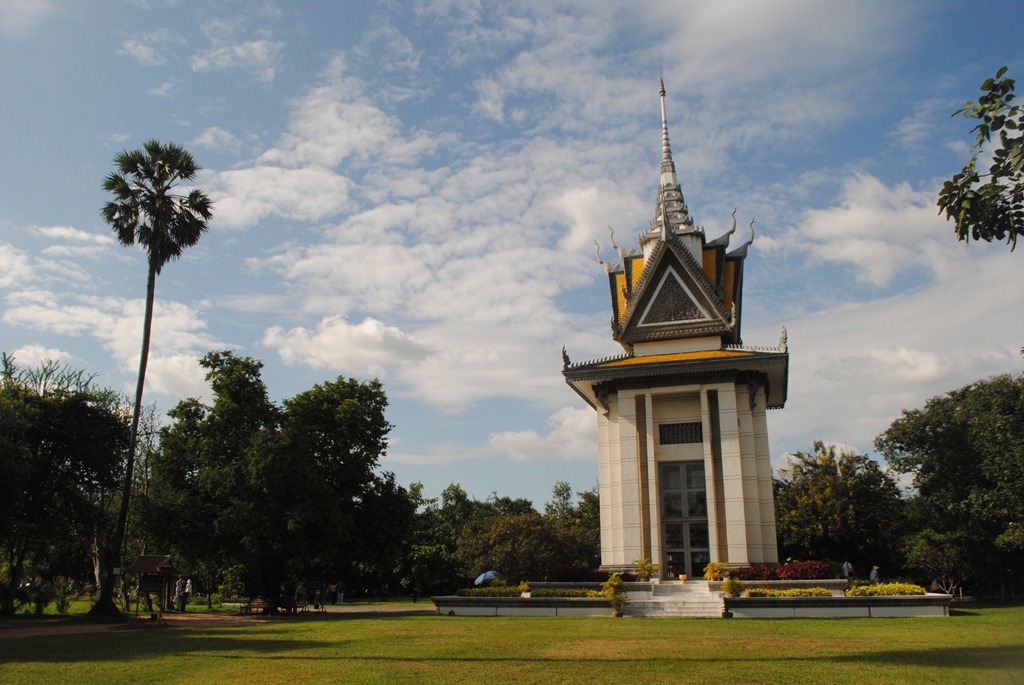
When people say Cambodia, the first thing that probably comes to mind is the famed Angkor Wat Temple Complex in Siem Reap. What most people don’t know though, or not even bother to know, is that more than the magnificent temples and ruins that leave you awestricken, Cambodia holds a darker, sadder and, albeit the different context, an equally jaw-dropping history—the Khmer Rouge regime and the horror of the Killing Fields.

Cheong Ek Genocidal Center (Killing Fields) Memorial Stupa
Cheong Ek Genocidal Center (Killing Fields) Memorial Stupa (How can something so beautiful be so tragic?)

Continue reading FotoFolio: Killing Fields, Phnom Penh, Cambodia →

FotoFolio: Manila, I’m Coming Home

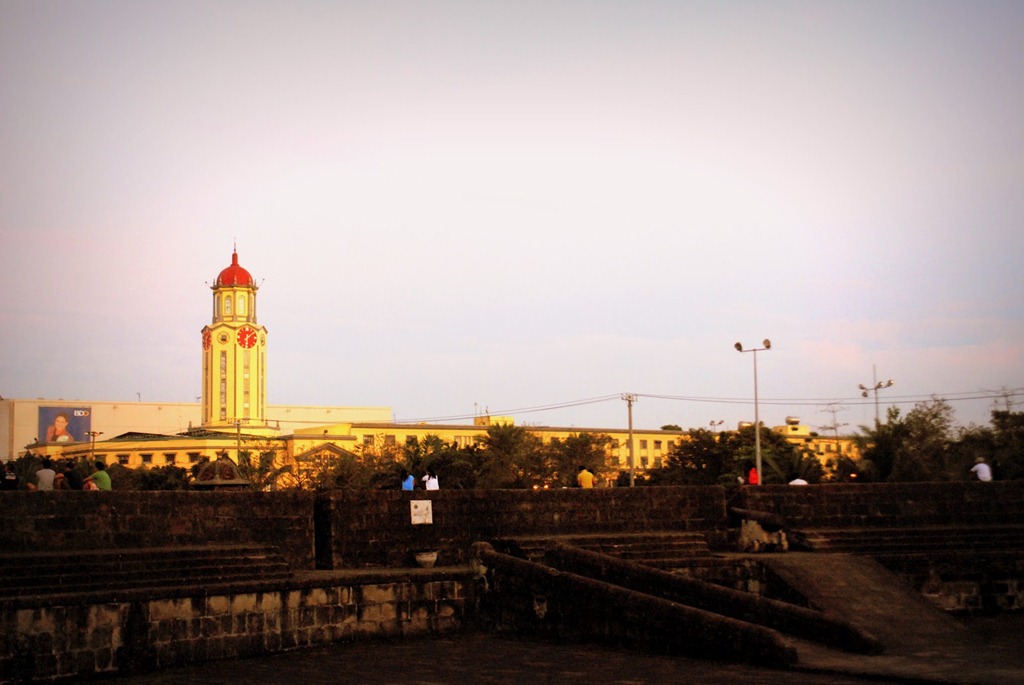
A few weeks before leaving for India, I went for a Manila tour as part of the In-Country Orientation of new VSO Volunteers from Canada. And of course, part of the tour is a visit to Intramuros, Manila, the old walled city.

Manila has been the Philippine capital since the time of the Spaniards, with Intramuros as its central seat of power.

Manila City Hall

So yes, though I don’t live in Manila, I dare say, “Manila, I’m coming home!”

FotoFolio: The Helix Bridge and Singapore Flyer

I have been to Singapore twice: first in April 2010 for a quick 4-day Singapore and Kuala Lumpur birthday holiday and second in October 2011 as part of my 4-week backpacking South East Asia trip.

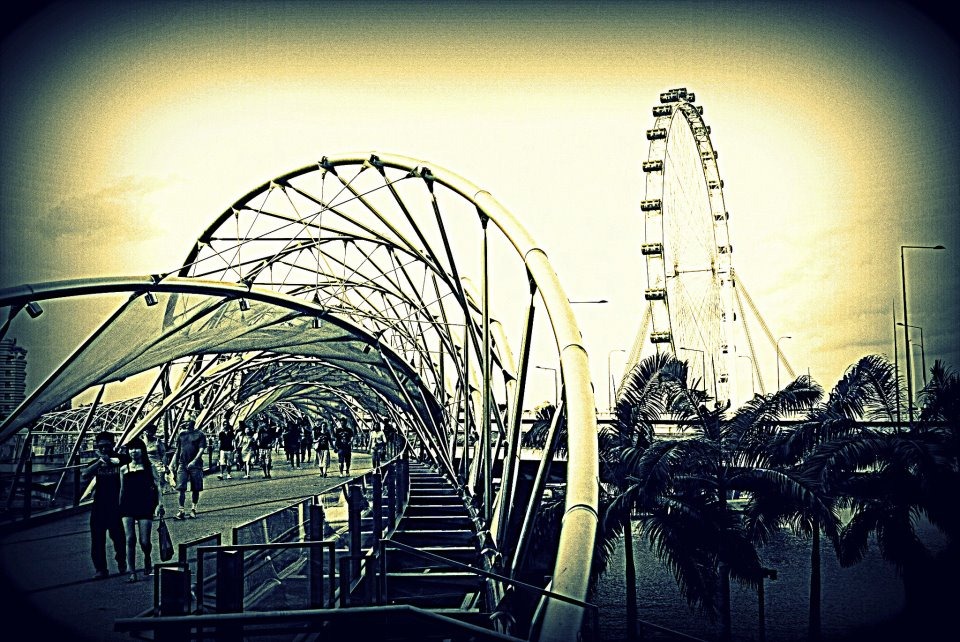
Helix Bridge and Singapore Flyer
Helix Bridge and Singapore Flyer: Metallic Wonders

The first time we went, as we had limited time in Singapore itself, I think we only saw a glimpse of the Singapore flyer and the newly-[half] opened helix bridge. The entire Helix Bridge, which connects the Marina Bay area, officially opened in July 2010.

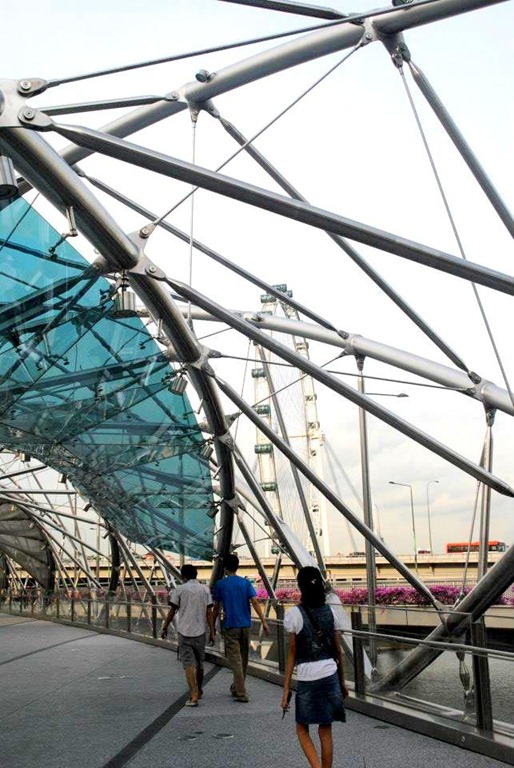
Inside the Helix
Shaded walkway for a fine afternoon stroll

When we came the second time, we spent almost an entire day just walking around the streets of Singapore. And of course, when we visited the Marina Bay Sands area before heading to the Singapore Flyer for our ride, the Helix Bridge served as a pleasant, interesting and [most importantly] shaded connecting walkway.

View from Helix Platform
The Singapore River and Skyline (leftmost is Fullerton Hotel, with the small Merlion a little to its right; rightmost is the Esplanade – Theaters on the Bay, with a bit green of The Float)

Not only that. When you walk through the walkway, you also get a chance to have a different vantage point (opposite side of the Merlion area) to appreciate the calm Singapore River with the bustling skyline in the background.

Happy walking! Click here to read the Wikipedia entry for Singapore’s Helix Bridge.

Backpacking South East Asia: Brunei – The Sultan’s Treasures at the Royal Regalia Museum

After visiting the Kampong Ayer (water villages) and having lunch at CBTL where Zaza met me, we then went to the Royal Regalia Museum, one of the must see places in the capital Bandar Seri Begawan (BSB).

Brunei-Royal-Regalia-Museum-Portrait.jpg
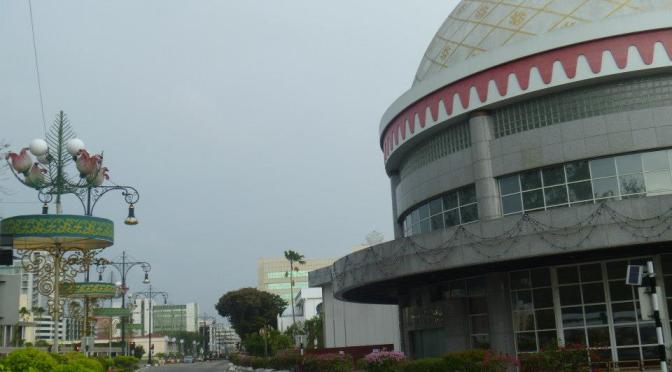
Royal Regalia Museum

The Royal Regalia Museum houses the “treasures” of the Sultan and the Sultanate of Brunei, ranging from personal collections of photos and memorabilias to gifts from various State leaders and governments. I guess you can say that just like in old times where the visiting envoys or monarchs or sultans/datus/rahas present exquisite gifts to the host, visiting State leaders or Ambassadors also present tokens from their countries as a gesture of “friendship” between countries. The collection included birthday gifts as well as anniversary gifts for the commemoration of the Sultan’s coronation.

Continue reading Backpacking South East Asia: Brunei – The Sultan’s Treasures at the Royal Regalia Museum →