If you’ve ever been to Macau, it’s almost impossible to miss the Macau Tower, standing tall against the historically quaint but rapidly urbanizing special administrative region. Located in the south side of Macau Peninsula, Macau Tower is among the most popular tourist spots and, of course, the most photographed as well. Coming from the Taipa district where our CouchSurfing host Darren lives, the Macau Tower and the Sai Wan Bridge is always a sight to behold, same way on the way back, day or night. As Leah and I cross the Zhujiang River estuary through the Governador Noble de Carvalho Bridge, I tried to hold my breath and made a wish. I don’t remember what it was anymore but I guess it must have come true, coz so far, it’s been really good. 🙂 Maybe it was to go bungee jumping at the Macau Tower next time!
Like the Philippines, India was also colonized by different countries, one of which is France with Pondicherry as its known territory in the sub-continent. Pondicherry is a quaint coastal town-state in South India, reachable via the airport or major trains stopping at Chennai and about 3-hour bus/car drive. It is in Pondicherry where I first got introduced to South India (since I only passed by Chennai, it didn’t count) and to many things French. While no longer a territory of France these days, many of the structures remain especially when walking down the French quarter (which is the popular tourist area). One can still see and feel the legacy of France in Pondicherry and surprisingly, the way it has completely merged with the Tamilian culture and way of life. Walk down the Bay of Bengal’s beach or promenade and you will see Tamilian men in their lungis (wrap around “skirt”) and hear them conversing in French. The church services are in Hindi, Tamil and French. Even the streets have kept their French names. And, the food was awesome! The very reason we went to Pondicherry was to have a taste of French and Tamilian cuisines and Pondicherry provided us that — breads, steaks, desserts! Pondicherry is also home to several Ashrams of gurus and its close to Auroville, a commune serving “the Divine” — if in case you’d need food for the soul! >
Monsoon season in Maharashtra is said to be one of the best times for this West India state, primarily because it is gifted with natural beauty that comes alive and vibrant during the months of June to September. Marathi monsoon masti is [my] catchphrase for rainy season fun in Maharashtra. Together with some couchsurfers, I organized a river rafting trip to Kundalika River, about 2 hours or so from Mumbai. One couchsurfer had a car while Sravan, my neighbor couchsurfing friend, brought his bike, with me as its passenger most of the time. I can’t remember how long the river rafting ride was exactly but it’s a long river trail. Kundalika River, at least the water rafting part, would be longer than the Davao river rafting section, where I did water rafting for the first time. I think Kundalika River will have between class 3 to class 4 rapids — which means, get ready for a fun ride! 🙂 Don’t worry, actually falling into the water while paddling your way out of a whirlpool is a legit excuse to bathe into Kundalika River’s waters! And if you missed that chance, you can always go in at the calm section of the river. Best to go during rainy season as the water levels at Kundalika River will be higher and, if you’re lucky, rains add up to the fun and excitement of river rafting!>
Melaka or Malacca in mainland Malaysia is a fusion of Malay, Chinese, Portuguese and Anglo architecture, tradition and cultures. I remember when I was in grade school and high school, Malacca is always mentioned as part of Filipino and Asian history, but mostly underscoring it’s importance as a spice capital and trading post. When I found myself actually in Melaka, there was barely any evidence left of it being the choice port of call among galleon traders. What remains, however, is a beautiful and rich mixture of multi-cultural influence from its former leaders and/or colonizers — Malay food, Chinese temples, Portuguese and Dutch churches, imposing forts, and cobbled stone streets. Not to mention the arts (several art shops and paint-on-the-spot street artists), crafts and cuisine that can be seen and had while going through street after street of historical buildings and establishments. A mere 2 hours south on a private car (thanks to Rajie for bringing me and my two friends traveling at the time), perhaps 2.5 hours when riding tour buses) from Malaysia’s capital Kuala Lumpur, the UNESCO World Heritage Site that is Melaka can be a quick and easy side trip to include in your vacay travel itinerary.;
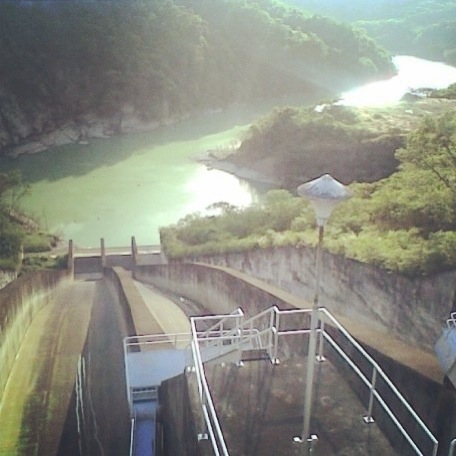
The first dam I ever saw in full in my life is Pantabangan Dam in Nueva Ecija. This photo was taken in 2009, back when having a 3.2 megapixel Nokia phone was the in thing. 🙂 Pantabangan Dam is a multi-purpose dam / water reservoir that’s used for hydroelectricity generation, irrigation water for farmlands, and household water supply. I think it’s also used as catchment basin (or reservoir) for rainwater. Its water comes from two sources, I just can’t remember their names. (Help from NIA colleagues please!) When we were there, the Pantabangan Dam and it’s water (after the spillway — it’s not a slide!) was so still and it’s mostly green colored, which I am guessing is either a reflection of the trees, or moss. Either way, I found (actually find) it really beautiful. >
Life is short so take a leap of faith. Let’s wander, explore and discover. Come and journey with me.



 The Diarist Wanders