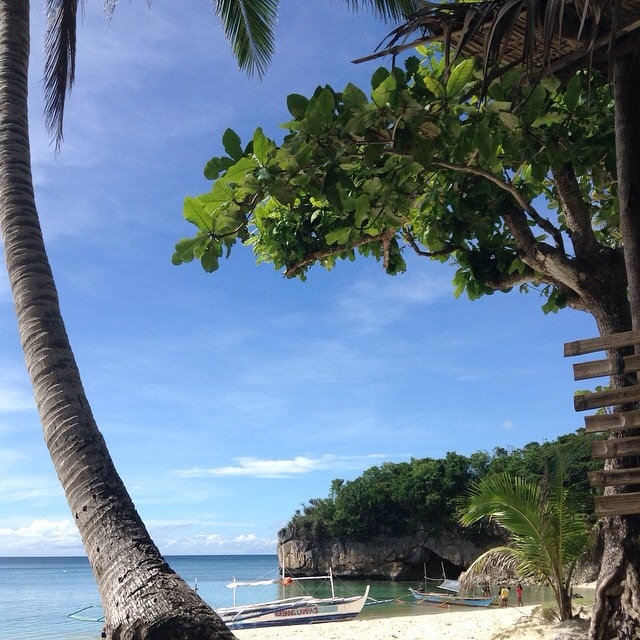
Over the weekend, I had a really fun, active and amazing beach camping trip with fellow CouchSurfers and friends at Grande Island in Pagbilao, Quezon. We played Frisbeach (frisbee at the beach), Tug of War and Takeshi bang bang! Add drinking brandy under the stars, eating smores and Banana de Hanne (chocolate-stuffed char-grilled bananas), playing with magical luminous planktons, and the pleasure of CouchSurfers’ company — yep, an awesome 27th Frisbeach Weekend indeed! Home to the so-called Puting Buhangin (translation: white sand), the Grande Island also has the Kwebang Lampas as it’s main attraction. Kweba means “cave” and Lampas (with the meaning earlier debated in the group) in this case means “through” — you can enter the cave from the main beach on one end and then come out on the other end of the beach. We only went to the cave at low tide so no swimming through for us! We were so enamored (big word! haha) with the beauty of Puting Buhangin –sand so white, sky so blue and water so clear — that we only checked out Kwebang Lampas the morning before we departed!
How to get there: The area where we stayed is not the easiest to reach, especially on public transport. We left the Jam Bus Terminal in Buendia at about 3am (fare P210), arrived at Lucena Grand Terminal at about 7am, had breakfast and then got on a rented jeepney to Pagbilao to do our supplies shopping. From there, we proceeded to Brgy, Ibabang Polo (fare if total commute: P20 (?) to Pagbilao, P35, for Ibabang Polo and 50-100 for tricycle) as our final land transport stop. Towards the end of the Pagbilao Power Station, a coal-fired thermal power plant, we took a short banca (outrigger boat) ride to Grande Island (P185, including camping fee). From this point, and carrying all the supplies, the 18 weekend campers set on foot for about 10 minutes (seemed like forever!) navigating through some kind of forest trail. It was almost 10 or later I think when we finally reached the “entrance gate” of Grande Island. Give or take our stops, that’s about 5-6 hours of travel! But again, the charm and pull of Puting Buhangin and Kwebang Lampas more than compensated for it!
During the first time I set foot in Malaysia back in 2010, we only had one day and between Melaka, Genting Highlands and the Batu Caves, we decided to play with the clouds. It was only during the month-long Southeast Asia backpacking trip that I made it to Melaka and to the Batu Caves, both thanks to my fried Rajie who took time off her busy schedule to tour me, Lalai and Tetet! 🙂 Anyway, Batu Caves, as the name suggests (in Tagalog, batu, well bato, means stone), is a series of caves and cave temples inside a limestone hill. Batu Caves is a popular tourist spot and Hindu temple site around 13kms north of Kuala Lumpur, the capital city of Malaysia. The area is surrounded by birds feeding on corn kernels the visitors throw around and by a small pond of ducks and koi fish. You’d need to climb up about 8-10 floors worth of stairs, alongside monkeys that can be pretty violent when they see food, to get inside the caves and the temples. Rajie, at the time at least, was not a devout Hindu so we were not sure whether the stories of Kartikeya (the massive golden statue at the foot of the caves to which the cave temples are dedicated to), and his family (daddy = Shiva, mommy = Parvati, brother = Ganapathi) and the peacock he’s riding, were as accurate as the scripts or just made up bedtime stories! It was quite entertaining though. 🙂 After visiting the caves, you might want to relax your legs and knees a bit and stay a while by the small pond, watching the ducks and koi fish glide and swim. Or, you can also pay a visit to Lord Hanuman, the monkey god, farther on the left.
I first ‘experienced’ Diwali in 2011, at Little India in Singapore.
Happy Deepavali
I was walking around with two friends when I saw these massive makeshift arcs lining the streets of Little India. Clueless that we were, we thought these were just day-to-day decorations to the community, reflecting the Indians’ colorful way of life.
Lalai and Tetet (and Starbucks?!)
Little did we know that we were right smack in the middle of a full on Festival of Lights and a season of prosperity for Indians, particularly the Hindus.
Massive Deepavali arcs at Little India, Singapore
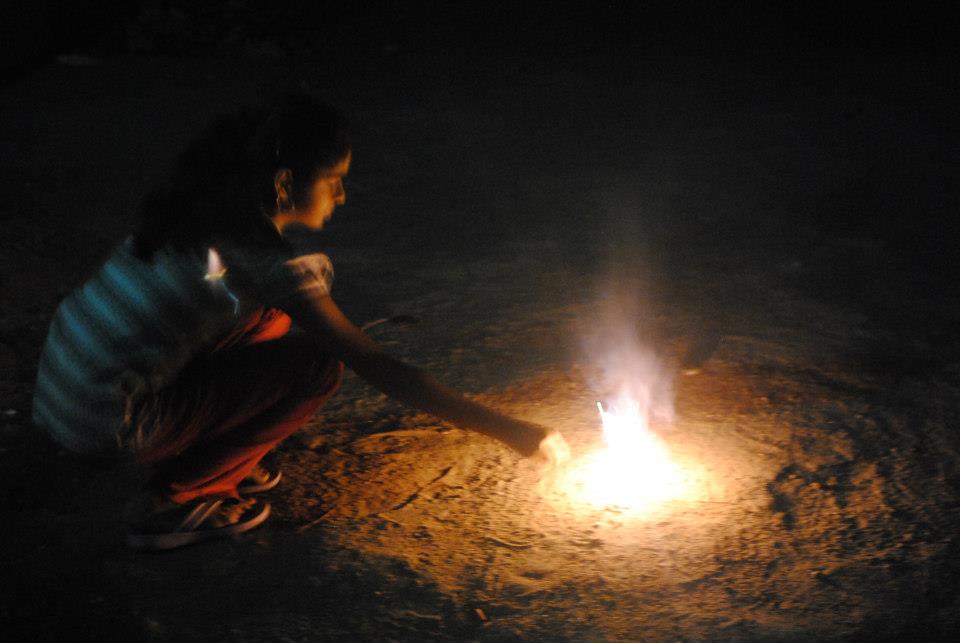
I celebrated Diwali properly while a VSO volunteer with Yuva Rural in India, assigned in Nagpur, east of the state of Maharashtra where I was based. When I say “properly”, that means we lit up some diyas (oil lamps) and firecrackers (although I don’t really light one these days), made (well, watched how they make it for me) rangoli (colorful and beautiful designs people put by their doors or house surroundings), participated in the community events, performed the puja, and ate Diwali food!
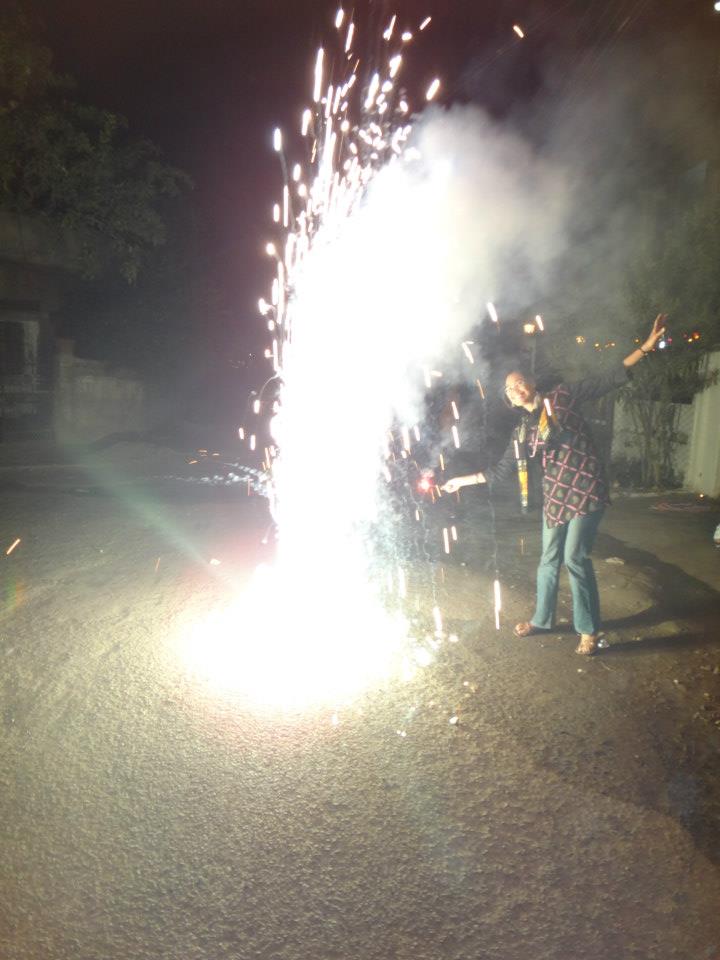
Lights and Firecrackers
Diwali, or the Festival of Lights, is being celebrated in India for several reasons, mostly religious. Most commonly (or at least that I was made aware of), Diwali celebrates the return of Lord Rama to his kingdom in Ayodhya after saving his wife Sita from the Demon god and his exile in Sri Lanka. According to the Ramayana, Lord Rama’s return to Ayodhya was welcomed by his loyal subjects and celebrated through the lighting of diyas or oil lamps, hence the “bursting” of fire crackers and lighting of fireworks.
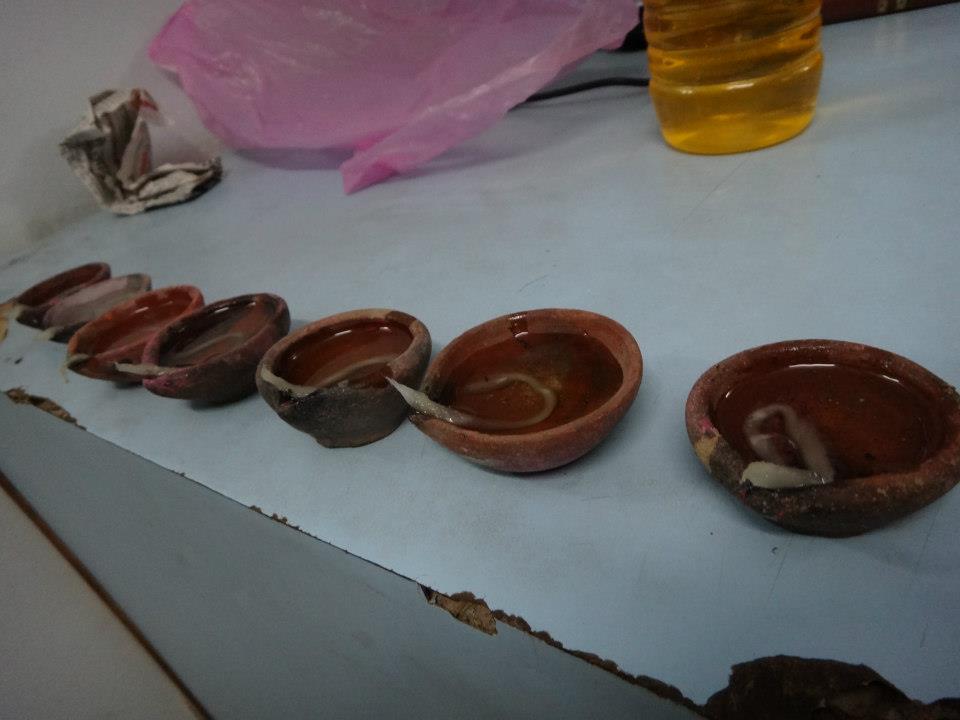
My colleague Ratna was the chief instigator, err, organizer for the simple Diwali celebration at our office. She got this oil lamps. They’re really small!
Unlit diyas ready for Diwali celebrationLit diya at the office (yes, it gets this dark in my area in Nagpur)
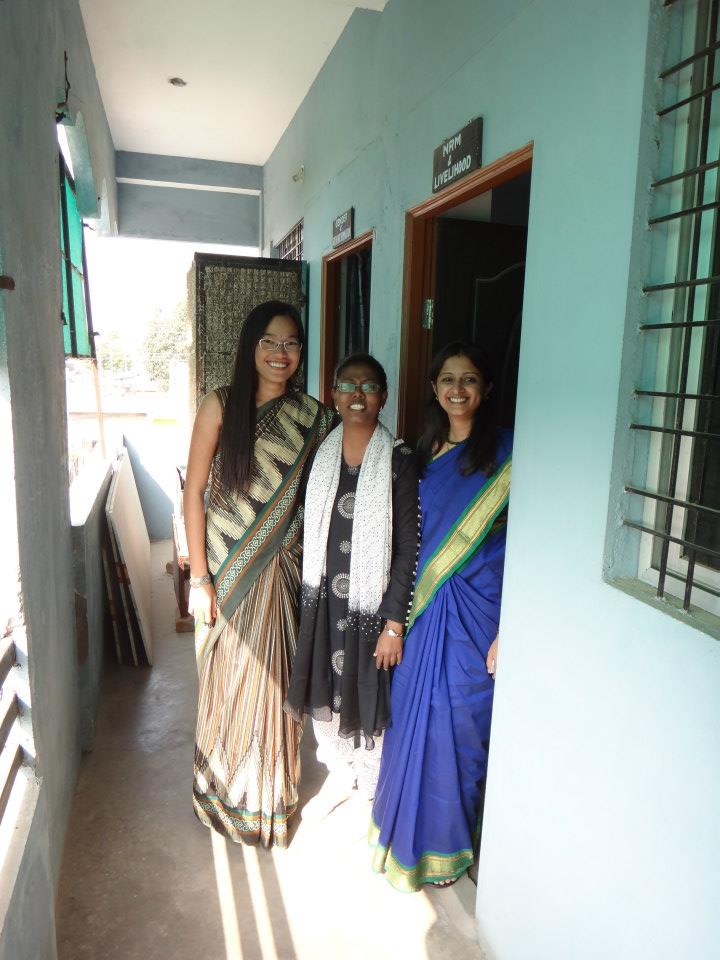
She also played as my fairy godmother and draped me into my first saree ever!
Me in my first saree with Samta and RatnaMy landlady’s daughter Pratiksha lighting firecrackers (Uncle and Auntie were supervising)Me and the fire fountain!
Prayers, songs and dances
The community temple also played songs (and I guess prayers) all the time (and I mean all the time) during Diwali!
The community temple
They also set-up a pandal (like a stage/platform) wherein prayers were sung and performance were, errr, performed.
I especially liked it when they had the cultural performances of several dances! Every song has meaning of course but I was enjoying too much to ask my translators — the Meshram kids and their friends!
Colors and more colors
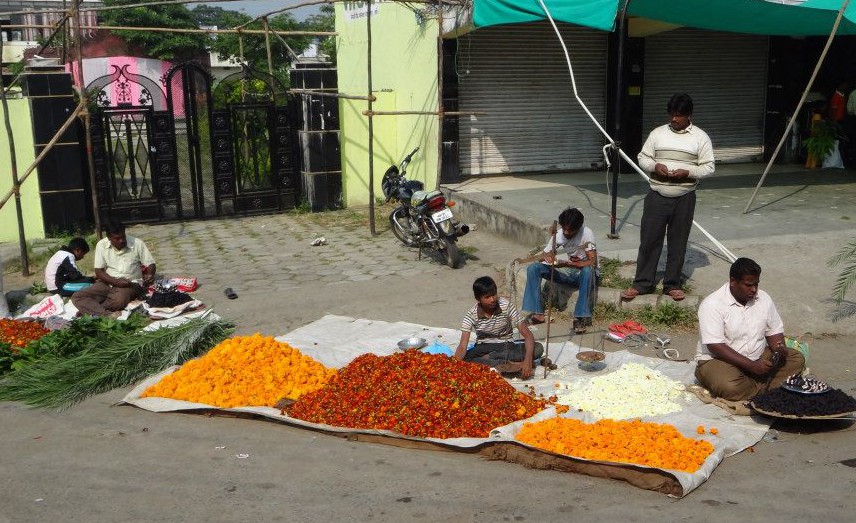
With Diwali comes not only lights and firecrackers but of course, colorful-than-usual idols, rangoli powders and other decorations!
My friend Rahul, who happens to be from Nagpur, invited me to their home which is on another side of town. The trip was worth the wait meeting his family and seeing all the Diwali action!
Idols and diyas sold on the streetThis decor store is just so…colorful!Flowers and leaves for idols and pandalsStep 1: Get some colored powder; Step 2: Create your design outline; 3: Steadily “color” the design outline by carefully “pouring” powder; Step 4: Tada!
I liked taking pictures of rangoli so much that I took a picture of almost every rangoli I passed by — on the street, by the gates, in a supermarket! Literally, every rangoli, everywhere!
Rangoli! Rangoli! Rangoli!
The Puja and the Food
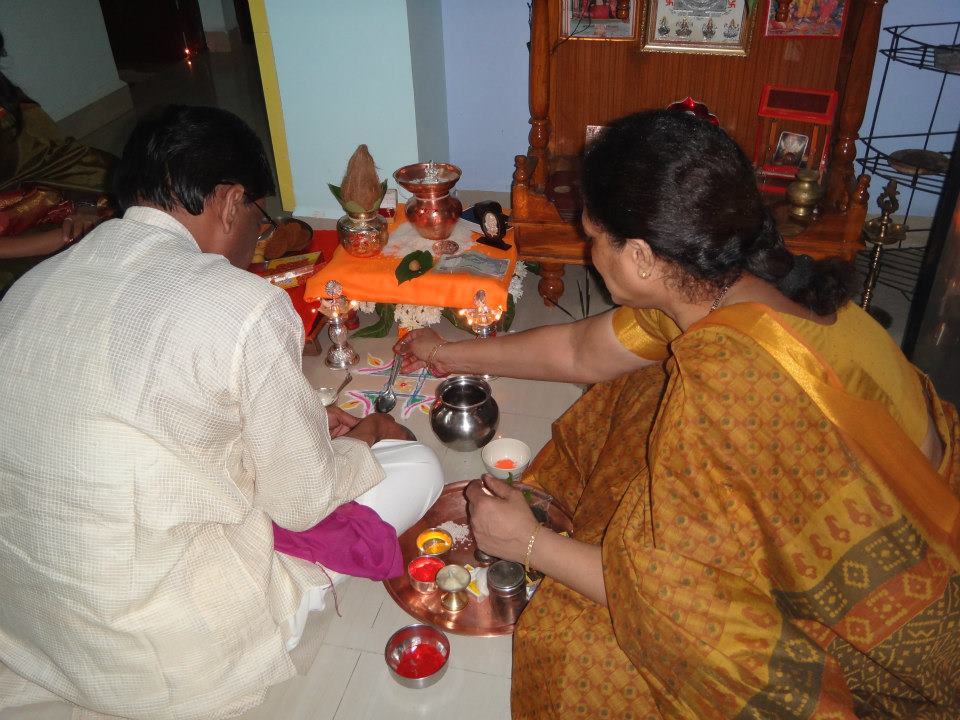
Diwali is also the time to perform Lakshmi puja, a prayer ritual to goddess Lakshmi (and other gods too!) for wealth and prosperity.
Ratna’s Neighbor’s Altar – This really isn’t that many considering the 330 million deities of Hinduism!See all that cash? 😀
So, as part of the celebration, I had my fair share of firecracker bursting and fireworks lighting! And, I observed and participated in a family’s Lakshmi puja and aarti!
Uncle, as the head of the family, began the PujaMy colleague Ratna performing her partA family that prays together, stays together. Right?!Uncle and Auntie 🙂They had two altars. I think this one is the more permanent in the house.I had to practice several times before I actually performed the puja. I can’t remember what I prayed for but given that I’m pretty happy where I am now, maybe it was granted. Di ba?! 🙂
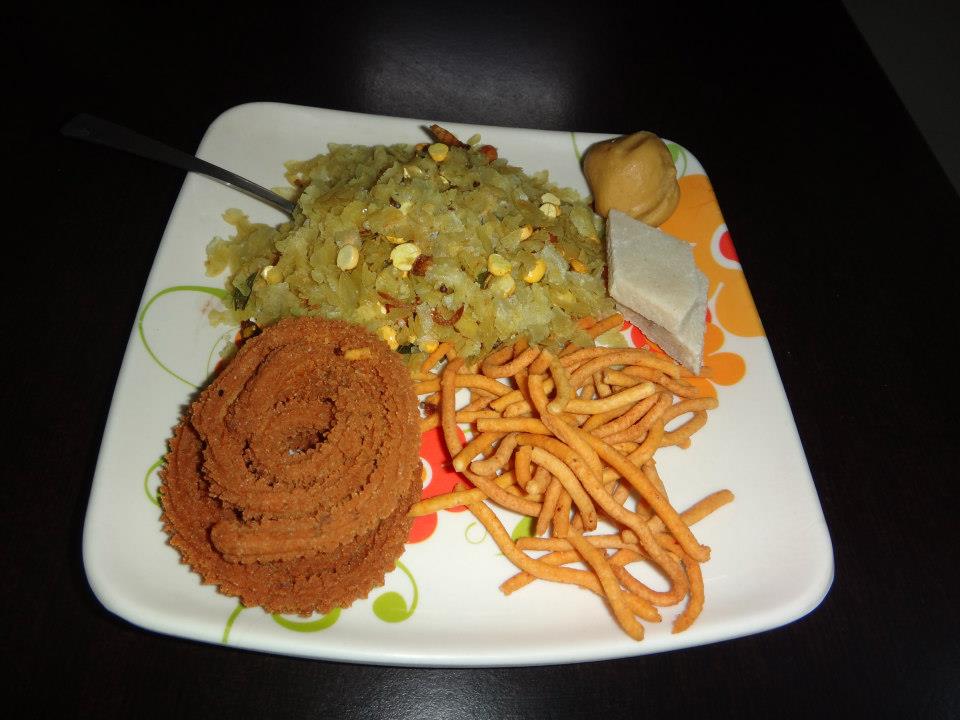
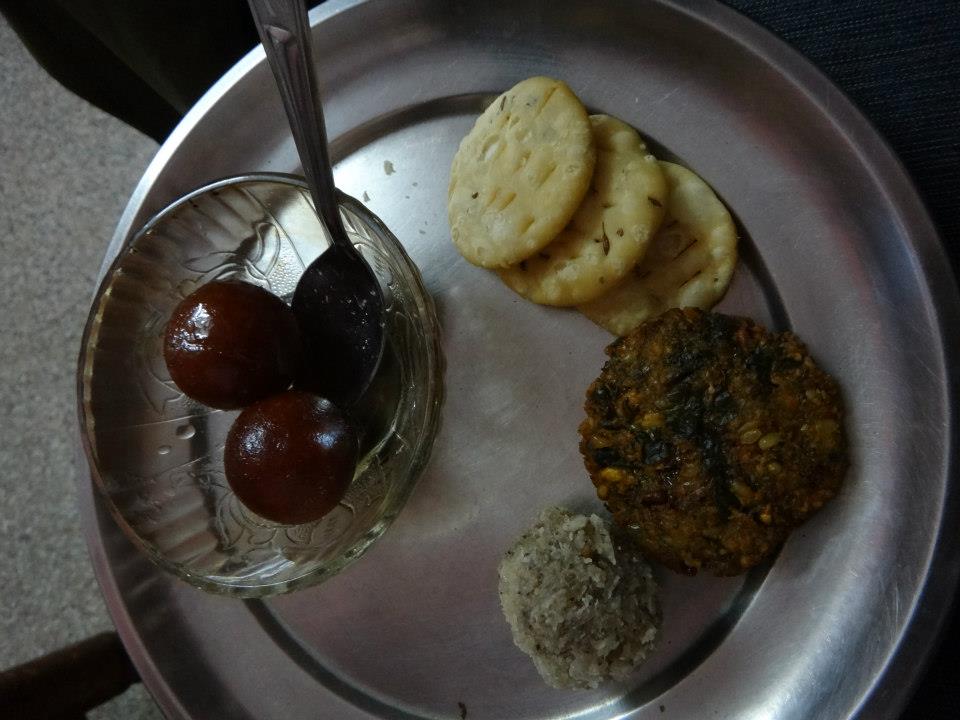
Of course, an Indian festival, or any other Indian occasion for that matter, is incomplete without food! I got to taste Auntie’s cooking (and Ratna’s too I think!) and that of their neighbor too!
Sweet and savory snacks!Gulab jamun and savory food at the neighbor’s houseAuntie’s sweet paratha!
Being a foreigner who, even after eight months of living in India by that time, remain unknowing of the many facets of Indian and Hindu culture, I consider myself lucky to have experienced Diwali in a truly Indian fashion! I even got Rs. 100 note from Ratna’s neighbor, since I was the youngest of the visiting people! I felt like it’s Christmas and all my aunts and uncles are giving me money! Hehe 🙂
Yes, I think, even without praying for it, I have already been blessed. 🙂
For this, my heartfelt thanks to my adoptive family the Meshrams, to Datta Sir’s family, my colleagues at Yuva Rural, and Ratna’s family. I probably wouldn’t have experienced Diwali the way I did if not for y’all!
The Me Nam Chao Phraya is a major river in Thailand, even referred to as the River of Kings. On my second day in Bangkok, during my Rattanakosin Island walkabout, I ended up in a plaza across Wat Arun (Temple of the Dawn) where the Chao Phraya river has overflowed, swallowing most of the benches by the riverbanks. If you remember the flooding in Bangkok and Thailand in October 2011, you wouldn’t think that the overflow from the calm Chao Phraya River can be the cause for severe flooding in many of the provinces and its capital city. This photo, taken the next day when I explored Bangkok outside of Rattanakosin, was when I took the Chao Phraya Express Boat so I can have a closer look at some of the sights I have missed! Also coz I’m so cheap to buy the dinner river cruise ticket. Hehe 🙂 We passed under the towering Industrial Ring Road Bridge or officially, the Bhumibol Bridge, named after King Bhumibol Adulyadej (apparently, naming bridges after Kings is customary). By the time I left Bangkok the day after, the city was already frantic trying to prepare for the floods — communities passing and arranging sandbags, construction of 2-feet cemented walls by their homes’ doors, diversion of traffic in some areas. Although the Chao Phraya River caused misery to many Thai people, the River of Kings remain to be an important part of their daily lives — either for agriculture, trade or transport. I hope measures, by government and the communities, are being taken so that the October flooding won’t happen to Bangkok or to Thailand again.
A few nights ago, some friends and I were talking about Sagada since some of them are planning to go. Of course, one of the top recommendations I can give them is to pay a visit to the Bomod-ok Falls, also known as the Big Falls. How big? Well, it stands 200ft high and at the time of our visit (March), water was really, errr, falling! Bomod-ok Falls, located about 30-minutes on a jeepney or van, is nestled at North Sagada, deep into the rice paddy terraces. How deep? Say an hour’s trek going down from the road to the falls, walking along the rice paddies, passing by villages and stream, and another hour going back up on the other way. Was it worth all the calories burnt? Definitely! If I am to visit Sagada again, I would still pay the Big Falls a visit, observe the villages and rice terraces we will pass by, chill at the secret pool on the left side of the falls (you’d have to do a duck walk or crawl through the gap to get there), brave the almost-90-degrees-buwis-buhay-rocks to go “cliff-diving” on the right side, swim till I can’t feel my toes, and just we awed by Bomod-ok Falls and its majesty.
Life is short so take a leap of faith. Let’s wander, explore and discover. Come and journey with me.












 The Diarist Wanders