Category Archives: Provinces

#100Days Photo 22: Dona Paula Bay, Goa, India

20140724-144720-53240090.jpg


A Portuguese aristocrat girl falling madly in love with a local  Goa fisherman (a love story), then choosing to take her own life by jumping from a cliff when their relationship was forbidden (a tragedy), and centuries after mesmerizing, or haunting, tourists or locals as she emerges from the sea amidst the moonlit waves, wearing nothing but a pearl necklace (a myth) — this is the story of Dona Paula. Well, at least the version that adds a romantic flair to its namesake scenic tourist destination in the suburban district of the capital city Panaji (or Panjim) in Goa, West India. I never really saw the statue of Dona Paula when I arrived at Ashwin and Aki’s place along the Dona Paula Bay with my VSO co-vol/CS buddy Rajie and our Goan CS host Warren, nor did I hear the tale about the statues watching over the Mandori and Zuari Rivers as they unite with the Arabian Sea. However, even when there is already a proven historical account of the life and existence of Dona Paula Amaral Antonio de Souto Maior, I don’t fault the townsfolk or the tour guides if they choose to tell the romantic story instead. While the Dona Paula Bay and its natural beauty can’t be denied, a love story and a little mystery add to its charm, right? 🙂
Reblogged: Holiday Vacay Round-up: New Year in New Delhi

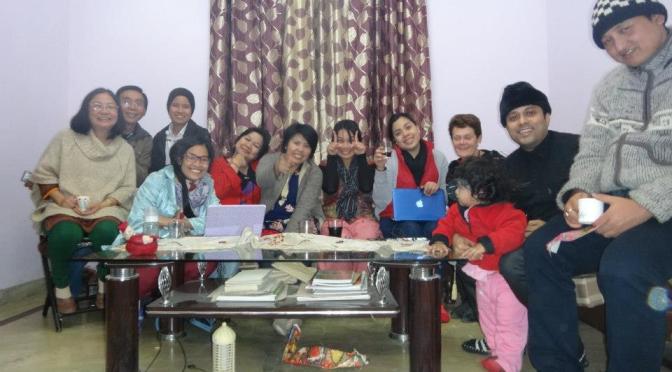
Reblogged is a series of blog posts on my life in India coming from the weblogs I set-up. It’s an attempt to put the stories all in one place! The post Holiday Vacay Round-up: New Year in New Delhi was originally posted on January 12, 2013. I spent the New Year celebrations in Delhi with VSO co-volunteers, the welcoming family of Tito Ben and Tita Agnes, and friends. This was part of my south-to-north holiday vacation from December 23, 2012 to January 7, 2013.

This is a part of the Holiday Vacay Round-up Series. For Goa, the Christmas destination, click here.

After spending Christmas in Goa with co-vols Sue and Rosie, and her twin Penny and Pen’s BF Tom, and my friend Leah and fellow CouchSurfer Sumin (who were both hosted by my former CS host Warren), I proceeded to New Delhi, where I’ll celebrate the coming of 2013 with fellow Filipinos and VSO volunteers! Plus the wedding of Minrose and Shishir (which provided an opportunity for us to wear sarees!) and Rajie and Pras’ housewarming party!


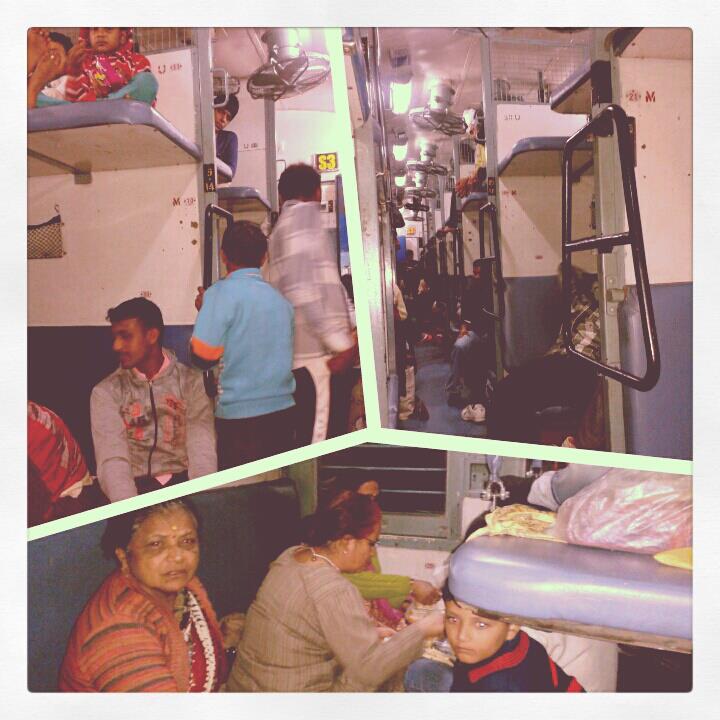
But before that, I had to take a 43-hour train ride first from Madgaon in south Goa to H Nizamuddin in New Delhi! It was supposedly just a 38-hour journey but due to the fog in the capital of India, we were delayed for 5 hours! This train ride with Goa Express is the longest I have taken, beating the 36-hour journey from Bhubaneswar to Mumbai last October!

Continue reading Reblogged: Holiday Vacay Round-up: New Year in New Delhi

#100Days Photo 19: Bay of Bengal, Promenade, Pondicherry, South India

20140422-080204.jpg

Like the Philippines, India was also colonized by different countries, one of which is France with Pondicherry as its known territory in the sub-continent. Pondicherry is a quaint coastal town-state in South India, reachable via the airport or major trains stopping at Chennai and about 3-hour bus/car drive. It is in Pondicherry where I first got introduced to South India (since I only passed by Chennai, it didn’t count) and to many things French. While no longer a territory of France these days, many of the structures remain especially when walking down the French quarter (which is the popular tourist area). One can still see and feel the legacy of France in Pondicherry and surprisingly, the way it has completely merged with the Tamilian culture and way of life. Walk down the Bay of Bengal’s beach or promenade and you will see Tamilian men in their lungis (wrap around “skirt”) and hear them conversing in French. The church services are in Hindi, Tamil and French. Even the streets have kept their French names. And, the food was awesome! The very reason we went to Pondicherry was to have a taste of French and Tamilian cuisines and Pondicherry provided us that — breads, steaks, desserts! Pondicherry is also home to several Ashrams of gurus and its close to Auroville, a commune serving “the Divine” — if in case you’d need food for the soul! >

#100Days Photo 18: Kundalika River, Kolad, Maharashtra, West India

20140420-235123.jpg
Monsoon season in Maharashtra is said to be one of the best times for this West India state, primarily because it is gifted with natural beauty that comes alive and vibrant during the months of June to September. Marathi monsoon masti is [my] catchphrase for rainy season fun in Maharashtra. Together with some couchsurfers, I organized a river rafting trip to Kundalika River, about 2 hours or so from Mumbai. One couchsurfer had a car while Sravan, my neighbor couchsurfing friend, brought his bike, with me as its passenger most of the time. I can’t remember how long the river rafting ride was exactly but it’s a long river trail. Kundalika River, at least the water rafting part, would be longer than the Davao river rafting section, where I did water rafting for the first time. I think Kundalika River will have between class 3 to class 4 rapids — which means, get ready for a fun ride! 🙂 Don’t worry, actually falling into the water while paddling your way out of a whirlpool is a legit excuse to bathe into Kundalika River’s waters! And if you missed that chance, you can always go in at the calm section of the river. Best to go during rainy season as the water levels at Kundalika River will be higher and, if you’re lucky, rains add up to the fun and excitement of river rafting!>

#100Days Photo 16: Pantabangan Dam, Nueva Ecija, Philippines

20140418-220900.jpg

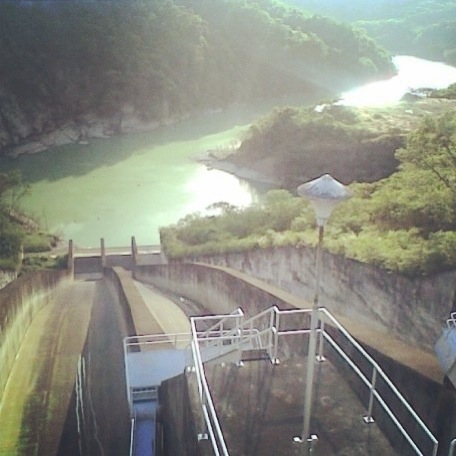
The first dam I ever saw in full in my life is Pantabangan Dam in Nueva Ecija. This photo was taken in 2009, back when having a 3.2 megapixel Nokia phone was the in thing. 🙂 Pantabangan Dam is a multi-purpose dam / water reservoir that’s used for hydroelectricity generation, irrigation water for farmlands, and household water supply. I think it’s also used as catchment basin (or reservoir) for rainwater. Its water comes from two sources, I just can’t remember their names. (Help from NIA colleagues please!) When we were there, the Pantabangan Dam and it’s water (after the spillway — it’s not a slide!) was so still and it’s mostly green colored, which I am guessing is either a reflection of the trees, or moss. Either way, I found (actually find) it really beautiful. >