I haven’t posted a new travel entry for two months now and as I am running out of excuses for it, I’ve decided to have a quick Instagram post of my 4-day trip to Visayas with Leah, my good friend whom I’ve met through CouchSurfing in India.
At the back of the speeding taxi from Kharghar to the Mumbai International Airport
As she’s only here for 8 days and I have just started on a new job, we made sure that she’d be able to see the Philippines under the urban/metro and rural/nature sense.
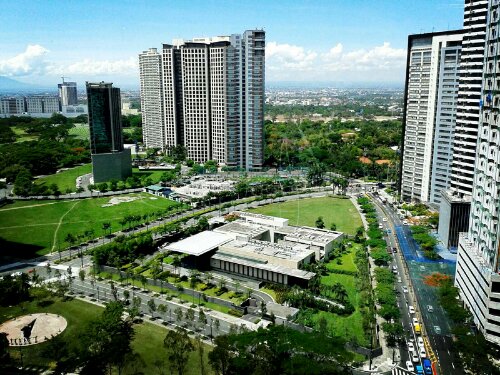
View of the west side of Bonifacio Global City from one of the office windows
Our first stop after she roamed the streets of Taguig, Makati and Manila is the naturally-gifted province of Bohol. While planning her trip, I asked Leah which of the 7107 islands of he Philippines would she be more interested in. I provided her with the top tourist destinations’ main selling points and at the mention of Tarsier, the world’s smallest primate (or so we thought), our itinerary finally had its anchor.
Up-Down from Left: Nap time while waiting for our 4AM flight via ZestAir, Terminal 4; ferry trip from Cebu to Bohol via 2Go; Bus toploaders galore; Bus topload view of Bohol (Sikatuna area); Loboc River Cruisers; Bell/Time Tower at Loboc Plaza; Loboc Church
People who really know me won’t dub me as a party girl–not in a go-clubbing-all-night-every-night definition at least. But, they would tell you that whenever I do party, I make sure I party hard. And that night at Republiq was no exception.
I wasn’t really planing on going out with couchsurfers that night as I made plans with college friends. Turns out, everybody just got busy and rather than sulking about it, I accepted an invite from couchsurfing friends for what will eventually be known/called Payback Friday, the history of which I would know only later.
So, from Japanese food at Nihonbashi Tei and sake (rice wine) to enjoy it with, then to beer-induced dance-while-sitting moments and make do for the failed beer pong attempt due to the long queue of yuppies and not-so-old buddies at Cable Car, to the one helluva rocking night of dancing and drinking an amazingly-not-that-expensive beer and free pass through a Guest List (thanks Mariane!)at Republiq in Resorts World Manila, I would say that it was a Friday party night that best capped a really long week!
And yes, I danced like no one was watching. Partied like it’s the end of the world. Smiled to myself even, as I remembered a beloved dance partner and what it felt to be alive. It truly was liberating, to just feel the music and move to the rhythm–without care, without doubt, without limits.
Yep, today is a personal post. I mean, of course, everything I share with you on this travel blog is from my personal experience but this one is different. It’s my birthday blog post! Today, I turn 26 and to commemorate the completion of my quarter life (assuming of course that I live to 100 years), I would like to share with you my 25th year in travel.
Navi Mumbai, Maharashtra – 25th Birthday Celebration with YUVA Staff and Volunteers
I miss Mumbai. There, I said it. I lived in Navi Mumbai (New Bombay, totally different twin city) and I would go to South Bombay (aka SoBo) whenever me and my friends would go out for dinner and drinks. Why SoBo and not in Bandra, the party/gimik capital of Mumbai? I think it’s mainly because it is more accessible and hanging out in Colaba has a more chill vibe. Not to mention, I personally find South Mumbai more pleasant to walk through, with more character and history than the upscale Bandra area.
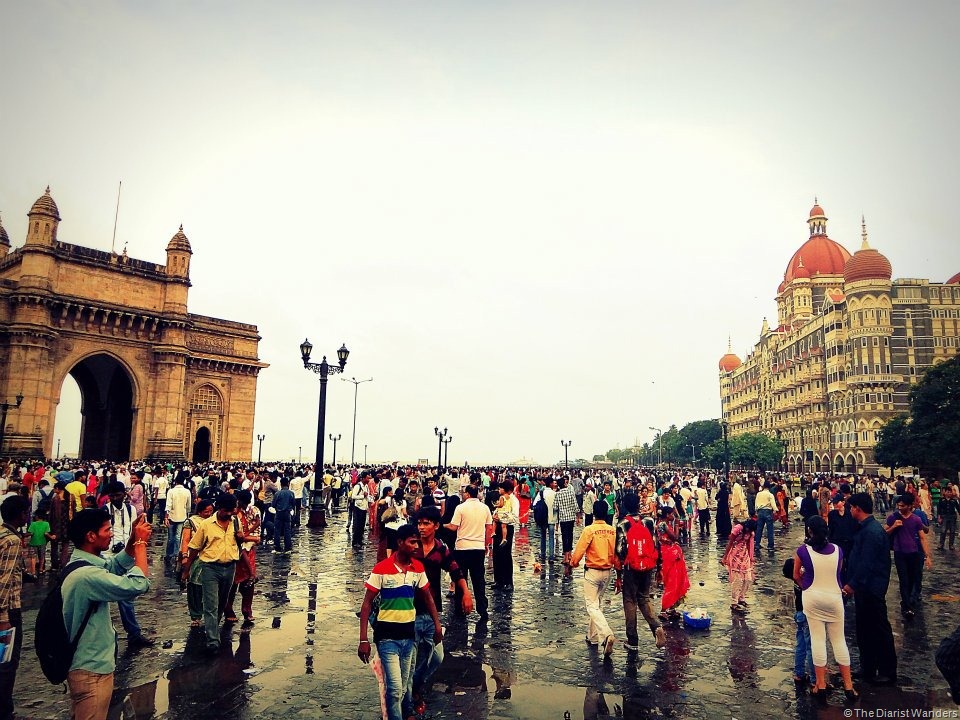
The Gateway of India and The Taj Hotel
Needless to say, South Bombay and Colaba is also the most touristy. But hey, when you live in the city, you don’t really mind the mix of the local and foreign crowd. You enjoy it. People-watching and all. Being a foreigner myself, though I am not as tourist as the newly-arrived ones anymore, I always find something new to discover in Mumbai.
Anyway, I am not in a talking (writing) mood much today. Unless I want to end up too nostalgic to function. Haha. Therefore, I would jus want to share with you the images of Colonial Mumbai. I always call South Bombay the British area, primarily because the structures you would see closely resemble what you would find in London. I think (as referenced to movies and TV series).
I’ve included here a series of photographs, showing these British colonial structures. I tried my best to put them in the walking order, although my memory might be messed up already since there were some turns during these several walkthrough of South Mumbai.
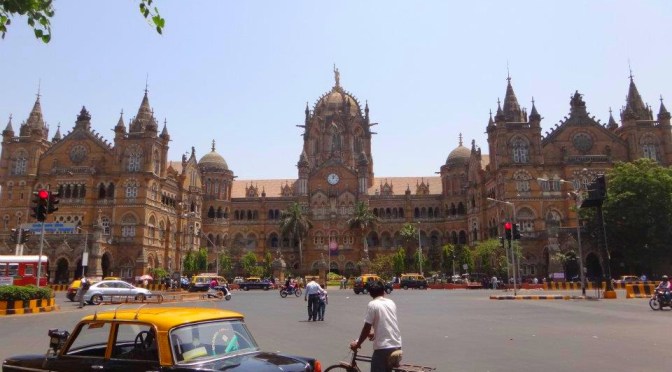
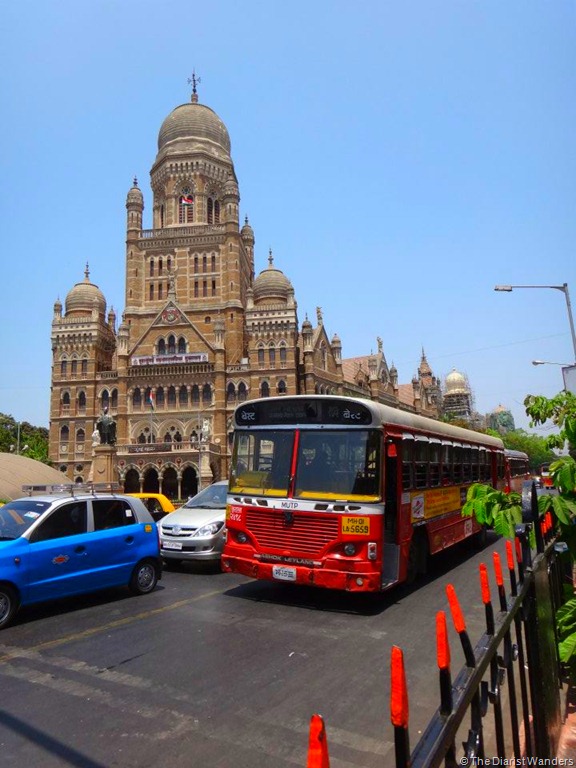
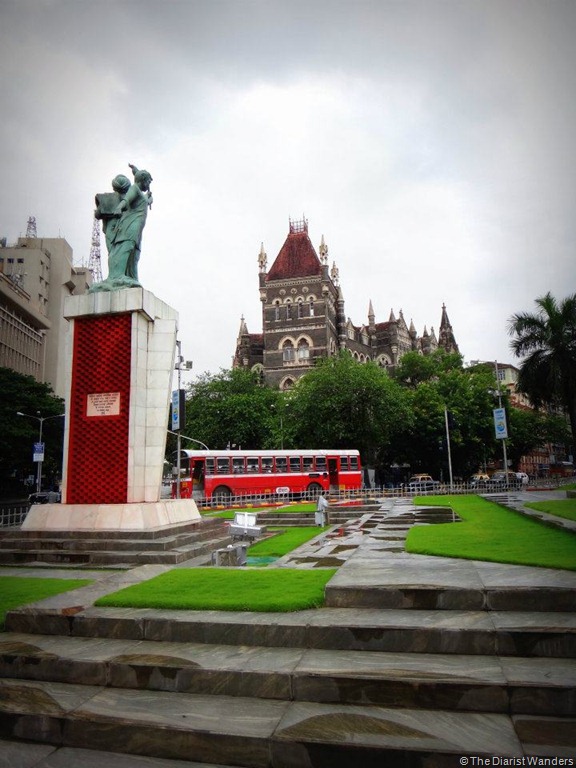
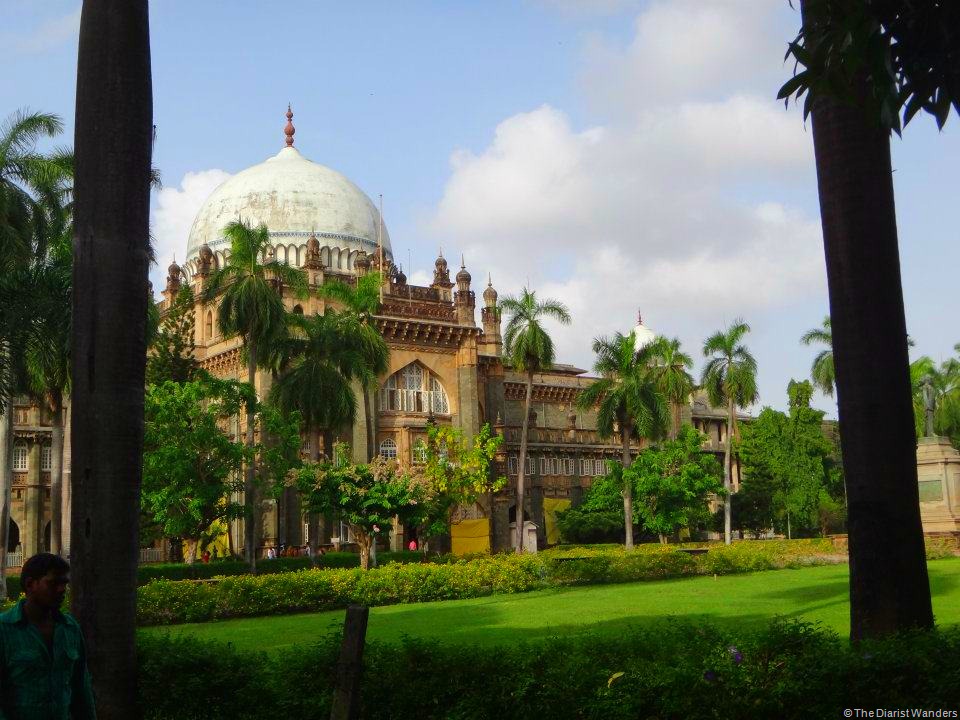
Chhatrapati Shivaji Terminus (CST, formerly known as Victoria Terminus) is a UNESCO World Heritage Site and the main railway terminal for local and inter-state trainsBirhanmumbai Municipal Corporation (BMC) serves as the City Hall (sosyal!). It’s on the left side if facing CSTI can’t be sure if this is still part of CST but it is behind the CST facade areaThese colonial buildings house modern establishments and banksSeveral unidentified sculptures form part of one building’s foundationsI am not sure if this is the Churchgate Railway Station. If it isn’t, then it must be the building across the roadHutatma Chowk (Martyr’s Square) is found at the center of South Bombay. Easily accessible from Churchgate StationThe Hutatma Chowk memorial, as far as I have heard, was to commemorate the lives of the martyrs during the Maharashtra and Gujarat separation (correct me if I’m wrong!)Flora Fountain, built in 1864, is one of the most photographed landmarks in South Bombay. Sorry, no more water flowing through. 😦University of Mumbai (Fort Campus) was established in 1857. It’s mong the oldest universities in IndiaThe Rajabai Clock Tower, completed in 1878, is called Little Ben as it was patterned to the Big Ben in LondonDavid Sassoon Library, built in 1870, is another main landmark in the Kala Ghoda area. I never entered the library.The Prince of Wales Museum (officially renamed as Chhatrapati Shivaji Maharaj Vastu Sangrahalaya) houses artifacts, sculptures, painting, china and other art collections. I think it’s under the patronage of the Tatas. (Entry Rs 300 for foreigners, Rs 50 for Indians. Camera fees apply)I don’t know who the statue is for or what is the building. But I’m sure this is after the museum and towards the Colaba areaThe Gateway of India (not to be confused with the India Gate in New Delhi). Built from 1911 (primarily to commemorate the visit of King George V and Queen Mary) to 1914, the Gateway of India is perhaps the most visited and photographed monument in Mumbai. The boats leaving for Elephanta Island is found at the back of the Gateway of India.The Taj Mahal Palace Hotel and Tower is on the left of the Gateway of India if arriving by boat. It is said to be the or one of the most expensive hotels in Mumbai.
I hope you enjoyed these virtual walking tour of South Bombay. Maybe you’ll get to walk through Colonial Mumbai someday too! I’ve heard several mixed reviews of being a tourist in Mumbai. Admittedly, the city can be unnerving and overwhelming but hey, give it more than a day or two and surely, you’ll get to know and feel it’s vibe too. If you need a walking guide (especially for couchsurfers), let me know and I might introduce you to a friend or two who may be able to show you around Colaba, South Mumbai and the rest of the city!
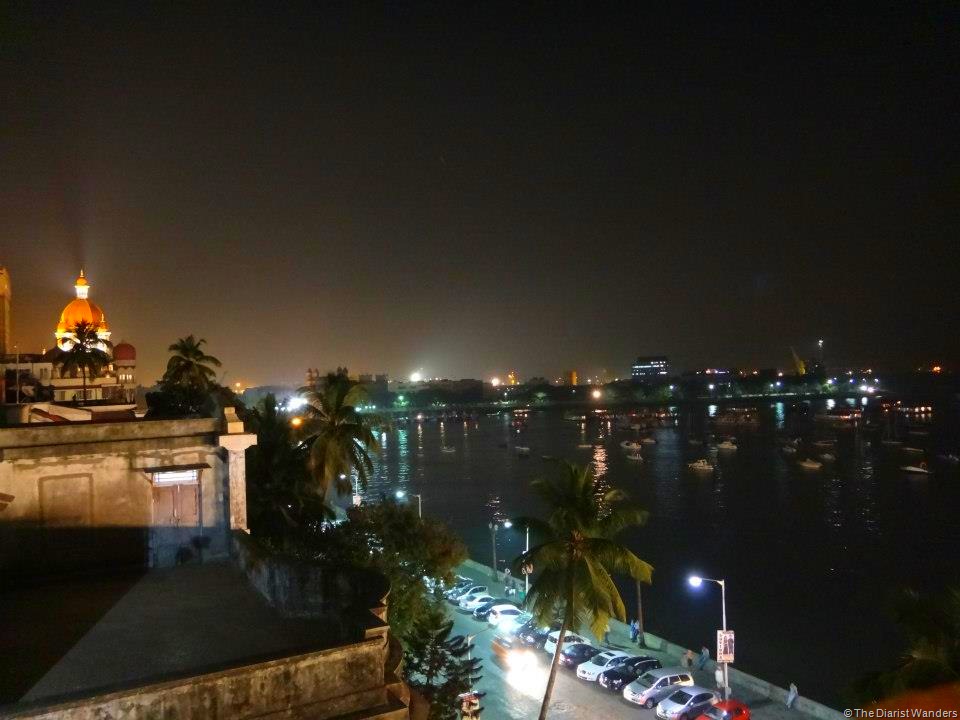
The illuminated dome of the Taj Mahal Hotel and the waterfront (Arabian Sea)
I spent the third day of the new year being awed and mesmerized (not to mention frozen) by the Golden Temple in Amritsar. While Amritsar is not the state capital, hundreds of thousands, possibly hundreds of millions, visit this city at India’s northwestern frontier as it is home to the Harmandir Sahib aka Golden Temple. The Harmandir Sahib is considered “heaven” among the Sikhs, followers of Sikhism. (most of us [especially Pinoy] know them as the people with the turban)
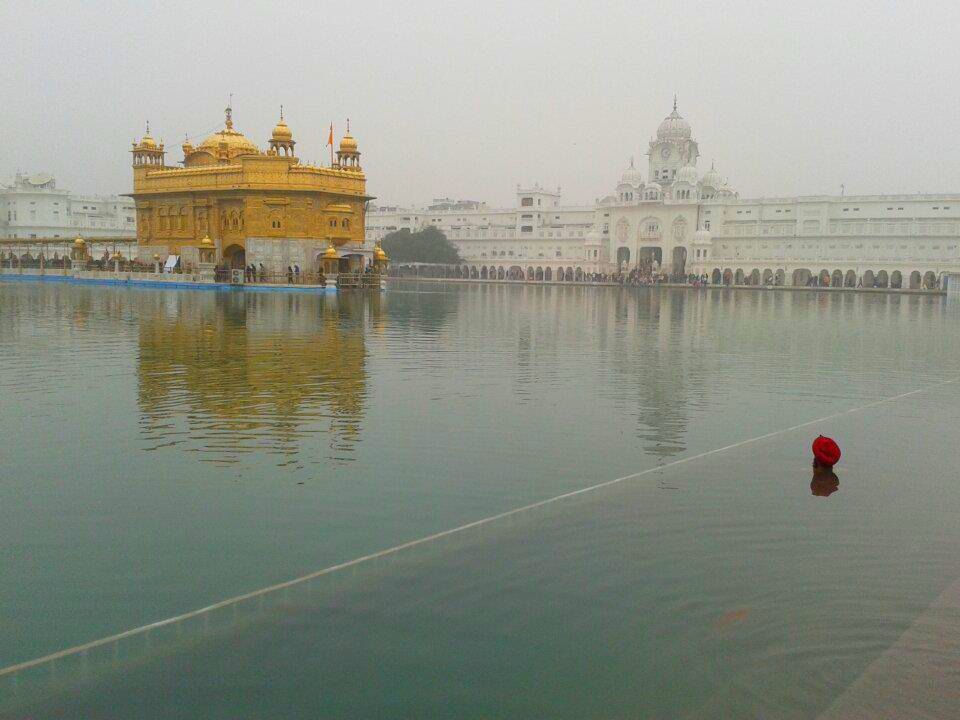
A devout Sikh dips into the sarovar (holy pool) even when it’s about 5 degrees cold
I first came to know of the Golden Temple via an article written by Mamu Rose, a Filipina co-volunteer, who toured the Sikh’s Holy City together with other VSO volunteers. Upon gazing at the picture, I told myself that I, too, shall see the Golden Temple for myself.
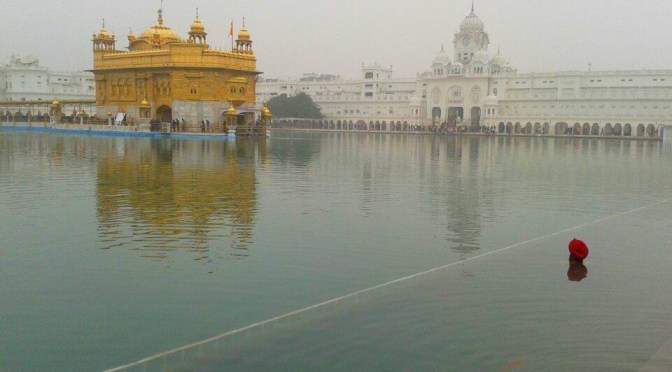
The Golden Temple is located in the middle of the holy pool
It took months before I was finally able to go but I was so glad that I did. Being at Harimandir Sahib, even though I was not a Sikh or a follower of Sikhism (though I like their teachings, the ones I heard of at least), gave me a certain feeling of calm and peace. The Golden Temple, unlike any other places I visited, I felt these even while I was just about to enter the complex premises.
One of the entrances, by the Langer (free kitchen). Covered heads and washed feet are required before entry
I don’t know but for some reason, I felt like I am really being welcomed. That I am being, uhm, ushered in. Alright, alright. You can say I am being dramatic. But that was really what I felt at the time. And mind you, I haven’t actually gone in the Golden Temple itself yet.
A bridge connects the pilgrims and visitors from the walkway area to the Harimandir Sahib
It probably was because of the long line of devotees and “curious” tourists waiting to get their chance to enter the Sikh “heaven” (although I think the entire complex kinda feels like that already) but also, more importantly, because I wanted to understand the essence of the Harimandir Sahib better.
Can you see the line just to enter the Golden Temple?
And that moment came later that night when my CouchSurfing kind-of host Sokirt met me at the Harmandir Sahib after the trip to the Wagah (Indo-Pakistan) border. Sokirt is a Sikh, and, I should say, probably as devout as my grand aunt were in the congregation.
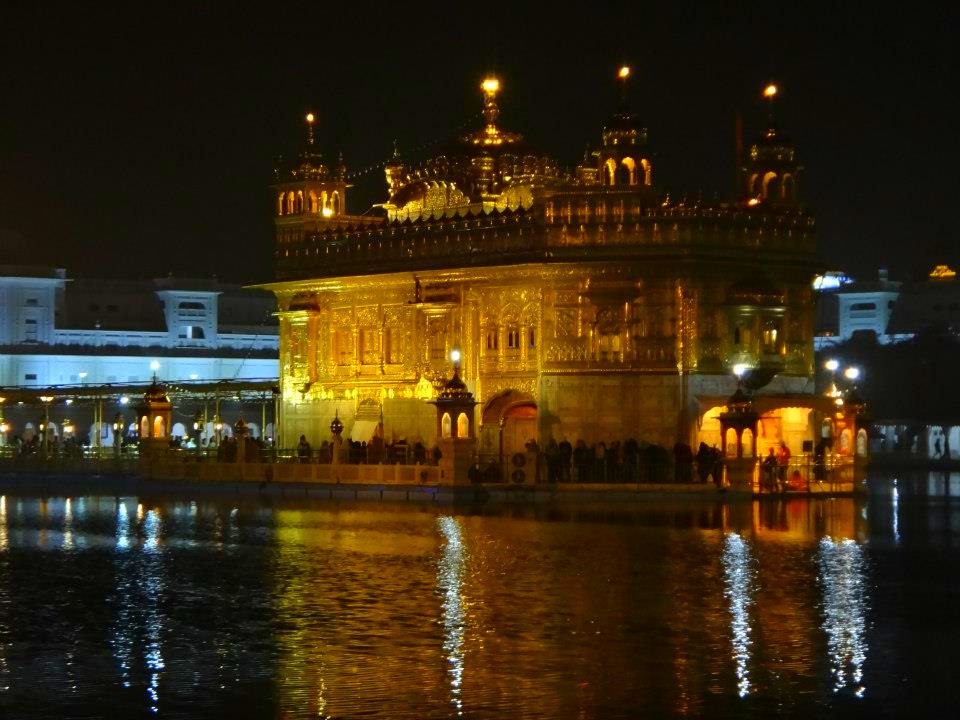
The Golden Temple and the lights are reflected by the sarovar during the day and night
How did I say so? Well, when we entered the Golden Temple complex, the first words out of Sokirt’s mouth, was “This is heaven.” And, though I may not share the same views as strongly as he does when it comes to religion, I gotta say, I was sold. I mean, you could hear it in his voice. There was so much faith and belief.
Pilgrims and visitors are highly encouraged to revel at the Golden Temple’s majesty during the day and the night
I haven’t met anyone like Sokirt who had that much reverence and awe for his place of worship. Or for the idea of having “heaven on earth”. Not even my late grand aunt. I probably would not convert to Sikhism but really, meeting a Sikh in their holy site and seeing and feeling how much they believe in the teachings of Sikhism, man, that is something that gets through you.
The Harimandir Sahib glows and radiates throughout the night
When asked about my favorite places or moments in India, the Golden Temple in Amritsar is definitely always mentioned. Not just because of the beauty of the Harimandir Sahib itself (which was built thrice already after being destroyed due to religious and political conflicts) but of what the temple and the surrounding structures represent. Of course, it might be different for you and me. But if you have the chance, I hope you’d get to visit the Golden Temple and see and feel for yourself how the Sikh’s “heaven” can be a refuge for you as well.
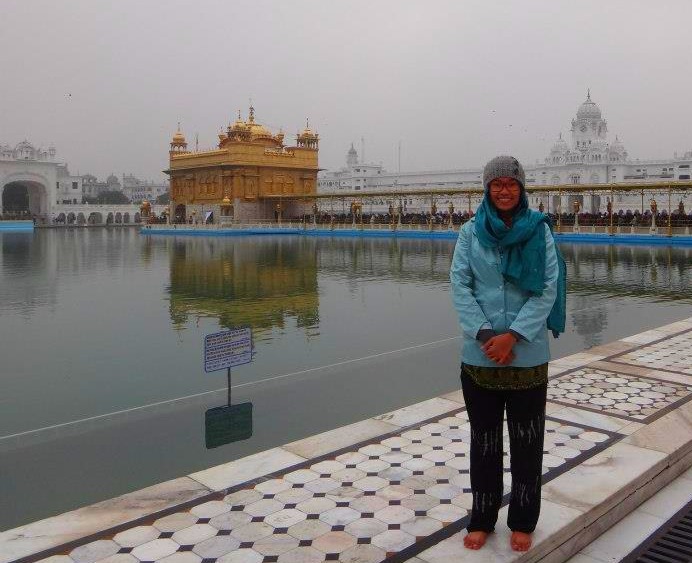
Sokirt said I was a brave girl for coming to Amritsar during winter. Well, at 5 degrees, I guess my 8-layered get-up can cope. 🙂
For general travel information on how to get to Amritsar and visit the Harimandir Sahib, please refer to Wikitravel. If you want to learn more about my experience at the Golden Temple and the other places in Amritsar (Langer [free kitchen], Wagah Border, Jalianwallah Bagh), please be patient for the rest of the entries or leave me a comment.
Life is short so take a leap of faith. Let’s wander, explore and discover. Come and journey with me.













 for the rest of the entries or leave me a comment.
 The Diarist Wanders