I am not necessarily a fan of prince charming and fairy tale endings but I’ve always been interested with royalty and period films centered on their lives—such as the movie Young Victoria. So much so that when I was in Kolkata, formerly known as Calcutta as in the British Raj’s former capital in India, I decided to visit the Victoria Memorial.
Impressive green and white symmetry
Before my visit, which was part of my 10-day vacation dubbed “The Great Eastern Journey”, I did not even know about Victoria Memorial. Or what it is exactly. I only assumed that it was, like the Gateway of India in Mumbai, a colonial structure meant to commemorate the power of the British Raj during their reign in India.
The Victoria Memorial definitely can’t be missed from the King’s Way
Julie has been to Kolkata a few times before (since she lived in Bhubaneshwar which was just an overnight train away) and apart from Mother Theresa’s tomb (which I missed coz they’re closed on Thursdays, the day I was there!), the Victoria Memorial is the other place she recommended for me to visit. Jane, my co-volunteer based in Kolkata, gave me directions after we three decided to split up in the afternoon to do our own thing.
I can’t remember the directions anymore but Victoria Memorial and other colonial structures and areas are found in the Esplanade locality. I think once you are in Esplanade, tourist spots are basically walkable. You can also ask for directions, which I did. As I said, Victoria Memorial is one of the top attractions and the guava peddler (the red chili and salt mix was too good!) easily gave me directions to just turn right from the main street and follow the road called King’s Way. He said I won’t miss the Victoria Memorial.
True enough, I found it. I mean, the Victoria memorial is a massive structure made of what I assume is white marble. It truly is hard to miss. Hehe. Besides, as long as you know how to ask directions, in broken English, Hindi or body language, people in the street can help you find the place you are looking for.
There were probably 9.5 out of 10 locals among the visitors of the Victoria Memorial
Speaking in Hindi, at the entrance gate, actually helped me score a 10-rupee instead of 150-rupee ticket. With my northeast Indian features and a simple “Ek ticket do, saarji!” phrase, I managed to get the local price. And no, it was not illegal as I held a residency permit at the time. So, with that and because it was too hot with too many people in the queue under the scorching sun to enter the Victoria Memorial building itself, I chose to eat my red chilli-ed guava and some biscuits under the shade in the garden, while the birds chirped away.
After my food ran out, and realizing that the queue isn’t really getting shorter, I decided to fall in line and wait for my turn to enter the building. Actually, the Victoria Memorial did not have as much items as you would expect of a museum. And, I didn’t enjoy it much since there were too many people at the same time, walking around in a line as in a procession. And photos are not allowed inside the halls! Not that there was a sign but I saw that the guards meant it when they snatched a camphone away from its teenage owner who tried to reason with them but ended up getting scolded at. Scary.
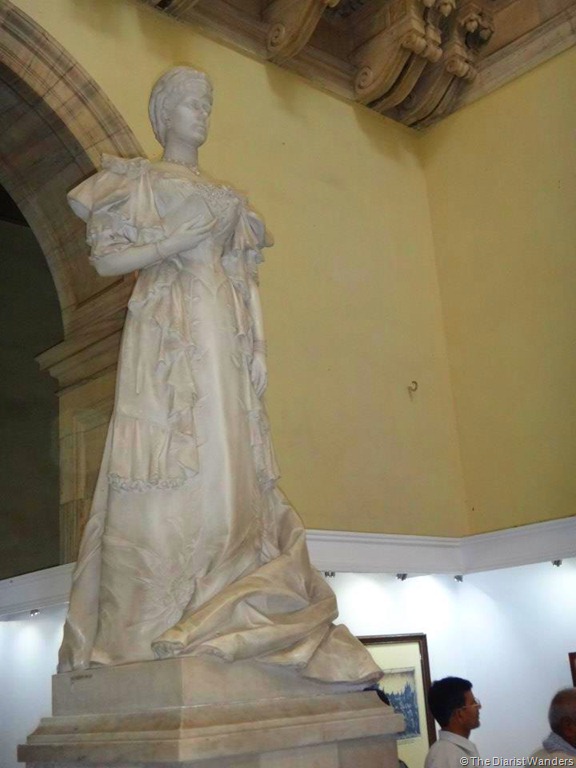
I am assuming that this statue is Queen Victoria, young version. It’s the only photo I have inside the halls
It was better after the first area by the entrance as the hall was bigger (I assumed it’s the center area, under the dome) and was again much better once I climbed up to the next floor. Not that there was much to see in the floor itself but because it gave you a view of the garden at the back. It made me feel like Elizabeth in Pride and Prejudice at Derbyshire with Mr. Darcy. (cheesy!!!)
View from the upper floor terrace. Beautiful, isn’t it?
After letting my imagination flow, I moved on to the back garden to enjoy a greener and more peaceful part of the grounds and see the Victoria Memorial at a different angle and perspective.
I liked what I saw. I mean, I liked it enough to recommend for you to visit it whenever you happen to be at Calcutta. Especially if you are interested in architecture. Apart from eating yummy Bengali fish curry, riding the trams and pulled richskaws, might as well add the Victoria Memorial to the list and enjoy the scenery and gardens and be transported to the time of royalties and majesties!
I miss Mumbai. There, I said it. I lived in Navi Mumbai (New Bombay, totally different twin city) and I would go to South Bombay (aka SoBo) whenever me and my friends would go out for dinner and drinks. Why SoBo and not in Bandra, the party/gimik capital of Mumbai? I think it’s mainly because it is more accessible and hanging out in Colaba has a more chill vibe. Not to mention, I personally find South Mumbai more pleasant to walk through, with more character and history than the upscale Bandra area.
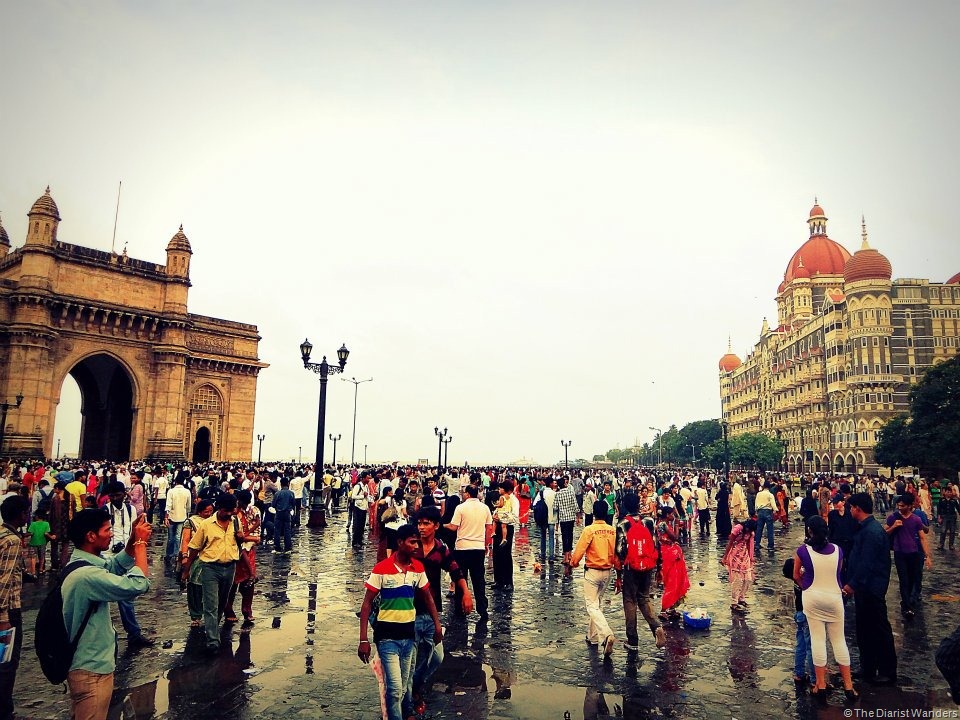
The Gateway of India and The Taj Hotel
Needless to say, South Bombay and Colaba is also the most touristy. But hey, when you live in the city, you don’t really mind the mix of the local and foreign crowd. You enjoy it. People-watching and all. Being a foreigner myself, though I am not as tourist as the newly-arrived ones anymore, I always find something new to discover in Mumbai.
Anyway, I am not in a talking (writing) mood much today. Unless I want to end up too nostalgic to function. Haha. Therefore, I would jus want to share with you the images of Colonial Mumbai. I always call South Bombay the British area, primarily because the structures you would see closely resemble what you would find in London. I think (as referenced to movies and TV series).
I’ve included here a series of photographs, showing these British colonial structures. I tried my best to put them in the walking order, although my memory might be messed up already since there were some turns during these several walkthrough of South Mumbai.
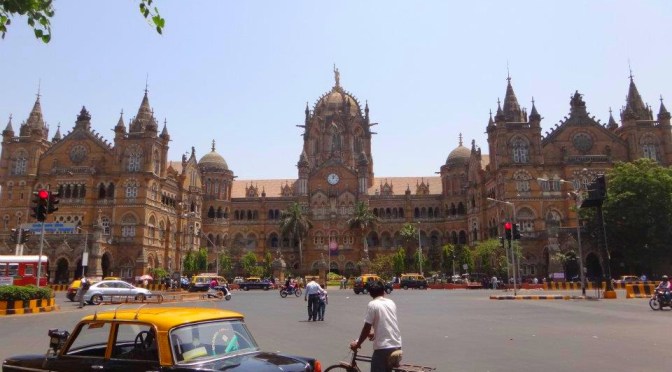
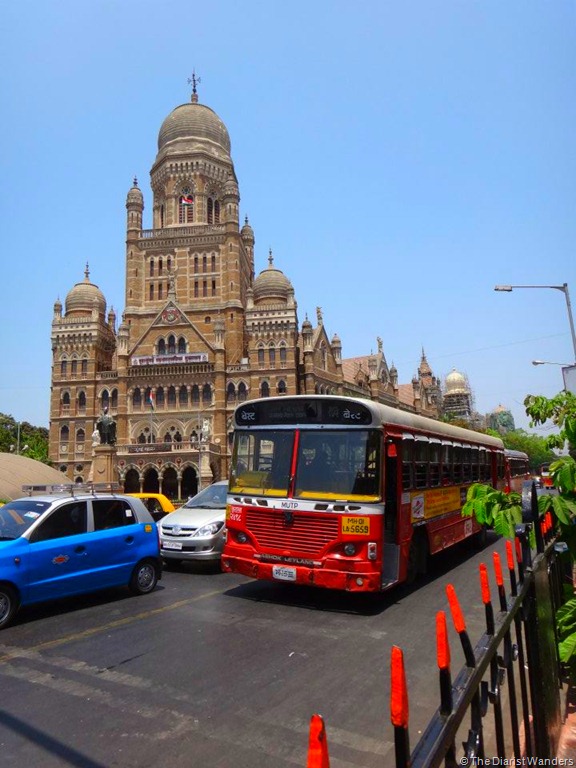
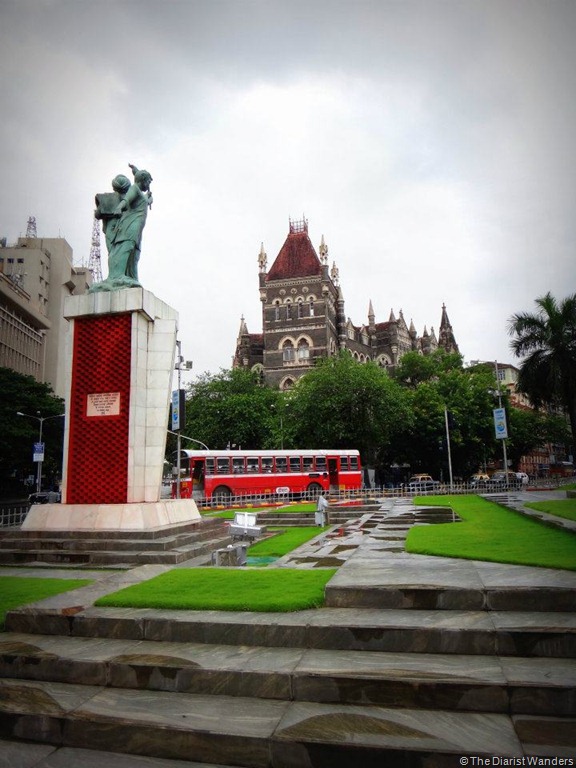
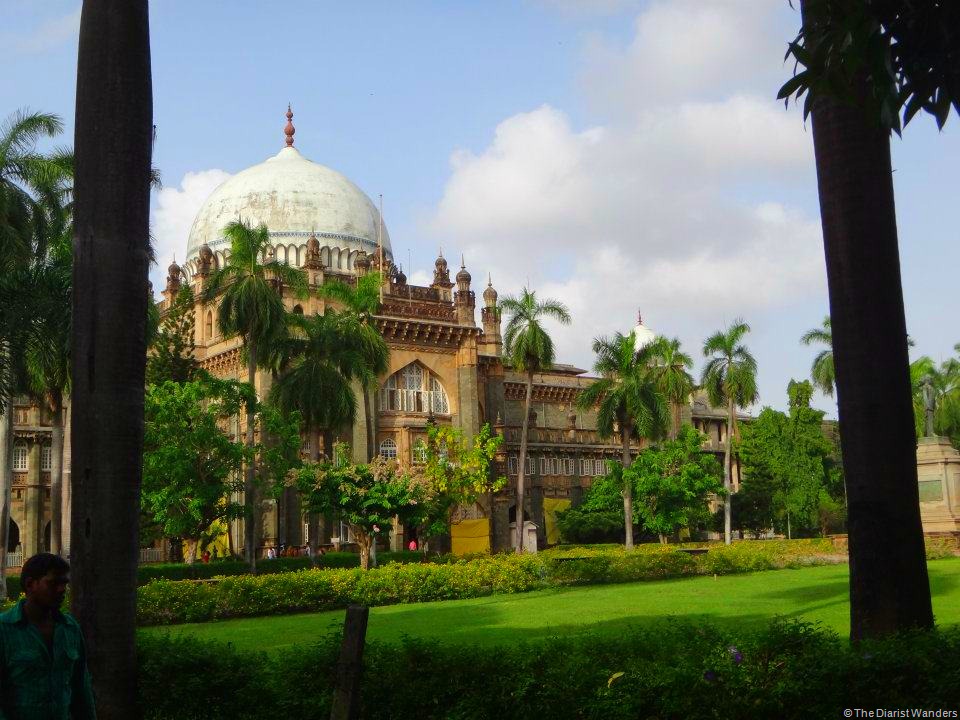
Chhatrapati Shivaji Terminus (CST, formerly known as Victoria Terminus) is a UNESCO World Heritage Site and the main railway terminal for local and inter-state trainsBirhanmumbai Municipal Corporation (BMC) serves as the City Hall (sosyal!). It’s on the left side if facing CSTI can’t be sure if this is still part of CST but it is behind the CST facade areaThese colonial buildings house modern establishments and banksSeveral unidentified sculptures form part of one building’s foundationsI am not sure if this is the Churchgate Railway Station. If it isn’t, then it must be the building across the roadHutatma Chowk (Martyr’s Square) is found at the center of South Bombay. Easily accessible from Churchgate StationThe Hutatma Chowk memorial, as far as I have heard, was to commemorate the lives of the martyrs during the Maharashtra and Gujarat separation (correct me if I’m wrong!)Flora Fountain, built in 1864, is one of the most photographed landmarks in South Bombay. Sorry, no more water flowing through. 😦University of Mumbai (Fort Campus) was established in 1857. It’s mong the oldest universities in IndiaThe Rajabai Clock Tower, completed in 1878, is called Little Ben as it was patterned to the Big Ben in LondonDavid Sassoon Library, built in 1870, is another main landmark in the Kala Ghoda area. I never entered the library.The Prince of Wales Museum (officially renamed as Chhatrapati Shivaji Maharaj Vastu Sangrahalaya) houses artifacts, sculptures, painting, china and other art collections. I think it’s under the patronage of the Tatas. (Entry Rs 300 for foreigners, Rs 50 for Indians. Camera fees apply)I don’t know who the statue is for or what is the building. But I’m sure this is after the museum and towards the Colaba areaThe Gateway of India (not to be confused with the India Gate in New Delhi). Built from 1911 (primarily to commemorate the visit of King George V and Queen Mary) to 1914, the Gateway of India is perhaps the most visited and photographed monument in Mumbai. The boats leaving for Elephanta Island is found at the back of the Gateway of India.The Taj Mahal Palace Hotel and Tower is on the left of the Gateway of India if arriving by boat. It is said to be the or one of the most expensive hotels in Mumbai.
I hope you enjoyed these virtual walking tour of South Bombay. Maybe you’ll get to walk through Colonial Mumbai someday too! I’ve heard several mixed reviews of being a tourist in Mumbai. Admittedly, the city can be unnerving and overwhelming but hey, give it more than a day or two and surely, you’ll get to know and feel it’s vibe too. If you need a walking guide (especially for couchsurfers), let me know and I might introduce you to a friend or two who may be able to show you around Colaba, South Mumbai and the rest of the city!
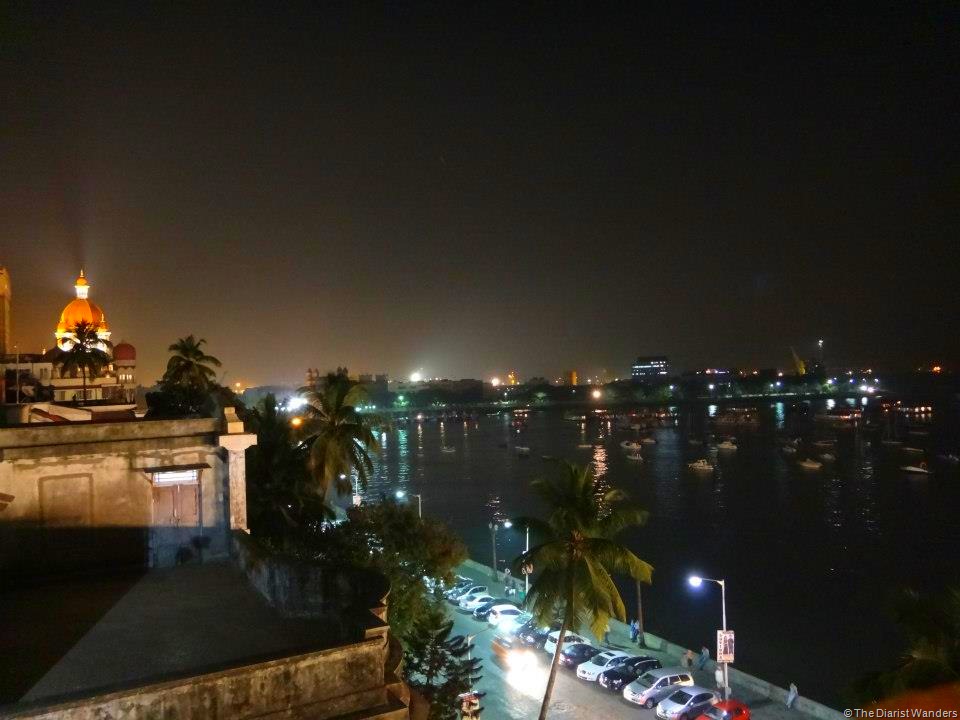
The illuminated dome of the Taj Mahal Hotel and the waterfront (Arabian Sea)
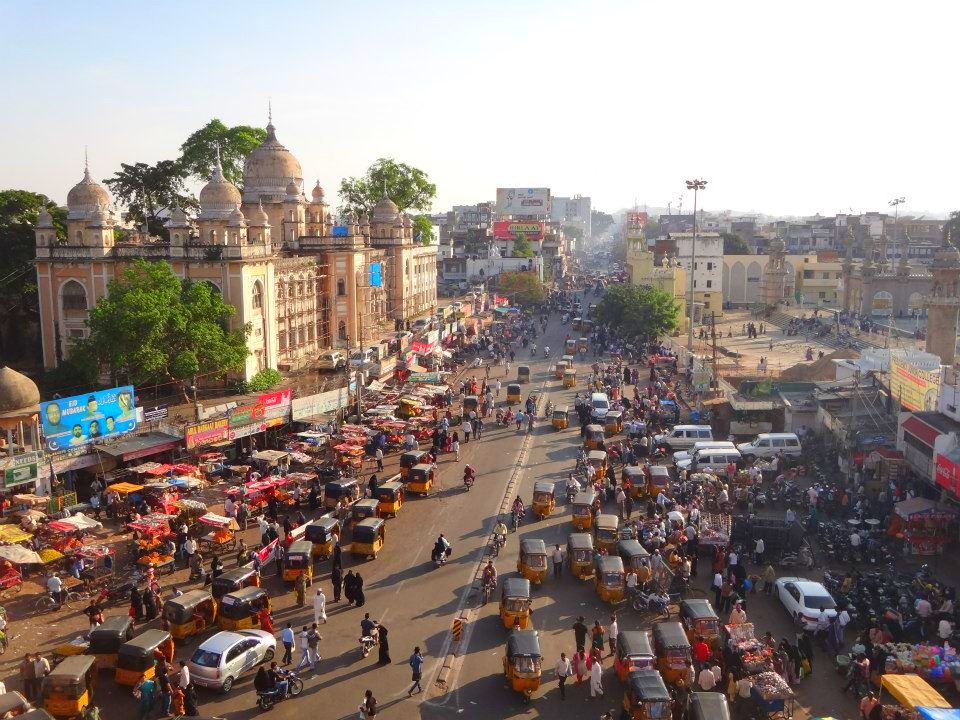
The most iconic monument of Hyderabad in Andra Pradesh (south India), Charminar is said to have been built between 1589 to 1592 BC (dates are not still debatable). It was supposed to be a monument to commemorate the founding of a new capital and the end of a plague. Charminar was commissioned by Muhammad Quli Qutb Shah, the 5th ruler of the Golconda Sultanate. Learn more about Chaminar at Wikipedia.
Exploring Hyderabad: Charminar and Mecca Masjid
Beside Charminar is the Mecca Masjid (Makkah Masjid), one of the oldest mosques in India. It is called Mecca Masjid as Qutb Shah ordered the soil from Mecca to be made into bricks that were used in building the Masjid. Learn more about Mecca Masjid at Wikipedia.
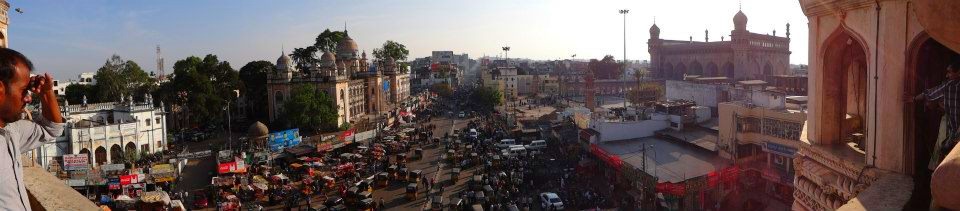
View from the top: Nizamia Tibbi College and Hospital and Makkah Masjid along Charminar Road
Reminder: Women going inside the Charminar are not permitted alone, for some reasons I did not understand, nor explained. My CouchSurfing host Bhavesh for my Hyderabad/Secunderabad trip also was not able to explain. However, a dark secret was shared while we were on top: it’s a suicidal area, much like the famous bridges where people jump! Scary! This is also why visitors were limited to only the “first landing” area of the Charminar, which by the way is about six-floors high! So get ready! (I wasn’t as I was still carrying my weekender pack with additional sarees I just bought!)
Charminar: View from the top
The view from the top of Charminar lets you see the other major landmarks of Hyderabad like the High Court and Patel Market (garments and pearls) on one side, Laad Bazaar (bangles market) on another, then the Makkah Masjid area, and a former palace turned into a college and hospital. Hyderabad, actually, is called the City of Palaces, among its other monikers!
Last night, at the Thirstday Thursday CouchSurfing Manila meet-up, there were two CouchSurfers from Vietnam and with other Filipino CS members, we talked about Cu Chi Tunnels, perhaps one of the most visited and most popular tours in Ho Chi Minh city.
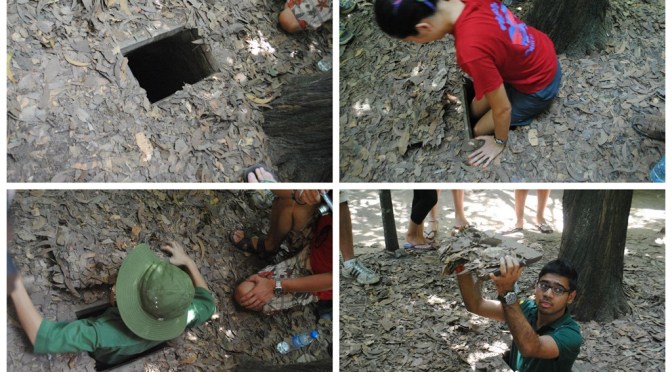
Raising the roof, literally! This is how the Vietnamese get inside the small rectangular “door” at Cu Chi tunnels (photo taken by Sid or Sulabh)
Together with Indians-but-Singapore-based Sid and Sulabh, whom I met in Phnom Penh, Cambodia, I went to Cu Chi Tunnels in the morning (it’s a half-day activity) to see for myself how the Vietnamese lived underground for years during the Vietnam War. Continue reading Backpacking South East Asia: Vietnam – Cu Chi Tunnels Tour→
It was in August 2012, while planning my first long holiday in India, that I got connected with Mamtha, a CouchSurfer from Bangalore in Karnataka, India.
My CS Host, Mamtha, and THE blue backpack bag I use for travel, hanging out at Krispy Kreme Doughnuts at Brigade Road
I was supposed to meet up with her as part of my Mumbai-Goa-Bangalore-Chennai-Pondicherry trip. Working for the CSR Department of a multi-national company, I think she became interested in meeting with me as I was then volunteering in India. Sharing a common interest with a CS member beyond traveling, I was all psyched up to meet Mamtha in Bangalore!
Unfortunately though, I got really sick just two days before I was supposed to begin my trip. So, I had to cancel the first leg (Mumbai-Goa-Bangalore) and head straight to Chennai and Pondicherry a few days after my “OMG-I –thought-it-was-malaria-or-dengue” scare. Of course, I missed the chance to meet Sharma but I promised her that if I do get another opportunity to visit Bangalore, I will definitely meet her. In Indian terms, Pakka!
So, as part of my South India on a Run (aka final vacay in India), I proceeded to Bangalore after visiting the monuments at Hampi, Karnataka where I also couchsurfed. Mamtha said that she and her husband, Tyag, will pick me up from the Bangalore City Junction train station. Now, not all couchsurfing hosts pick up their surfers. So, that’s a really good indication that your host is very much willing to go out of their way to welcome you! Especially when your train is supposed to arrive at 6 o’clock in the morning!!!
Upon arrival at the train station, I saw Mamtha and Tyag even though I don’t know how she looks coz her profile has no photo yet! I guess, you know, you just feel it. But before we could leave the station, I had to ask their help. I was in Sleeper Class Coach #3 when this guy, a devotee I met in Hampi’s Virupaksha Temple came up to me and said that there was a foreign “white” woman in his Coach (Sleeper #8) who looked really distressed and kept crying all night. He offered to help her but she wouldn’t talk to him. So, he wanted me to check on her after we get off the train. So, I had to ask Mamtha and Tyag. Of course, they said yes we should go to her and see if she’s alright.
With Anna at the Sharma’s garden
Turns out, Anna is also a CouchSurfer from Netherlands and also just came from Hampi. She was kind of distressed because she was in a section where mostly are men and they just kept staring at her. It is quite common in India (I experienced it too) for men to stare (like, really stare) especially if you are “white”. It does not necessarily mean that they are staring at you like imagining pervert things. It might just be because they are curious and you might be the first foreigner they met (sleeper class coach usually is for lower-middle-class/upper-poor-class) in their entire life. Even so, it can be quite uncomfortable. Anyway, cut the story short, as Anna, like me, is only in Bangalore for a day and heading towards Kerala (further south) in the late afternoon and evening, Mamtha and Tyag also invited her over to join us for the day! YEY!!!
Where the Sharmas live
Mamtha and Tyag live in a flat (condo) community in Bangalore (I think they are southside???). They live with Shantu, Mamtha’s 80-year-old mom, and both their daughters are in different states working and studying. Before we met, Mamtha described their home as a “simple middle class Indian home”. Well, after arriving at their home, I thought, she was being modest. I mean, I love their home! Nice furniture (esp the African spine-fitting-chairs!), spacious hall, green garden (with Ganapathi’s statue nonetheless!), and with paintings and sculptures too! It is indeed simple. But it’s really classy!
Saagu!
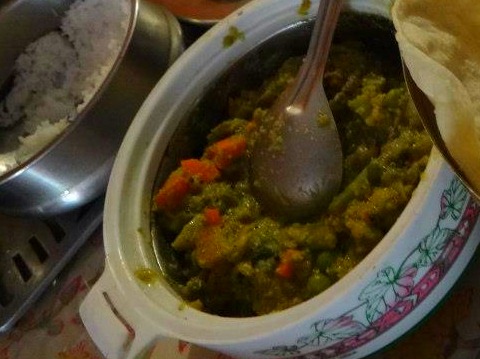
After freshening up, the first order of business was of course, yummy home-cooked Karnataka food by Shantu! We had poori (fried flour flat bread) saagu (aromatic spices blended with coconut and choice of veggies—I think we had potato, carrots and green peas). The Sharmas are vegetarians so of course, we enjoyed pure-veg goodness. A great way to start the morning with coffee and chai (Indian tea+milk+sugar)!
Top shot of Gavi Gangadhareshwara Temple (Gavipuram Cave Temple) with the “mysterious” monolithic discs which, Sharma says, supposedly tells the time
After getting our fill (actually more than because they wouldn’t let Anna and me off the hook until we ate twice our capacity!), we headed to the Gavi Ganghadeshwara Temple in Hanumanth Nagar. An example of Indian monolithic rock-cut architecture (like the Kailash Temple in Aurangabad), the Gavi Ganghadeshwara Temple is also called the Gavipuram Cave Temple. Apparently, the temple was built around the 9th Century (according to Wikipedia) and was constructed from a cave. Mamtha shared that she’s bringing us to THIS temple because it’s got more character than the new ones.
Lighting diwas as preparation for the Puja at Nandi’s statue (Anna and I were like Paparazzis!)
The Gavipuram Cave Temple is dedicated to Lord Shiva, one of the three main gods of Hinduism. His bull, Nandi, is found in front of the temple entrance, as part of the area where devotees light diwas (oil candles) as part of the offering for the aarti/puja (prayer ceremony) that we became a part of (I’ve been to some pujas but it’s my first time to have it inside a temple, I think for Anna too!). Another interesting feature of the Gavi Gangadeshwara Temple is that the Shivalinga, the main diety, is located at a position where, at certain times of the year, the sun’s rays will pass through the horns of Nandi and light up the shrine! Too bad we missed it!
Some of the Statues in Front of the temple include (left-right) Shiva, Parvati (wife/consort) and Pratik (son); Ganapathi/Ganesha (their elephant-headed son and my favorite Hindu god); and Shiva in Kailash Mountain (or forest) with the sages (???)
We also missed most of the idols of deities and sages inside the cave, built long, long time ago, even before the records could show, since there’s restoration/construction going on. Mamtha did share that a Shiva statue was wearing a string that is the style of a Brahmin (priests) caste. Now, it is quite unique because Shiva belongs to the Kshatriya (warriors) caste! (Looks like it’s a privileged info as I didn’t find it mentioned in most of the literature for the temple! I so love good ol’ local knowledge!) What I didn’t miss though, was the feeling that Mamtha described whenever she goes to this temple. I felt calm and at peace. It’s not like the other new/metro temples I’ve seen that was always buzzing. Apart from the temple prayer/music, I think I didn’t hear other sounds—even the city’s noise was kind of tuned out!
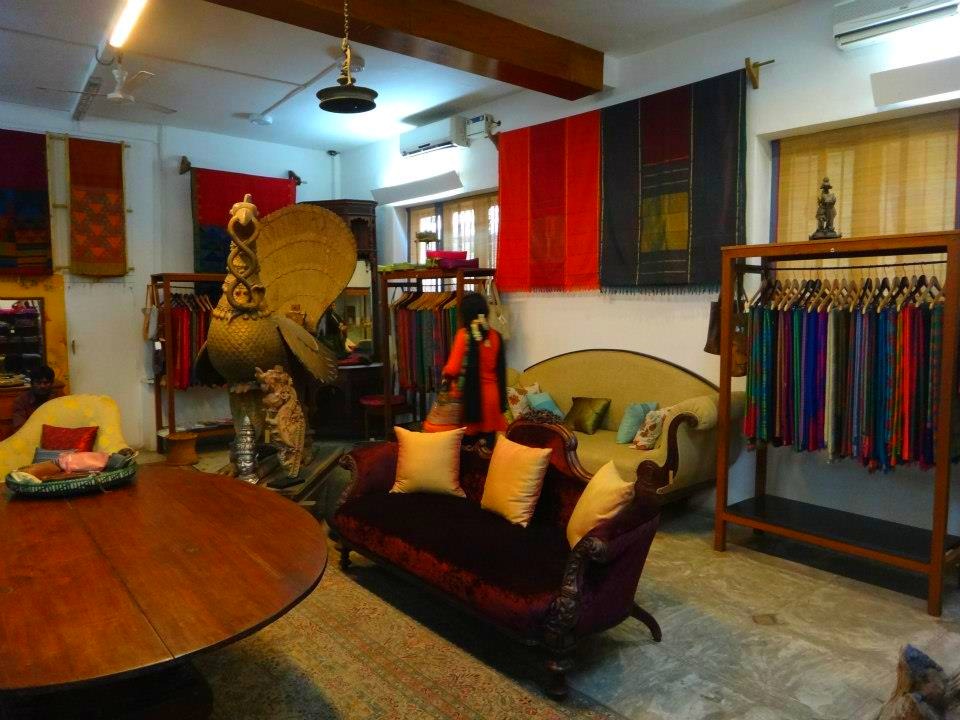
Inside Ambara’s main display hallway. The peacock is so massive!!!
After spending time just chatting and “feeling” the temple (which reminded me of Batu Caves in Kuala Lumpur, Malaysia), we then proceeded to our next destination—Ambara, an antique, arts and crafts boutique! If I wasn’t surfing with Mamtha, I wouldn’t have known about the place. Or, I probably would know but I wouldn’t go. The reason being that Ambara is quite upscale. I mean, with the quality of their products, I think they really are targeting upscale customers.
Furniture, antiques, sarees and garments are mostly the main display in this hall
Actually, before entering, Mamtha already shared that it’s an expensive place to buy stuff and our goal is not to buy—it’s to see and appreciate the culture, creativity and craftsmanship of Karnataka. And so we did. I mean, the place is impressively divine! The sarees are lovely and the garments are so rich. The leather bags are to die for! Anna had to “motivate” herself to move on from the grey tote bag she was eyeing. I think it was like 20,000 rupees (PhP 15000) or something! The furniture and sculptures definitely had a lot of character into it, and a hefty price tag too! But, then, as I said, the market is upscale. I do think the products on showcase at Ambara are worth every paisa!
Anna wanted to get a kurta and since Ambara is way out of our price range, Mamtha took us to Fab India (imagine the Indian version of Kultura Filipino with more focus on Fashion and lifestyle products). Fab India offers high quality garments with, I should say, reasonable prices. If you are lucky, some might even be on sale! After trying out some, Anna settled for a blue cotton kurta and pledged to get more once she reaches Sri Lanka!
Thali at the Ready: Attack! (left to right) Cucumber Pachadi, Cabbage Palya, Rasam/Saru, Rice, Saagu, Papadom
And of course, after all this sightseeing and shopping, our tummies have started complaining and we headed back to the Sharma’s home for another round of traditional South Indian lunch thali! And we ate with our hand, or at least tried to! It’s the best way to enjoy South Indian food! On the menu were Rasam or Saru (in Kannada), a sour (tamarind) soupy dish (lots of radish), cabbage palya (stir fried cabbage with shredded coconut), cucumber pachadi (grated cucumber in yoghurt), and my favorite, papadom (crispy fried/flame grilled pringles-like snack/side dish)! The saagu made a welcomed comeback too! Of course, again, Shantu’s cooking was awesome! I don’t need to state how many servings I had, right?!
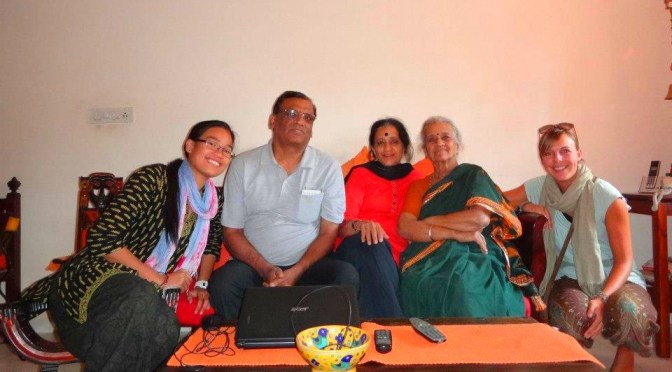
Anna and I with the Sharmas: Tyag, Mamtha and Shantu (I’m sitting at the African ‘spine chair’!)
After lunch, it was time to again pack our bags and leave the Sharma’s home. Well, not without a ‘CS-extended-family’ pic of course! Thank God for the timer! So (*sniff sniff*) we had to bade goodbye to Shantu (I asked for her blessing (mano po!) the traditional Filipino way) and the Sharmas’ home! Tyag would have wanted to tour us around their community but we were running out of time. Anna has an earlier train than me so we parted ways at Brigade Road, the central location where Bangaloreans and tourists alike meet.
People Watching at Brigade Road, Bangalore
I would say that Bangalore is more, uhm, Western when it comes to dressing up, more western than Mumbai or Delhi. Probably because of the influence of the MNCs (especially IT companies as Bangalore is tagged the Silicon Valley of India) and the influx of foreign students and travelers in the area.
The queue at KKD. Reminds me of the time when there was very few Krispy Kreme stores in Metro Manila before
Our time in Brigade Road was made more enjoyable when I saw the familiar Green, White and Red logo of Krispy Kreme Doughnuts!!! Yes, I went so gaga that Mamtha must have thought me crazy!!! The Krispy Kreme Doughnut store in Bangalore is the first and only in India. So yes, I went gaga! Although the line was quite long, Mamtha and I braved the queue to get a taste of the famous original doughnuts. And yes, she loved it too! She bought some home coz she knows Tyag and Shantu should definitely try it out too!!!
After our sweet sojourn, it was time for me to bid farewell to Mamtha. I wanted to visit the Bangalore’s famous Lal Bagh Botanical Garden before heading to the train station and Mamtha also had to be somewhere else. Though the time spent with Mamtha and her family was just a few hours, their genuine hospitality towards me and Anna was really something I count as highlights of this trip. (And to think I almost did not push through my South India vacay!)
I wrote this post not only as a way of sharing the CouchSurfing experience but also as a way of expressing deep gratitude to the Sharmas for sharing a day in their life and welcoming us to their lovely home.
Life is short so take a leap of faith. Let’s wander, explore and discover. Come and journey with me.















 But before we could leave the station, I had to ask their help. I was in Sleeper Class Coach #3 when this guy, a devotee I met in





 The Diarist Wanders