I am a 30-something Filipina involved in development work. Much as I am in love with traveling, meeting new people and having new experiences, I find more passion in using my skills and talents in helping shape a better future for other people, especially the rural poor. It's a bonus that I get to travel while I do just that.
And oh, I'm a real sucker for good food, especially the ones that look great in photographs. And yes, I really do want to change the world. :D
I miss Mumbai. There, I said it. I lived in Navi Mumbai (New Bombay, totally different twin city) and I would go to South Bombay (aka SoBo) whenever me and my friends would go out for dinner and drinks. Why SoBo and not in Bandra, the party/gimik capital of Mumbai? I think it’s mainly because it is more accessible and hanging out in Colaba has a more chill vibe. Not to mention, I personally find South Mumbai more pleasant to walk through, with more character and history than the upscale Bandra area.
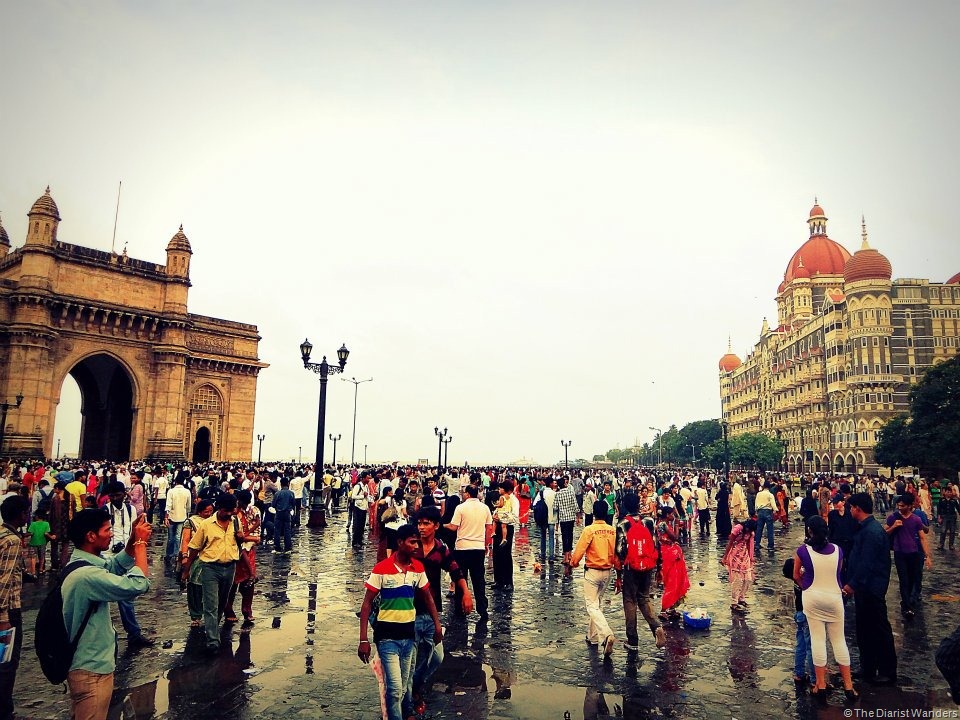
The Gateway of India and The Taj Hotel
Needless to say, South Bombay and Colaba is also the most touristy. But hey, when you live in the city, you don’t really mind the mix of the local and foreign crowd. You enjoy it. People-watching and all. Being a foreigner myself, though I am not as tourist as the newly-arrived ones anymore, I always find something new to discover in Mumbai.
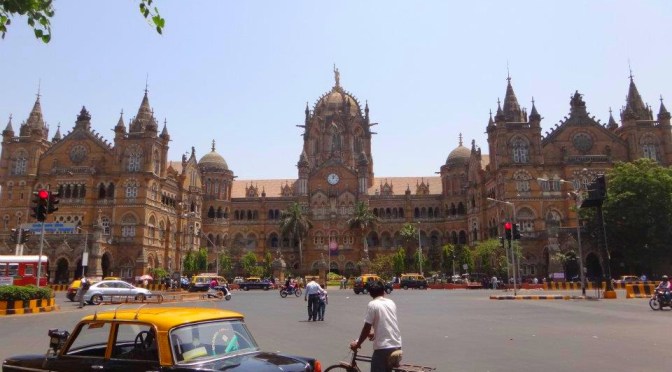
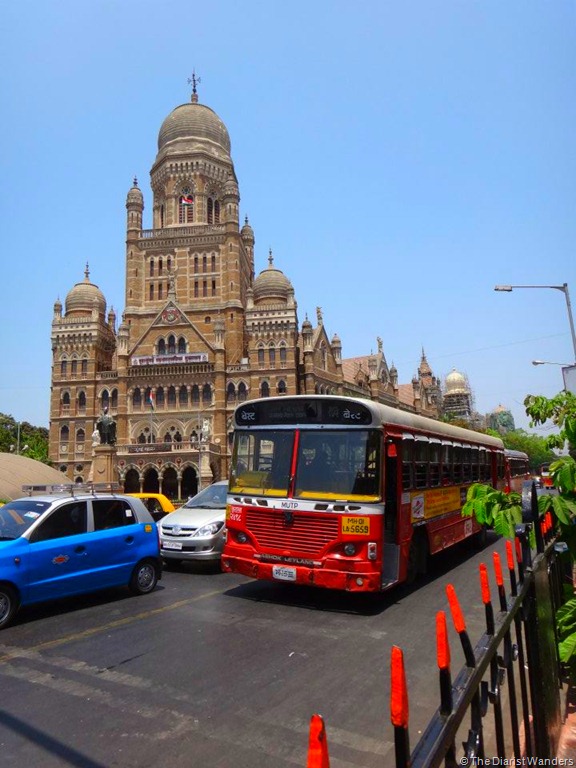
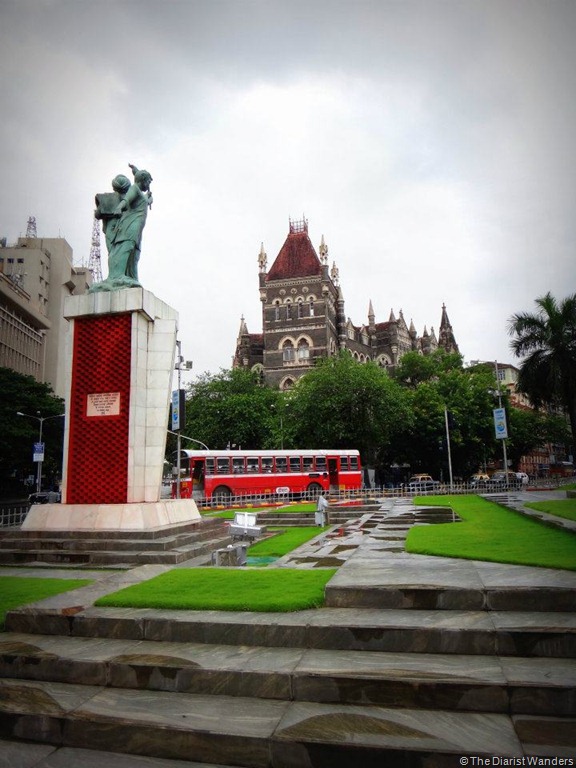
Anyway, I am not in a talking (writing) mood much today. Unless I want to end up too nostalgic to function. Haha. Therefore, I would jus want to share with you the images of Colonial Mumbai. I always call South Bombay the British area, primarily because the structures you would see closely resemble what you would find in London. I think (as referenced to movies and TV series).
I’ve included here a series of photographs, showing these British colonial structures. I tried my best to put them in the walking order, although my memory might be messed up already since there were some turns during these several walkthrough of South Mumbai.
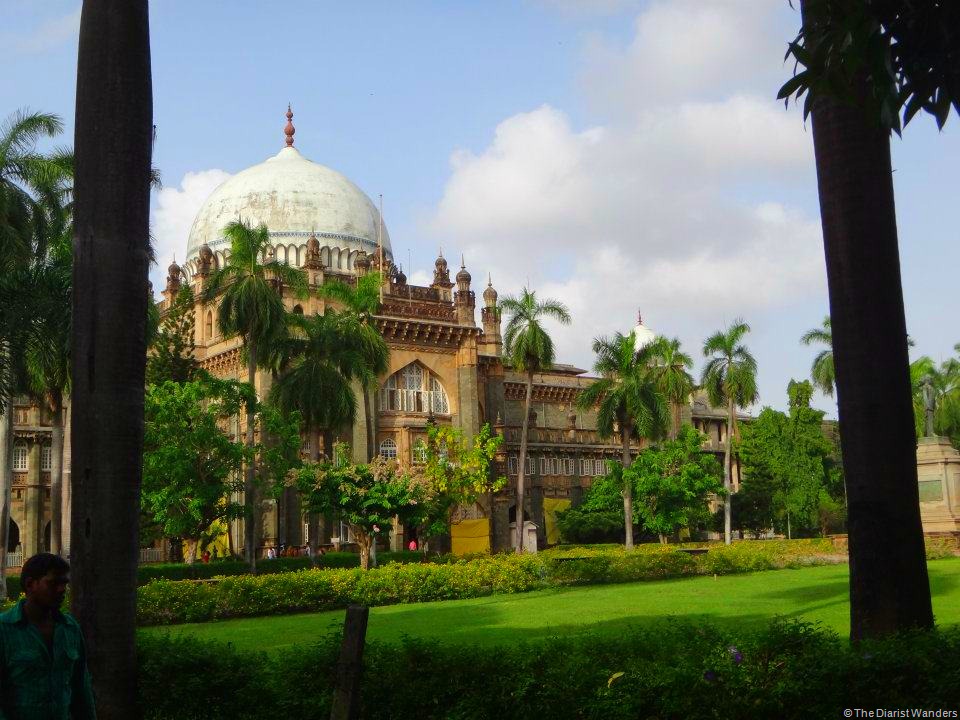
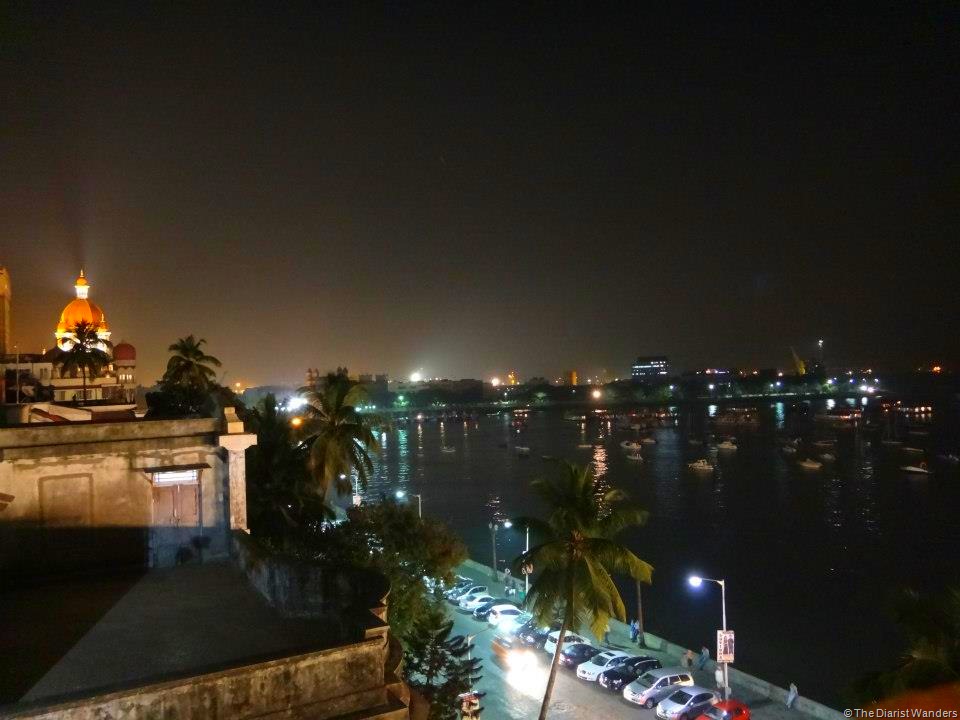
Chhatrapati Shivaji Terminus (CST, formerly known as Victoria Terminus) is a UNESCO World Heritage Site and the main railway terminal for local and inter-state trainsBirhanmumbai Municipal Corporation (BMC) serves as the City Hall (sosyal!). It’s on the left side if facing CSTI can’t be sure if this is still part of CST but it is behind the CST facade areaThese colonial buildings house modern establishments and banksSeveral unidentified sculptures form part of one building’s foundationsI am not sure if this is the Churchgate Railway Station. If it isn’t, then it must be the building across the roadHutatma Chowk (Martyr’s Square) is found at the center of South Bombay. Easily accessible from Churchgate StationThe Hutatma Chowk memorial, as far as I have heard, was to commemorate the lives of the martyrs during the Maharashtra and Gujarat separation (correct me if I’m wrong!)Flora Fountain, built in 1864, is one of the most photographed landmarks in South Bombay. Sorry, no more water flowing through. 😦University of Mumbai (Fort Campus) was established in 1857. It’s mong the oldest universities in IndiaThe Rajabai Clock Tower, completed in 1878, is called Little Ben as it was patterned to the Big Ben in LondonDavid Sassoon Library, built in 1870, is another main landmark in the Kala Ghoda area. I never entered the library.The Prince of Wales Museum (officially renamed as Chhatrapati Shivaji Maharaj Vastu Sangrahalaya) houses artifacts, sculptures, painting, china and other art collections. I think it’s under the patronage of the Tatas. (Entry Rs 300 for foreigners, Rs 50 for Indians. Camera fees apply)I don’t know who the statue is for or what is the building. But I’m sure this is after the museum and towards the Colaba areaThe Gateway of India (not to be confused with the India Gate in New Delhi). Built from 1911 (primarily to commemorate the visit of King George V and Queen Mary) to 1914, the Gateway of India is perhaps the most visited and photographed monument in Mumbai. The boats leaving for Elephanta Island is found at the back of the Gateway of India.The Taj Mahal Palace Hotel and Tower is on the left of the Gateway of India if arriving by boat. It is said to be the or one of the most expensive hotels in Mumbai.
I hope you enjoyed these virtual walking tour of South Bombay. Maybe you’ll get to walk through Colonial Mumbai someday too! I’ve heard several mixed reviews of being a tourist in Mumbai. Admittedly, the city can be unnerving and overwhelming but hey, give it more than a day or two and surely, you’ll get to know and feel it’s vibe too. If you need a walking guide (especially for couchsurfers), let me know and I might introduce you to a friend or two who may be able to show you around Colaba, South Mumbai and the rest of the city!
The illuminated dome of the Taj Mahal Hotel and the waterfront (Arabian Sea)
I first heard of Varanasi from a co-volunteer during my first week in India. He said that it is a must for him to visit Varanasi, the Hindus’ holy city. Varanasi is said to be the place where Hindus’ would like to die in, if they get the chance. I was told that it is believed that dying in Varanasi or having their remains sunk below or their ashes scattered across the Ganges River will either stop their reincarnation (maybe especially when they expect to rep bad karma in their next life) and/or go straight to heaven. Another reason for Hindu pilgrimage in Varanasi is the belief that you can be cleansed of your sins and cured of your illness once you drink from or bathe at the Ganges River.
After kilometers of biking, marveling and picture-taking (aka camwhoring) in and around the Angkor Wat Archaeological Complex in Siem Reap, you’d end up really hungry and I would personally recommend for you to satisfy that hunger for Khmer food at Stall No. 29.
Fish Amok (curry) served in a coconut shell
It was Julian, the Spaniard-but-based-in-Ireland-whom-I’ve-met-in-Phuket (whew!), who told me about the place. Since he arrived at Siem Reap and Angkor Wat complex a day before I did, he had the chance to try the place out.
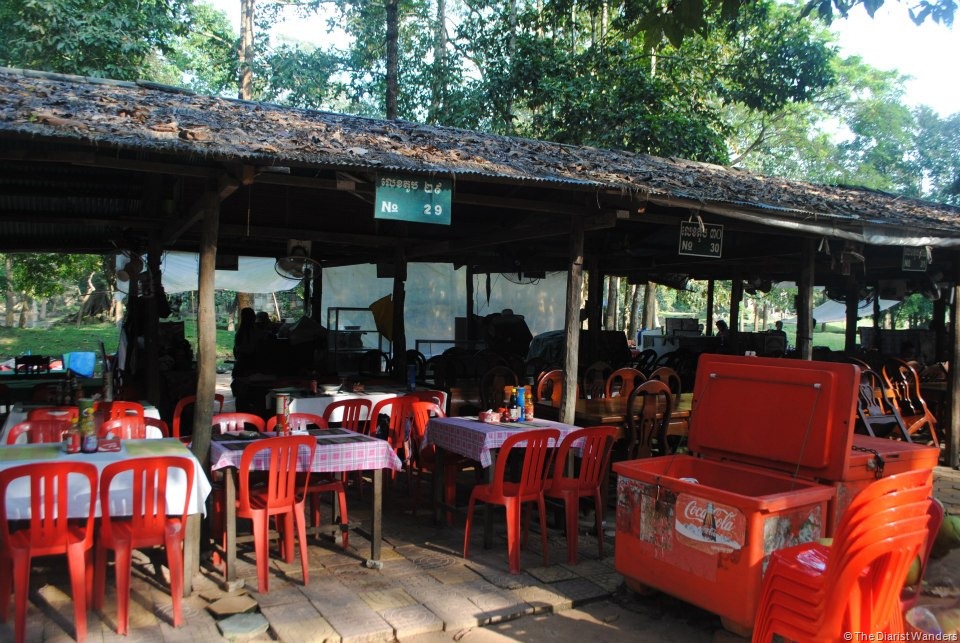
Food stall area
He said that apart from Stall No. 29, he tried another place too. But he chose for us to come back to Stall No. 29 not just because the Khmer food was better but also because the people are nicer!
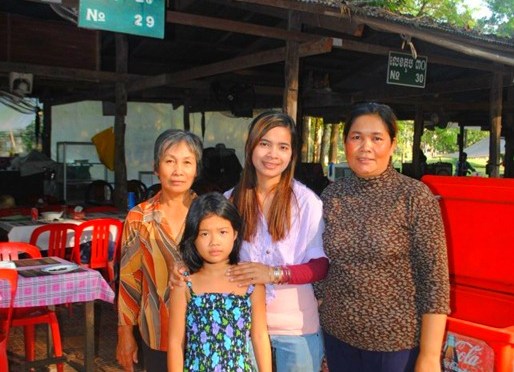
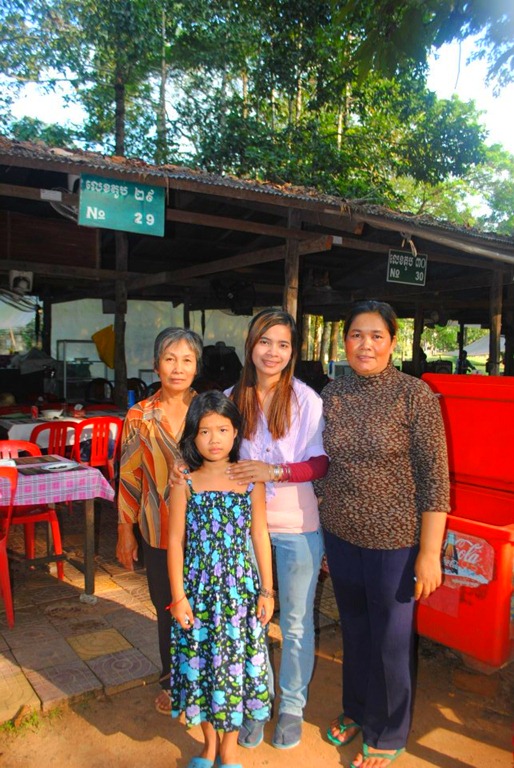
Stall No. 29, located inside the Angkor Wat Archaeological Complex in the stall area near the Terrace of the Leper King, Terrace of the Elephants and Prasat Suor Prat, is a family-run food stall (restaurant). Granma runs the kitchen, Mommy serves the food, and the daughter takes care of customer relations. (I’m really sorry that I have now forgotten her name)
I think this is the Terrace of Elephants. Go further down the road to the right to find the stalls
Don’t get me wrong. I mean, I am not recommending the place just because the people are nicer but it’s because the Khmer food they serve is really yummy. And the price, in thousands of Khmer riel (I think USD1=KHR4000 at the time) seems reasonable at 20-30000 for a dish, and looks like the same range of prices anywhere else.
simple-but-complex clear vegetable soup (mainly young bok choy, sweet potato, carrots and lettuce)
Well, it’s quite expensive in a sense that it’s a roadside stall and in that price, you can get a full meal with drinks and dessert in some restaurants/restobars here in the Philippines. But hey, this was real deal Cambodian food and Khmer goodness while marveling at temple ruins. Seriously, that ought to cover it. And, did I mention that the food was really good?!
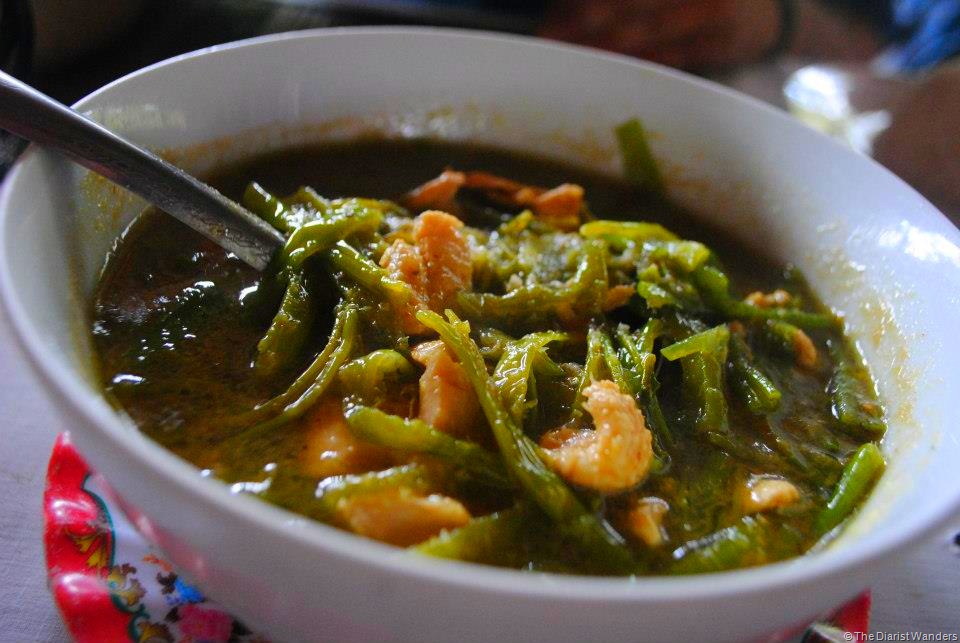
I forgot what it is exactly but I think this is chicken in lemon grass curry
Khmer food are usually curry-based, with a lot of coconut powder and lemon grass. During my stay in Cambodia, I’ve had several Khmer food and none of them matched the goodness I’ve tasted with the food from Stall No. 29.
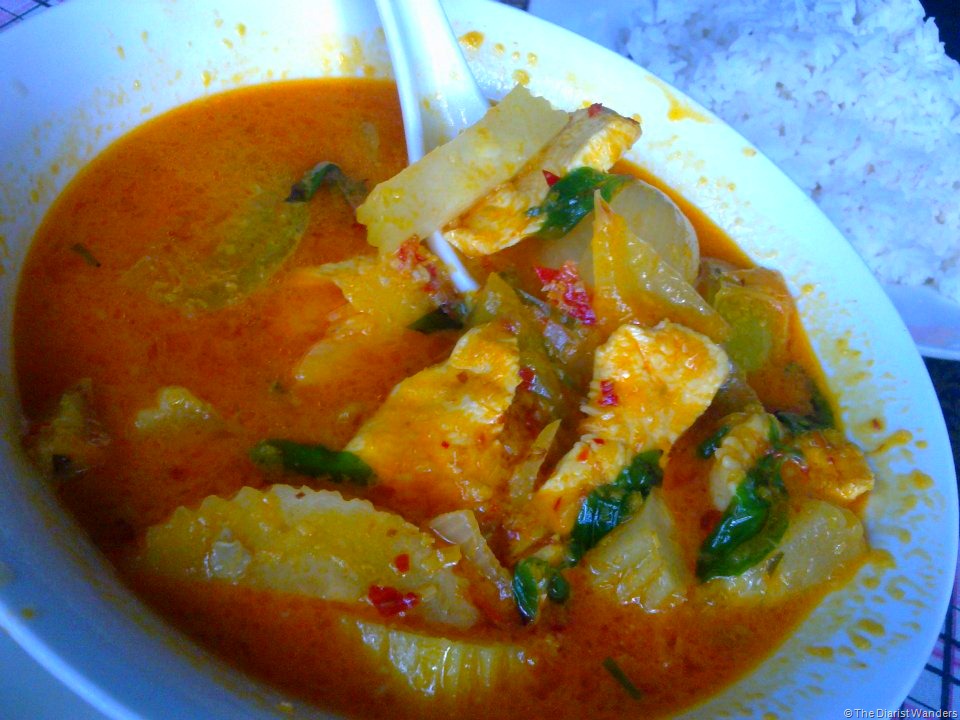
Chicken Curry (coconut-based)
Not even the dinner buffet at the Apsara dance performance or the free food at the Bousavvy Guesthouse where we stayed. There’s a certain way about Grandma’s fish amok (curry), served in a coconut shell no less, that when I tried to order another fish curry at Phnom Penh, I wished I hadn’t.
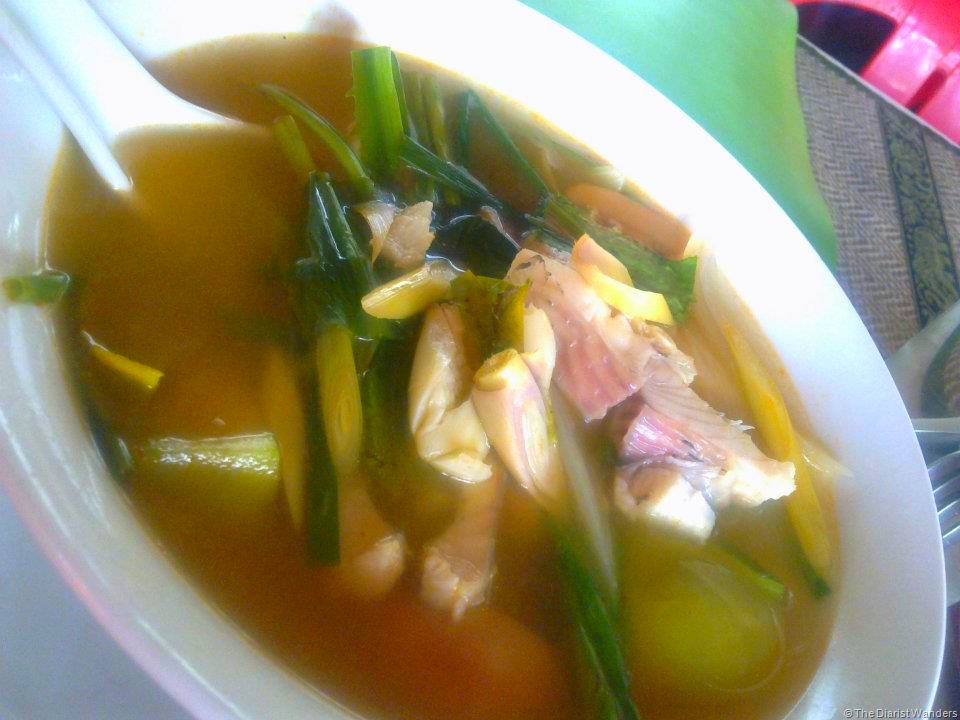
Fish soup (lemon grass mode!)
Grandma’s version was smooth, rich and flavorful. I know I probably sound like a TV show host selling food via home channel right now but really, that’s what it tasted like to me. Whether it was a spicier chicken curry (not as hot as Indian curry of course) or a simple-but-complex clear vegetable soup, Grandma knows how to tickle one’s taste buds and leave you wanting for more.
Simot sarap goodness (nothing but the bowl left!) with Angkor beer
Whenever we taste Cambodian food goodness at Stall No. 29, Julian and I would always leave full and satisfied. Plus, during the meal, we get entertained by the daughter’s stories about Cambodian culture. At the time, especially when I was on my last day at the Angkor Wat complex, we mostly talked about marriage and married life. I saw a wedding photo shoot and she was already thinking of marrying her boyfriend. The way she shared her stories made me experience it too, perhaps more than I should. Hehe
Shopping at Stall No. 25. They are friends with Stall No. 29 and help each other out
Another reason why I am recommending Stall No. 29 is because I believe in their genuineness. Of course, it is a business. But, it is a business which they run with sincerity and willingness to share. Stall No. 29 also reminds me that there really is good in a person, even when we are with strangers. On my last day and Khmer meal at Stall No. 29, I accidentally got my left leg burnt by a motorbike’s exhaust. After learning about this, the daughter disappeared and came back with a new tube of Colgate, bought especially to be applied to the burnt skin to soothe the heated pain. I was, of course, touched deeply and was at lost for words.
Stall No. 29 and The Family
So yeah, when I said Khmer goodness at Stall No. 29, I didn’t just mean Cambodian food. There’s a different kind of Khmer goodness that Stall No. 29 and the family have shared with me and Julian. If in case you are heading in Angkor Wat complex and heading to Stall No. 29 to taste and experience Khmer goodness, enjoy the food and I’d appreciate if you can give the family my regards.
I spent the third day of the new year being awed and mesmerized (not to mention frozen) by the Golden Temple in Amritsar. While Amritsar is not the state capital, hundreds of thousands, possibly hundreds of millions, visit this city at India’s northwestern frontier as it is home to the Harmandir Sahib aka Golden Temple. The Harmandir Sahib is considered “heaven” among the Sikhs, followers of Sikhism. (most of us [especially Pinoy] know them as the people with the turban)
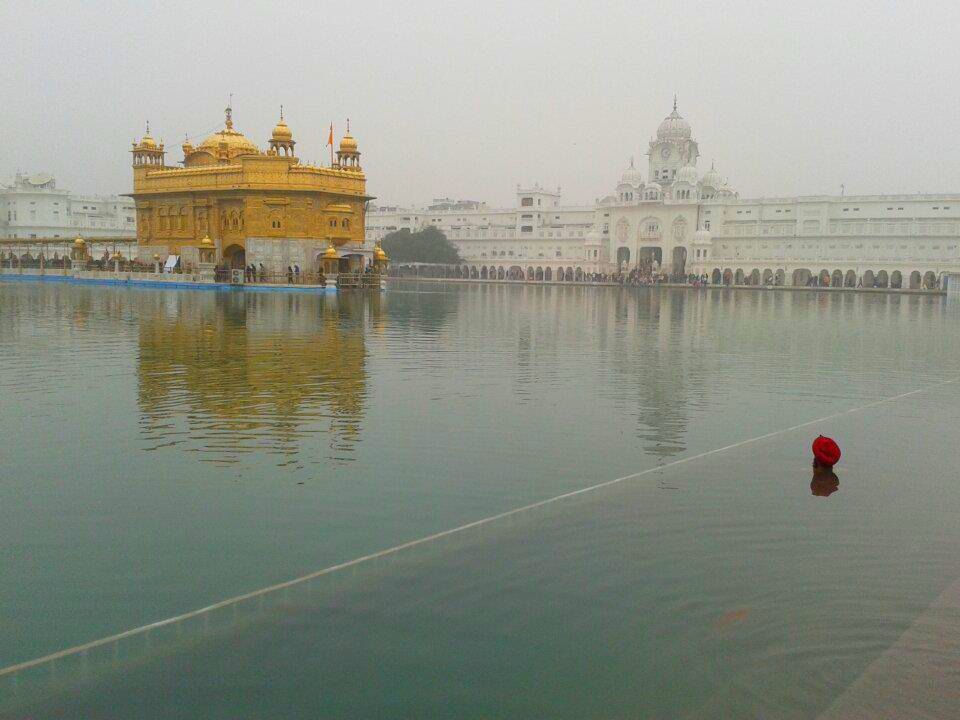
A devout Sikh dips into the sarovar (holy pool) even when it’s about 5 degrees cold
I first came to know of the Golden Temple via an article written by Mamu Rose, a Filipina co-volunteer, who toured the Sikh’s Holy City together with other VSO volunteers. Upon gazing at the picture, I told myself that I, too, shall see the Golden Temple for myself.
The Golden Temple is located in the middle of the holy pool
It took months before I was finally able to go but I was so glad that I did. Being at Harimandir Sahib, even though I was not a Sikh or a follower of Sikhism (though I like their teachings, the ones I heard of at least), gave me a certain feeling of calm and peace. The Golden Temple, unlike any other places I visited, I felt these even while I was just about to enter the complex premises.
One of the entrances, by the Langer (free kitchen). Covered heads and washed feet are required before entry
I don’t know but for some reason, I felt like I am really being welcomed. That I am being, uhm, ushered in. Alright, alright. You can say I am being dramatic. But that was really what I felt at the time. And mind you, I haven’t actually gone in the Golden Temple itself yet.
A bridge connects the pilgrims and visitors from the walkway area to the Harimandir Sahib
It probably was because of the long line of devotees and “curious” tourists waiting to get their chance to enter the Sikh “heaven” (although I think the entire complex kinda feels like that already) but also, more importantly, because I wanted to understand the essence of the Harimandir Sahib better.
Can you see the line just to enter the Golden Temple?
And that moment came later that night when my CouchSurfing kind-of host Sokirt met me at the Harmandir Sahib after the trip to the Wagah (Indo-Pakistan) border. Sokirt is a Sikh, and, I should say, probably as devout as my grand aunt were in the congregation.
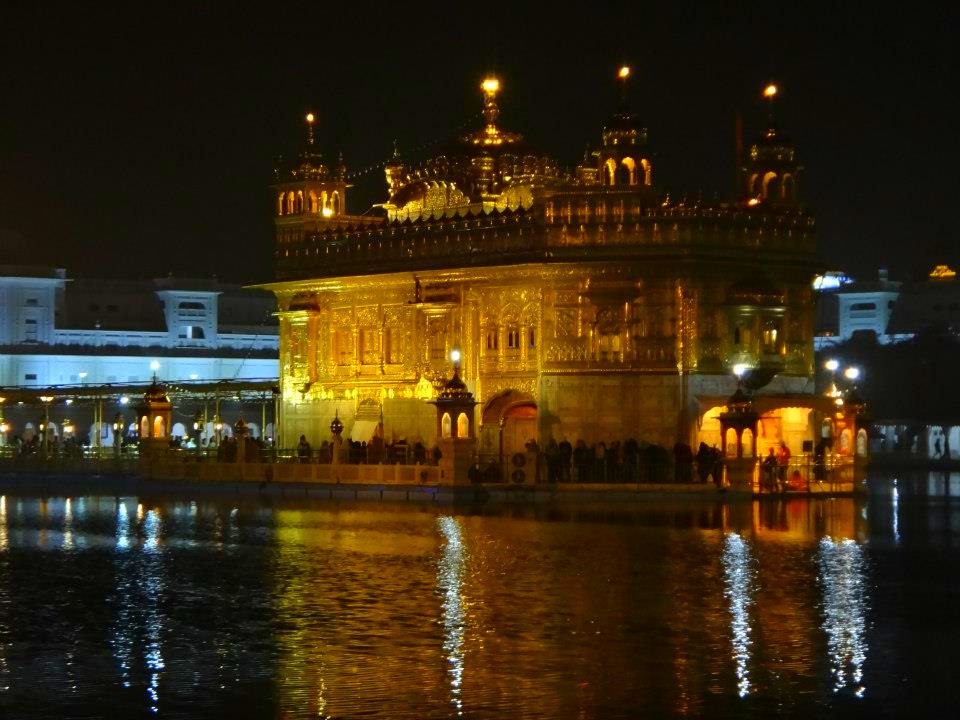
The Golden Temple and the lights are reflected by the sarovar during the day and night
How did I say so? Well, when we entered the Golden Temple complex, the first words out of Sokirt’s mouth, was “This is heaven.” And, though I may not share the same views as strongly as he does when it comes to religion, I gotta say, I was sold. I mean, you could hear it in his voice. There was so much faith and belief.
Pilgrims and visitors are highly encouraged to revel at the Golden Temple’s majesty during the day and the night
I haven’t met anyone like Sokirt who had that much reverence and awe for his place of worship. Or for the idea of having “heaven on earth”. Not even my late grand aunt. I probably would not convert to Sikhism but really, meeting a Sikh in their holy site and seeing and feeling how much they believe in the teachings of Sikhism, man, that is something that gets through you.
The Harimandir Sahib glows and radiates throughout the night
When asked about my favorite places or moments in India, the Golden Temple in Amritsar is definitely always mentioned. Not just because of the beauty of the Harimandir Sahib itself (which was built thrice already after being destroyed due to religious and political conflicts) but of what the temple and the surrounding structures represent. Of course, it might be different for you and me. But if you have the chance, I hope you’d get to visit the Golden Temple and see and feel for yourself how the Sikh’s “heaven” can be a refuge for you as well.
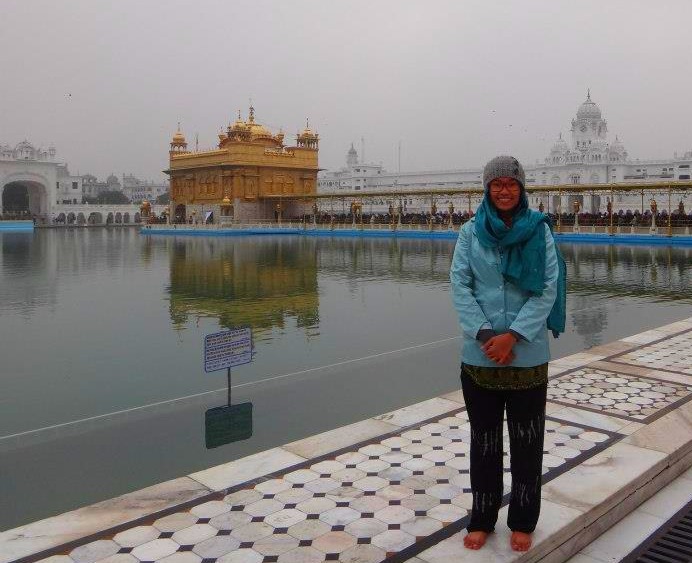
Sokirt said I was a brave girl for coming to Amritsar during winter. Well, at 5 degrees, I guess my 8-layered get-up can cope. 🙂
For general travel information on how to get to Amritsar and visit the Harimandir Sahib, please refer to Wikitravel. If you want to learn more about my experience at the Golden Temple and the other places in Amritsar (Langer [free kitchen], Wagah Border, Jalianwallah Bagh), please be patient for the rest of the entries or leave me a comment.
Before the Holy Week, I headed up north to Sagada with CouchSurfers and newfound friends to go spelunking in the Cave Connection, Bomod-ok falls trekking and swimming, and hanging coffins hunting.
The Viahera Vlog feature I’m including here is the one for the Bomod-ok Falls trek we did on our Day 2 in Sagada. There are 11 of us, 5 CouchSurfers, 5 jeepmates, and Larry the tourist, from the topload ride from Banaue to Sagada.
Total time for the Bomod-ok Falls trek is supposedly at 1-hour descending and 1-hour ascending. The thing is, with a group of 11 picture crazy people, I’d say that 3 hours would be a good estimate. Hihihi
Oh well. We still got there anyway. And enjoyed the Bomod-ok falls in its full glory. I even checked something off my bucket list once we were already in Bomod-ok—to jump off a cliff! Ok, I know it’s not really a “cliff” in open waters or something but hey, it’s still high! The 8-minute video of climbing to the jump-off point and taking the plunge into the waterfalls’ freezing pool is not included in this video playlist coz it deserves another entry! Seriously, buwis buhay (daredevil) mode!
For now, enjoy the Viahera Vlogs I took during our trek and I hope that one day, you’ll get to trek through the beautiful Sagada rice terraces and experience the thrill and chill of Bomod-ok Falls.
Life is short so take a leap of faith. Let’s wander, explore and discover. Come and journey with me.


















 for the rest of the entries or leave me a comment.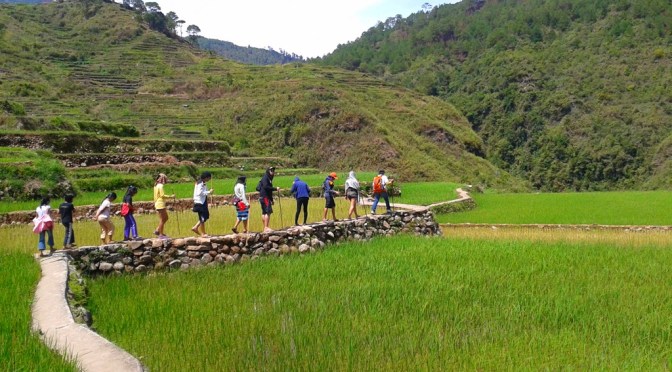
![20130324_131449[1]](https://thediaristwanders.com/wp-content/uploads/2013/04/20130324_1314491.jpg "20130324_131449[1]")
![20130324_134502[1]](https://thediaristwanders.com/wp-content/uploads/2013/04/20130324_1345021.jpg "20130324_134502[1]")
 The Diarist Wanders