Yep, today is a personal post. I mean, of course, everything I share with you on this travel blog is from my personal experience but this one is different. It’s my birthday blog post! Today, I turn 26 and to commemorate the completion of my quarter life (assuming of course that I live to 100 years), I would like to share with you my 25th year in travel.
Navi Mumbai, Maharashtra – 25th Birthday Celebration with YUVA Staff and Volunteers
Earlier this year, I made a checklist of the places I wanted to visit and Anawangin Cove in Zambales was included in it—until it got bumped by Nagsasa Cove.
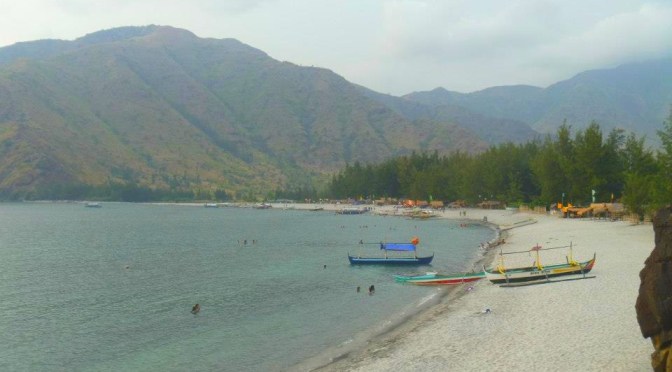
Nagsasa Cove is about 30 minutes farther by boat than Anawangin Cove if you are taking the Pundaquit or San Miguel jump off points in the town of San Antonio, Zambales. We availed the tour package offered by Ate Alice and our jump-off point was Brgy. San Miguel. It’s just 10 minutes from the San Antonio Municipal Hall where most passengers and tourists get dropped by the buses from Manila and picked up by their boatmen or tour operators.
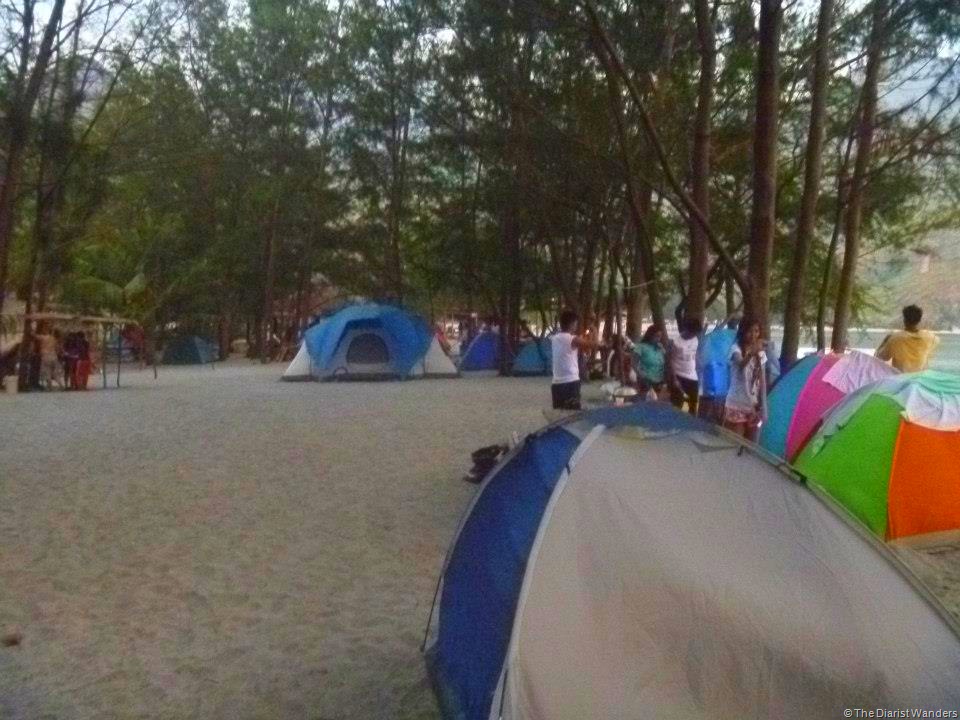
Campers with Ate Alice (contact 09294323081 or 09159664953, tolitsway@yahoo.com.ph)
From the jump-off point, it took us about an hour to get to Nagsasa Cove. The boat passed through surprisingly very calm waters, so calm that at some points it’s like a glass mirror reflecting the outriggers of the banca without any disturbance! Plus, since it was just a little past 6am when we started our boat journey, we had awesome views of the sunrise, the mountain, and the horizon! On the way to Nagsasa Cove, I was so happy feeling the subtle warmth of the sun’s rays breaking through the mountain peaks and touching my face. I greeted everyone a very good morning indeed!
And then, once we arrived at Nagsasa, we can’t help but admire the beauty that was around us. My travel companions, being foreigners who have lived here for a while now and have already traveled to other places, exclaimed that Nagsasa was indeed so beautiful and they can’t believe that they’re still in the Philippines and not somewhere else!
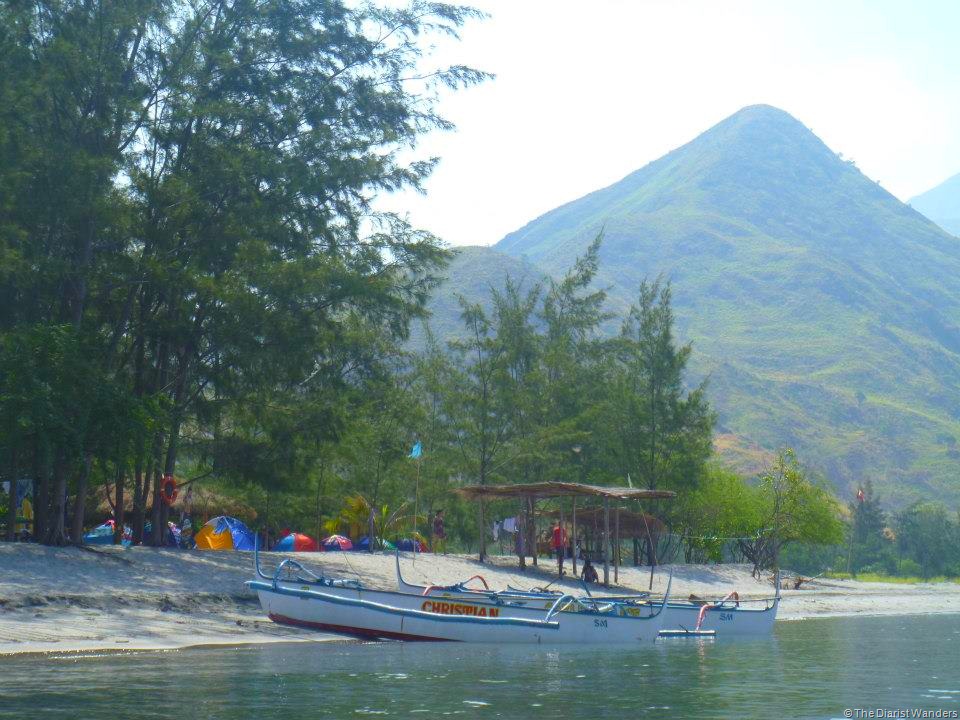
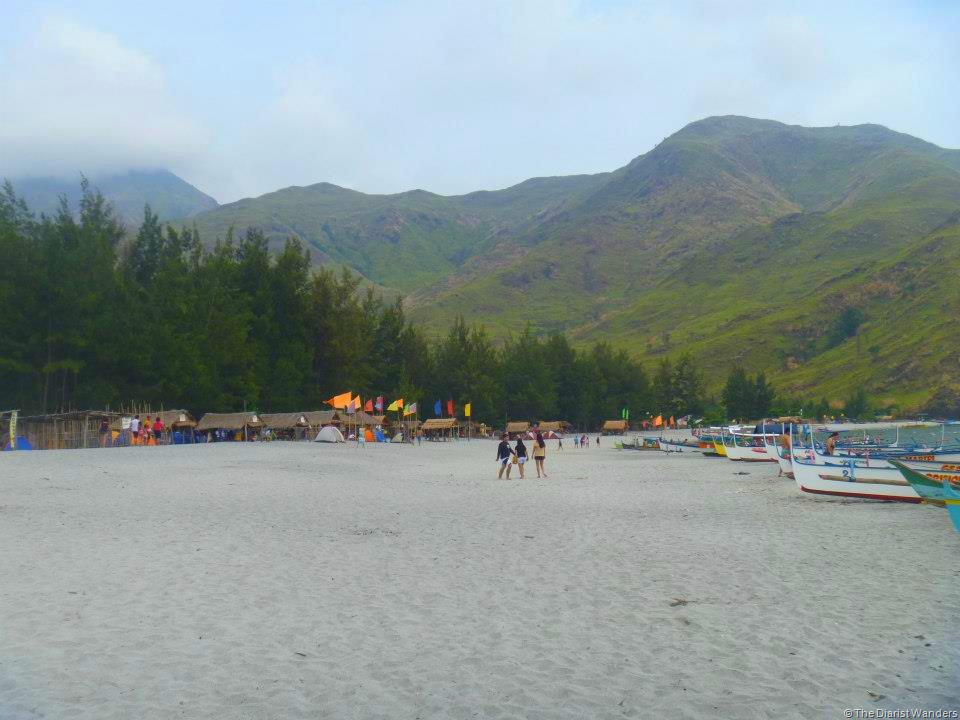
Groggy girls that we were, we found our spot at Mang Ador’s campsite and Kuya Ruben, our boatman, set up our tents. We then brought out our supplies and prepared breakfast. You can start your own fire but we opted to go to Mang Ador’s cottage-slash-sari-sari store coz they have better firewood cooking set-up. And after breakfast of fried eggs and bread, with cheeze spread and peanut butter, plus a good serving of Gatorade, we went for a swim and welcomed the clear and soothing waters!
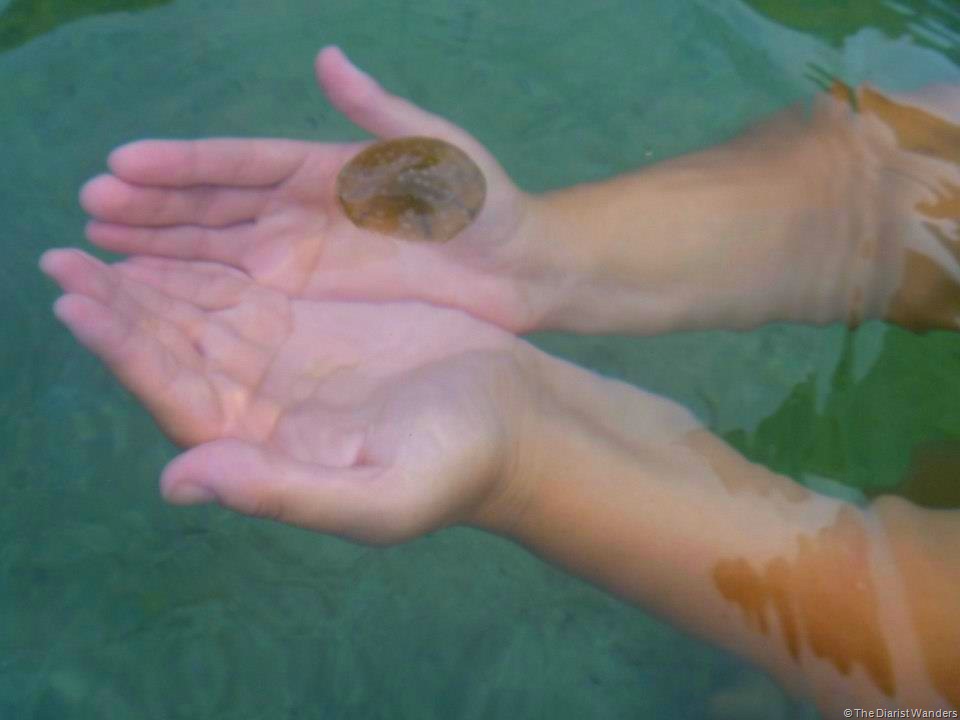
Apart from being the best sand my friends have ever been on, they also appreciated the clearness of the waters at Nagsasa Cove. It’s so clear that you don’t really need goggles or snorkel masks to see through the water. There are also some jellyfish species floating around as well as small fish. The campers here also seem friendly and are conscious of keeping the place clean.
After a good swimming and soaking, we decided to take a nap. It was kind of humid at first but the wind picks up every now and then at Nagsasa Cove. I still don’t know why that is so but it’s amazing how you would “hear” the humming of the wind first before you “feel” it!
It felt like we napped for a long time and then we realized that it was just noon!!! For some reason, we found time to be very slow once we’re at Nagsasa. It’s either the cove is doing it’s job of not making us think of time and how it passes OR our brain’s still exhausted and has not recovered from the lack of proper sleep! In any case, we didn’t really complain coz that meant we have more time to enjoy the coves!
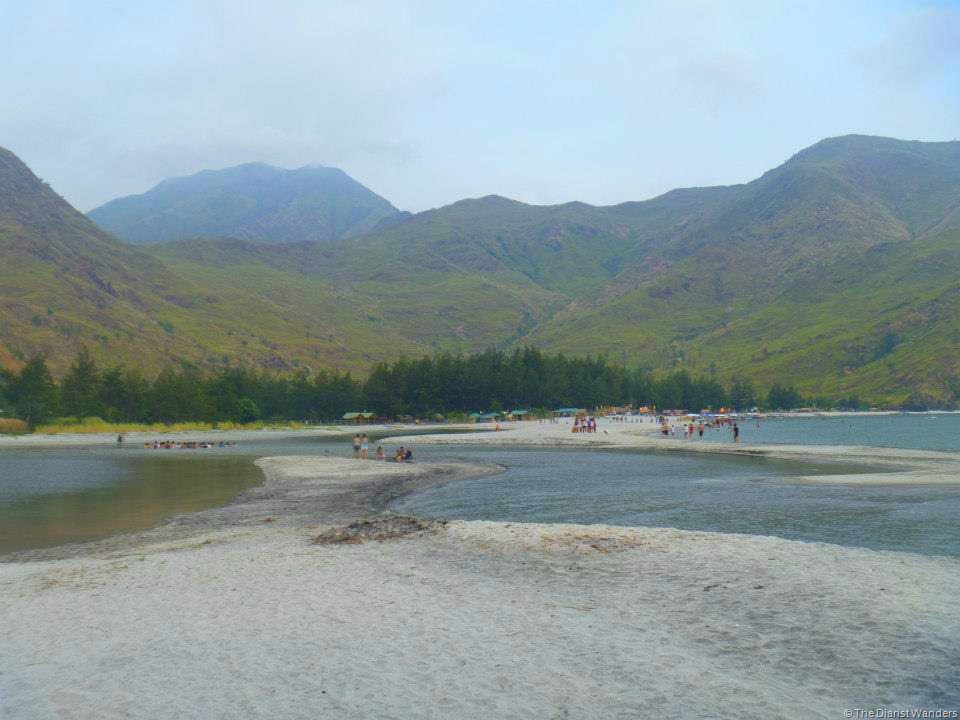
Once we’re done with lunch and another swim to play with the jellyfish and find other fishies, we decided to move to the other side of the cove—the one I want to call “mainstream campsites”. If facing the beach, from Mang Ador’s campsite, you would need to walk towards the left and reach some kind of a sandbar due to the drying river that flows through to the ocean.
The scenery is quite nice but upon reaching the shoreline of the mainstream campsite, I can’t help but feel disappointed and sad. There were a lot of plastic garbage! Me and Elaine did some cleaning-up but it was just too many!!! The sand is also coarse and more painful on the feet than the campsite at Mang Ador’s.
So, after taking pictures from the top of rocky cliff-like formation and taking a quick dip, Elaine and I decided to return to our campsite, just in time for the sunset. Nagsasa sunset wasn’t the “setting-in-front-of-you” type of sunset coz it was covered by the mountain but it was spectacular nonetheless. A good mix of red, orange and purple. Ganda!!!
And of course, after sunset comes another round of eating! And then, bonfire! I was really excited for the bonfire coz it will be the first time I was to have smores—a very good bite of marshmallow, chocolate and graham crackers goodness! I can’t remember how many I had but I still remember how the mallows and Hershey’s melted and the way it felt in my mouth!!! We four girls had some wine (or a lot of it) and just enjoyed feeding the fire with logs…and mallows!
I woke up really early in the morning (like before 6) and had a good swim (for hangover?) and watched the sun rise again—this time trying to break through the pinewood trees! And once all the girls were awake, we prepared breakfast and decided to stay at Nagsasa a while longer and skip Camara island on the way back.
We spent some time just chilling, swimming, chatting and exploring a bit more of the rocky side of the edge of Mang Ador’s campsite. I think some people from the mainstream campsites also walk over this side to take photos.
And to cap it off, Elaine “insisted” that I go for the water splash shot! To which I “not so willingly” (as in pakipot kuno) obliged. Hahaha I think it’s a good memory of Nagsasa, di ba?!
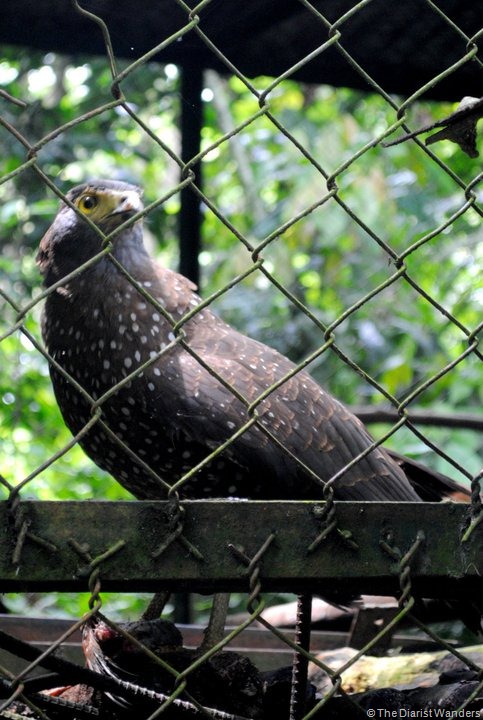
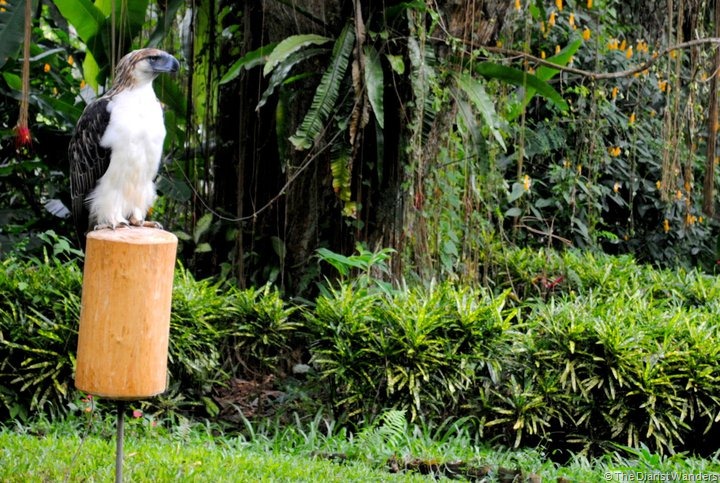
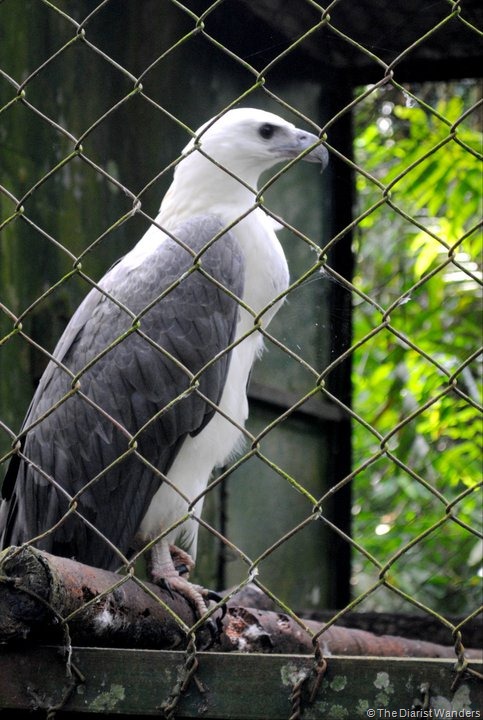
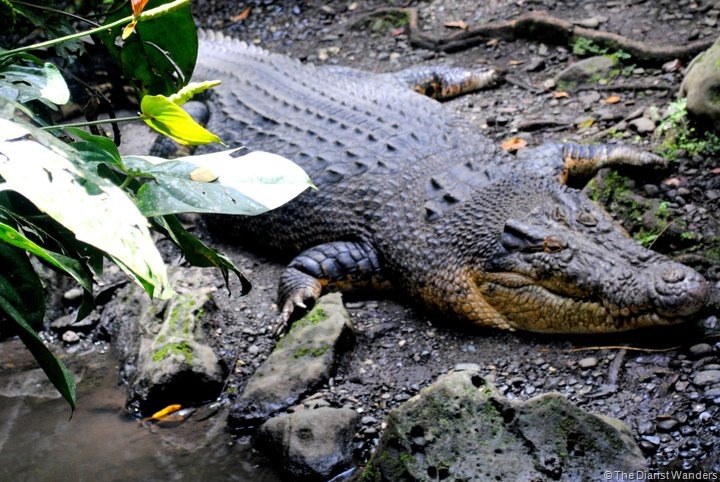
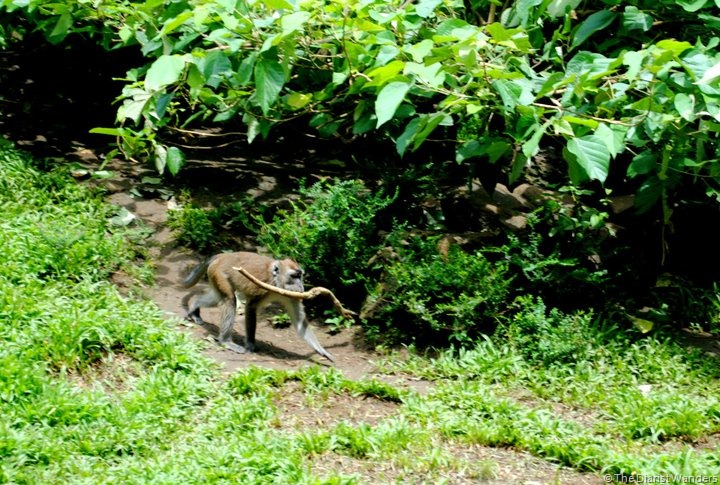
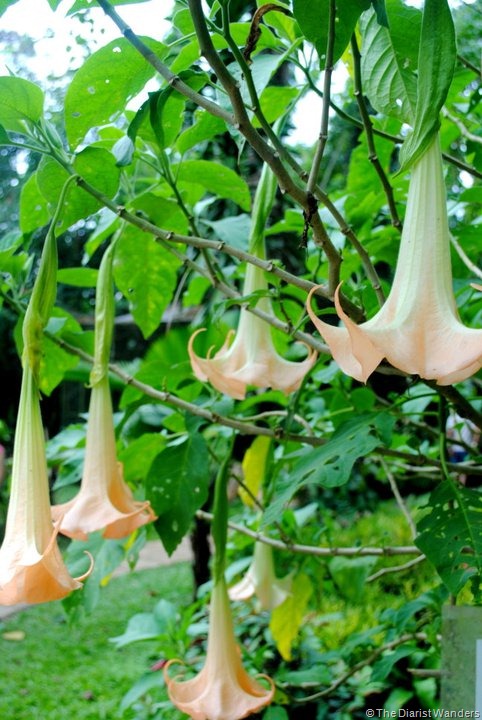
I was just looking at old photo albums in Facebook when I came across some photos of animals and plants, not to mention eagles, at the Philippine Eagle Center during the trip I made to Davao City with my brods and sisses from UPLB DevComSoc.
Suffice it to say that it brought me down memory lane. So before I succumb to the nostalgia, I “hurriedly” selected some photos which I would like to share with you. They’re not all eagles, but of other flora and fauna as well. The Philippine Eagle Center, apart from being popularly known as home to Pag-asa (hope), the first Philippine eagle bred in captivity, is also the home for several other avian species (birds) and animals. And yes, insects and flowers too!
So, if you can’t go to Davao to watch these birds and insects and walk along the green pathways of the Philippine Eagle Center, I hope that some of these photos can somehow transport you and let you enjoy a visual wildlife (though no longer as wild) encounter!
If you enjoyed this visual tour of the Philippine Eagle Center, wait till you actually see the eagles and animals and walk through it’s pathways! These photos were taken almost two years ago and for sure, there’s more to see at the Philippine Eagle Center now, especially after Pag-asa and Kalinawan gave birth to another eagle!
I am not necessarily a fan of prince charming and fairy tale endings but I’ve always been interested with royalty and period films centered on their lives—such as the movie Young Victoria. So much so that when I was in Kolkata, formerly known as Calcutta as in the British Raj’s former capital in India, I decided to visit the Victoria Memorial.
Impressive green and white symmetry
Before my visit, which was part of my 10-day vacation dubbed “The Great Eastern Journey”, I did not even know about Victoria Memorial. Or what it is exactly. I only assumed that it was, like the Gateway of India in Mumbai, a colonial structure meant to commemorate the power of the British Raj during their reign in India.
The Victoria Memorial definitely can’t be missed from the King’s Way
Julie has been to Kolkata a few times before (since she lived in Bhubaneshwar which was just an overnight train away) and apart from Mother Theresa’s tomb (which I missed coz they’re closed on Thursdays, the day I was there!), the Victoria Memorial is the other place she recommended for me to visit. Jane, my co-volunteer based in Kolkata, gave me directions after we three decided to split up in the afternoon to do our own thing.
I can’t remember the directions anymore but Victoria Memorial and other colonial structures and areas are found in the Esplanade locality. I think once you are in Esplanade, tourist spots are basically walkable. You can also ask for directions, which I did. As I said, Victoria Memorial is one of the top attractions and the guava peddler (the red chili and salt mix was too good!) easily gave me directions to just turn right from the main street and follow the road called King’s Way. He said I won’t miss the Victoria Memorial.
True enough, I found it. I mean, the Victoria memorial is a massive structure made of what I assume is white marble. It truly is hard to miss. Hehe. Besides, as long as you know how to ask directions, in broken English, Hindi or body language, people in the street can help you find the place you are looking for.
There were probably 9.5 out of 10 locals among the visitors of the Victoria Memorial
Speaking in Hindi, at the entrance gate, actually helped me score a 10-rupee instead of 150-rupee ticket. With my northeast Indian features and a simple “Ek ticket do, saarji!” phrase, I managed to get the local price. And no, it was not illegal as I held a residency permit at the time. So, with that and because it was too hot with too many people in the queue under the scorching sun to enter the Victoria Memorial building itself, I chose to eat my red chilli-ed guava and some biscuits under the shade in the garden, while the birds chirped away.
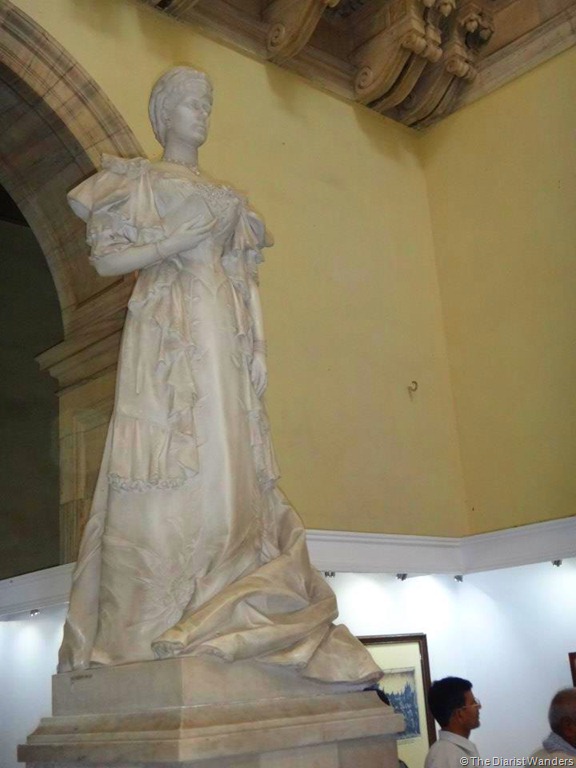
After my food ran out, and realizing that the queue isn’t really getting shorter, I decided to fall in line and wait for my turn to enter the building. Actually, the Victoria Memorial did not have as much items as you would expect of a museum. And, I didn’t enjoy it much since there were too many people at the same time, walking around in a line as in a procession. And photos are not allowed inside the halls! Not that there was a sign but I saw that the guards meant it when they snatched a camphone away from its teenage owner who tried to reason with them but ended up getting scolded at. Scary.
I am assuming that this statue is Queen Victoria, young version. It’s the only photo I have inside the halls
It was better after the first area by the entrance as the hall was bigger (I assumed it’s the center area, under the dome) and was again much better once I climbed up to the next floor. Not that there was much to see in the floor itself but because it gave you a view of the garden at the back. It made me feel like Elizabeth in Pride and Prejudice at Derbyshire with Mr. Darcy. (cheesy!!!)
View from the upper floor terrace. Beautiful, isn’t it?
After letting my imagination flow, I moved on to the back garden to enjoy a greener and more peaceful part of the grounds and see the Victoria Memorial at a different angle and perspective.
I liked what I saw. I mean, I liked it enough to recommend for you to visit it whenever you happen to be at Calcutta. Especially if you are interested in architecture. Apart from eating yummy Bengali fish curry, riding the trams and pulled richskaws, might as well add the Victoria Memorial to the list and enjoy the scenery and gardens and be transported to the time of royalties and majesties!
I miss Mumbai. There, I said it. I lived in Navi Mumbai (New Bombay, totally different twin city) and I would go to South Bombay (aka SoBo) whenever me and my friends would go out for dinner and drinks. Why SoBo and not in Bandra, the party/gimik capital of Mumbai? I think it’s mainly because it is more accessible and hanging out in Colaba has a more chill vibe. Not to mention, I personally find South Mumbai more pleasant to walk through, with more character and history than the upscale Bandra area.
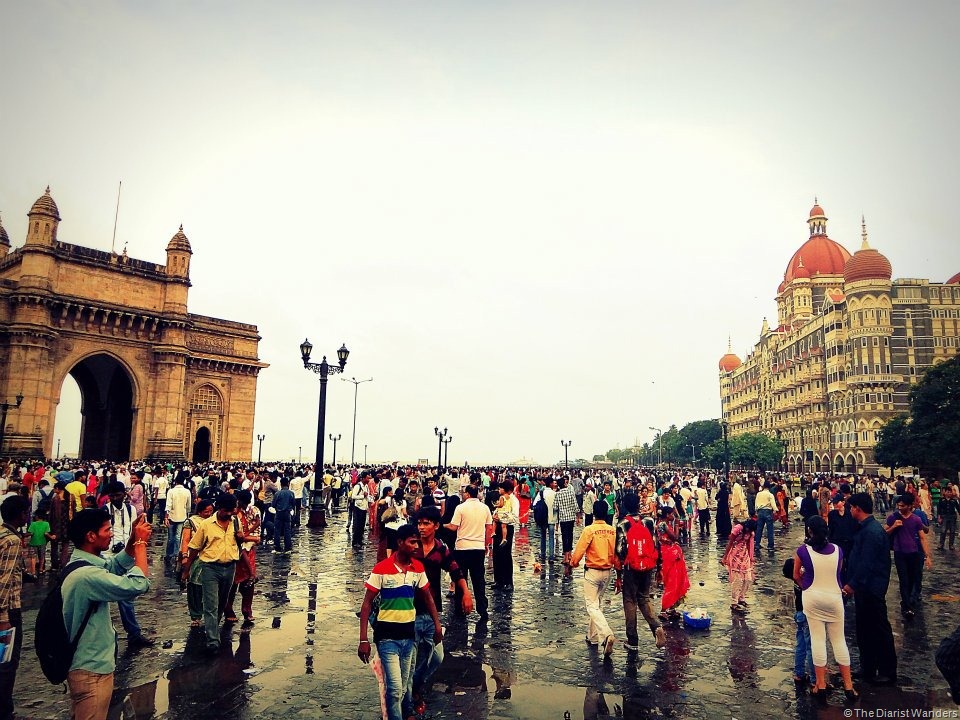
The Gateway of India and The Taj Hotel
Needless to say, South Bombay and Colaba is also the most touristy. But hey, when you live in the city, you don’t really mind the mix of the local and foreign crowd. You enjoy it. People-watching and all. Being a foreigner myself, though I am not as tourist as the newly-arrived ones anymore, I always find something new to discover in Mumbai.
Anyway, I am not in a talking (writing) mood much today. Unless I want to end up too nostalgic to function. Haha. Therefore, I would jus want to share with you the images of Colonial Mumbai. I always call South Bombay the British area, primarily because the structures you would see closely resemble what you would find in London. I think (as referenced to movies and TV series).
I’ve included here a series of photographs, showing these British colonial structures. I tried my best to put them in the walking order, although my memory might be messed up already since there were some turns during these several walkthrough of South Mumbai.
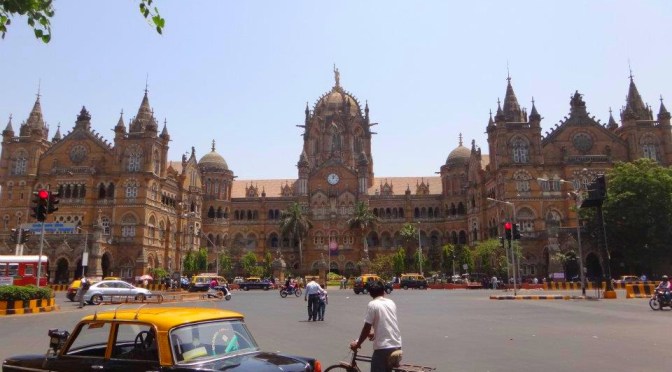
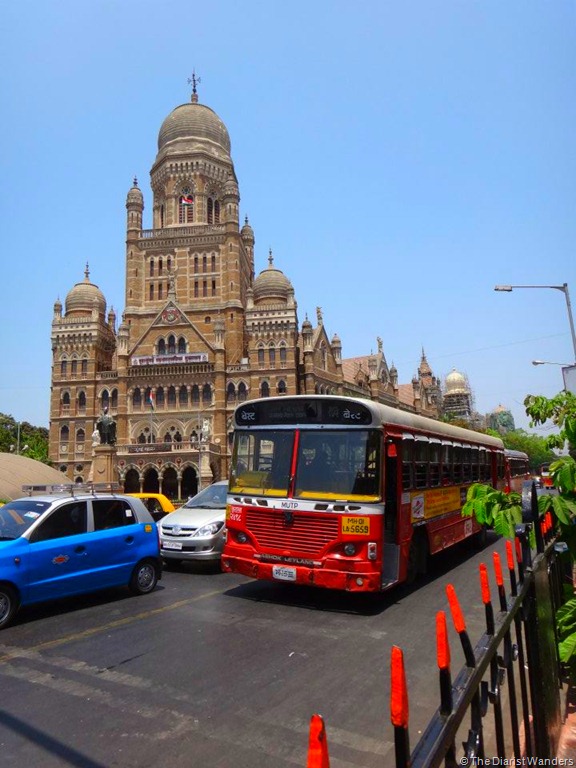
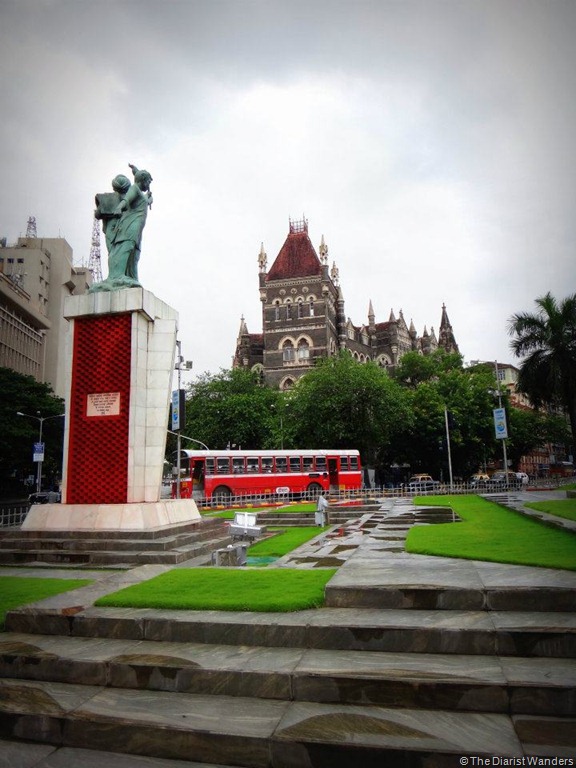
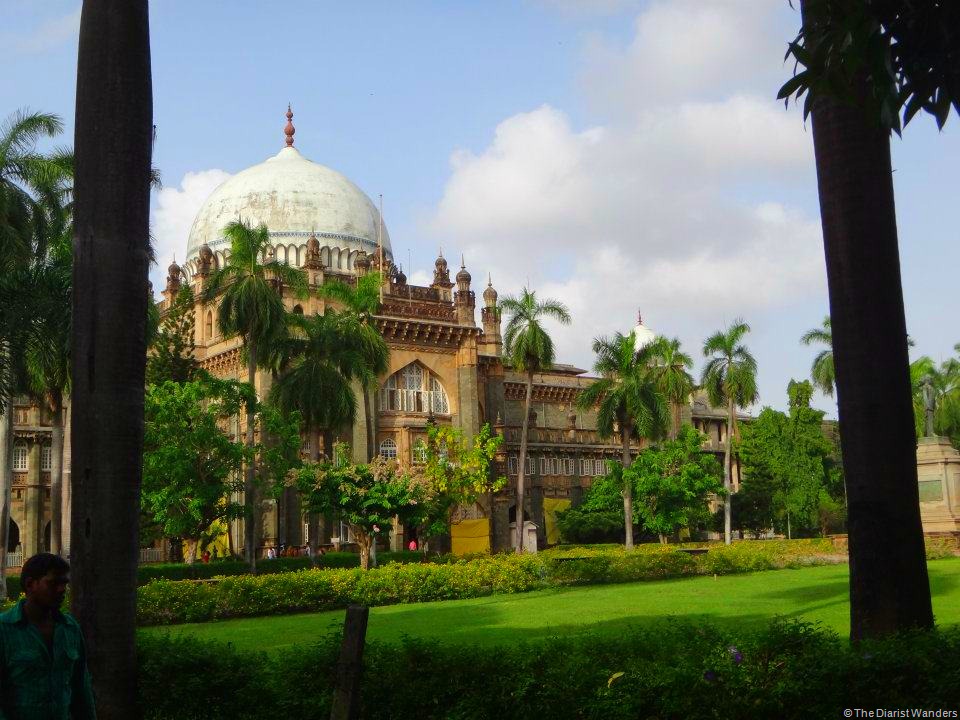
Chhatrapati Shivaji Terminus (CST, formerly known as Victoria Terminus) is a UNESCO World Heritage Site and the main railway terminal for local and inter-state trainsBirhanmumbai Municipal Corporation (BMC) serves as the City Hall (sosyal!). It’s on the left side if facing CSTI can’t be sure if this is still part of CST but it is behind the CST facade areaThese colonial buildings house modern establishments and banksSeveral unidentified sculptures form part of one building’s foundationsI am not sure if this is the Churchgate Railway Station. If it isn’t, then it must be the building across the roadHutatma Chowk (Martyr’s Square) is found at the center of South Bombay. Easily accessible from Churchgate StationThe Hutatma Chowk memorial, as far as I have heard, was to commemorate the lives of the martyrs during the Maharashtra and Gujarat separation (correct me if I’m wrong!)Flora Fountain, built in 1864, is one of the most photographed landmarks in South Bombay. Sorry, no more water flowing through. 😦University of Mumbai (Fort Campus) was established in 1857. It’s mong the oldest universities in IndiaThe Rajabai Clock Tower, completed in 1878, is called Little Ben as it was patterned to the Big Ben in LondonDavid Sassoon Library, built in 1870, is another main landmark in the Kala Ghoda area. I never entered the library.The Prince of Wales Museum (officially renamed as Chhatrapati Shivaji Maharaj Vastu Sangrahalaya) houses artifacts, sculptures, painting, china and other art collections. I think it’s under the patronage of the Tatas. (Entry Rs 300 for foreigners, Rs 50 for Indians. Camera fees apply)I don’t know who the statue is for or what is the building. But I’m sure this is after the museum and towards the Colaba areaThe Gateway of India (not to be confused with the India Gate in New Delhi). Built from 1911 (primarily to commemorate the visit of King George V and Queen Mary) to 1914, the Gateway of India is perhaps the most visited and photographed monument in Mumbai. The boats leaving for Elephanta Island is found at the back of the Gateway of India.The Taj Mahal Palace Hotel and Tower is on the left of the Gateway of India if arriving by boat. It is said to be the or one of the most expensive hotels in Mumbai.
I hope you enjoyed these virtual walking tour of South Bombay. Maybe you’ll get to walk through Colonial Mumbai someday too! I’ve heard several mixed reviews of being a tourist in Mumbai. Admittedly, the city can be unnerving and overwhelming but hey, give it more than a day or two and surely, you’ll get to know and feel it’s vibe too. If you need a walking guide (especially for couchsurfers), let me know and I might introduce you to a friend or two who may be able to show you around Colaba, South Mumbai and the rest of the city!
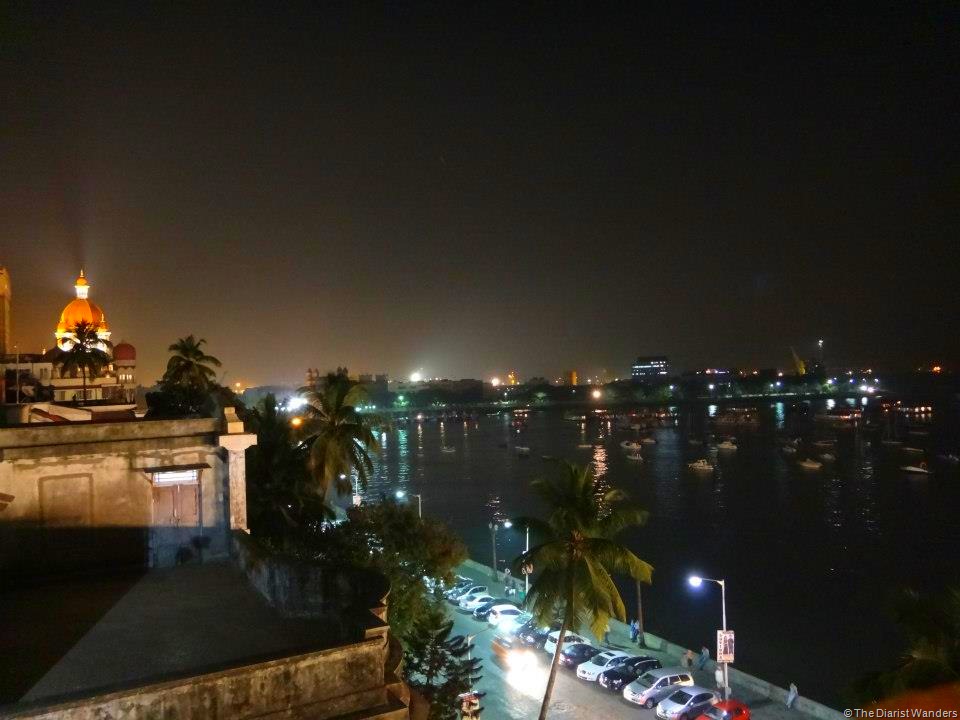
The illuminated dome of the Taj Mahal Hotel and the waterfront (Arabian Sea)
Life is short so take a leap of faith. Let’s wander, explore and discover. Come and journey with me.





 The sand is also coarse and more painful on the feet than the campsite at Mang Ador’s.

 We four girls had some wine (or a lot of it) and just enjoyed feeding the fire with logs…and mallows!














 The Diarist Wanders