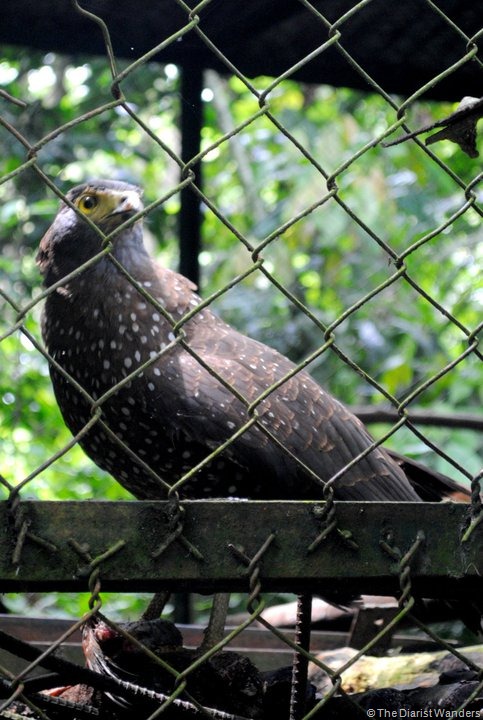
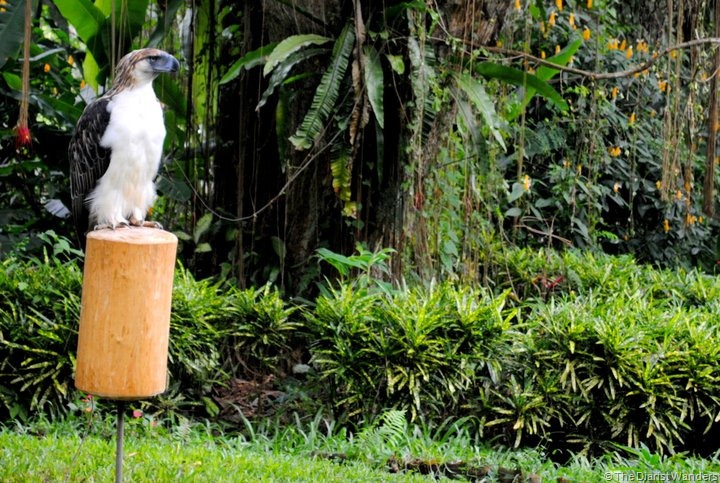
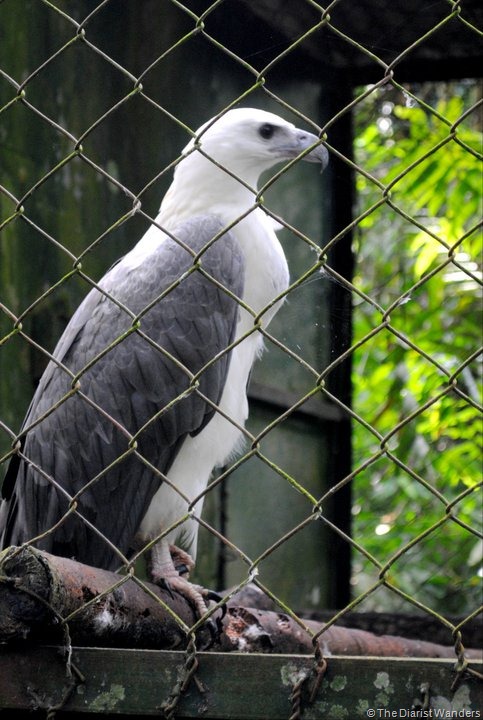
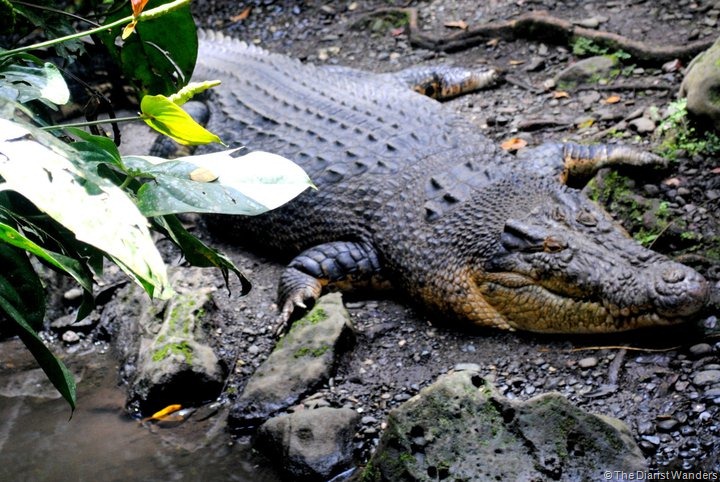
I was just looking at old photo albums in Facebook when I came across some photos of animals and plants, not to mention eagles, at the Philippine Eagle Center during the trip I made to Davao City with my brods and sisses from UPLB DevComSoc.
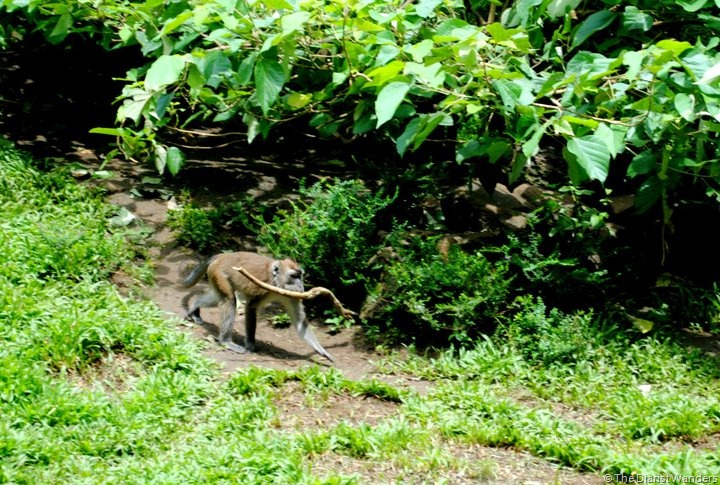
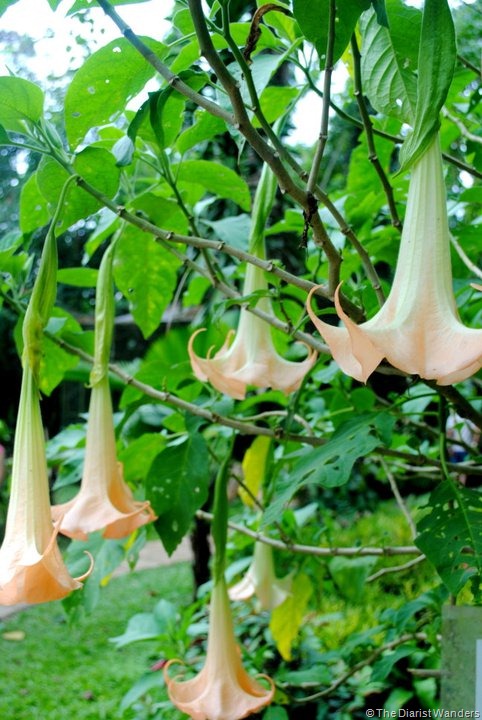
Suffice it to say that it brought me down memory lane. So before I succumb to the nostalgia, I “hurriedly” selected some photos which I would like to share with you. They’re not all eagles, but of other flora and fauna as well. The Philippine Eagle Center, apart from being popularly known as home to Pag-asa (hope), the first Philippine eagle bred in captivity, is also the home for several other avian species (birds) and animals. And yes, insects and flowers too!
So, if you can’t go to Davao to watch these birds and insects and walk along the green pathways of the Philippine Eagle Center, I hope that some of these photos can somehow transport you and let you enjoy a visual wildlife (though no longer as wild) encounter!
If you enjoyed this visual tour of the Philippine Eagle Center, wait till you actually see the eagles and animals and walk through it’s pathways! These photos were taken almost two years ago and for sure, there’s more to see at the Philippine Eagle Center now, especially after Pag-asa and Kalinawan gave birth to another eagle!
I am not necessarily a fan of prince charming and fairy tale endings but I’ve always been interested with royalty and period films centered on their lives—such as the movie Young Victoria. So much so that when I was in Kolkata, formerly known as Calcutta as in the British Raj’s former capital in India, I decided to visit the Victoria Memorial.
Impressive green and white symmetry
Before my visit, which was part of my 10-day vacation dubbed “The Great Eastern Journey”, I did not even know about Victoria Memorial. Or what it is exactly. I only assumed that it was, like the Gateway of India in Mumbai, a colonial structure meant to commemorate the power of the British Raj during their reign in India.
The Victoria Memorial definitely can’t be missed from the King’s Way
Julie has been to Kolkata a few times before (since she lived in Bhubaneshwar which was just an overnight train away) and apart from Mother Theresa’s tomb (which I missed coz they’re closed on Thursdays, the day I was there!), the Victoria Memorial is the other place she recommended for me to visit. Jane, my co-volunteer based in Kolkata, gave me directions after we three decided to split up in the afternoon to do our own thing.
I can’t remember the directions anymore but Victoria Memorial and other colonial structures and areas are found in the Esplanade locality. I think once you are in Esplanade, tourist spots are basically walkable. You can also ask for directions, which I did. As I said, Victoria Memorial is one of the top attractions and the guava peddler (the red chili and salt mix was too good!) easily gave me directions to just turn right from the main street and follow the road called King’s Way. He said I won’t miss the Victoria Memorial.
True enough, I found it. I mean, the Victoria memorial is a massive structure made of what I assume is white marble. It truly is hard to miss. Hehe. Besides, as long as you know how to ask directions, in broken English, Hindi or body language, people in the street can help you find the place you are looking for.
There were probably 9.5 out of 10 locals among the visitors of the Victoria Memorial
Speaking in Hindi, at the entrance gate, actually helped me score a 10-rupee instead of 150-rupee ticket. With my northeast Indian features and a simple “Ek ticket do, saarji!” phrase, I managed to get the local price. And no, it was not illegal as I held a residency permit at the time. So, with that and because it was too hot with too many people in the queue under the scorching sun to enter the Victoria Memorial building itself, I chose to eat my red chilli-ed guava and some biscuits under the shade in the garden, while the birds chirped away.
After my food ran out, and realizing that the queue isn’t really getting shorter, I decided to fall in line and wait for my turn to enter the building. Actually, the Victoria Memorial did not have as much items as you would expect of a museum. And, I didn’t enjoy it much since there were too many people at the same time, walking around in a line as in a procession. And photos are not allowed inside the halls! Not that there was a sign but I saw that the guards meant it when they snatched a camphone away from its teenage owner who tried to reason with them but ended up getting scolded at. Scary.
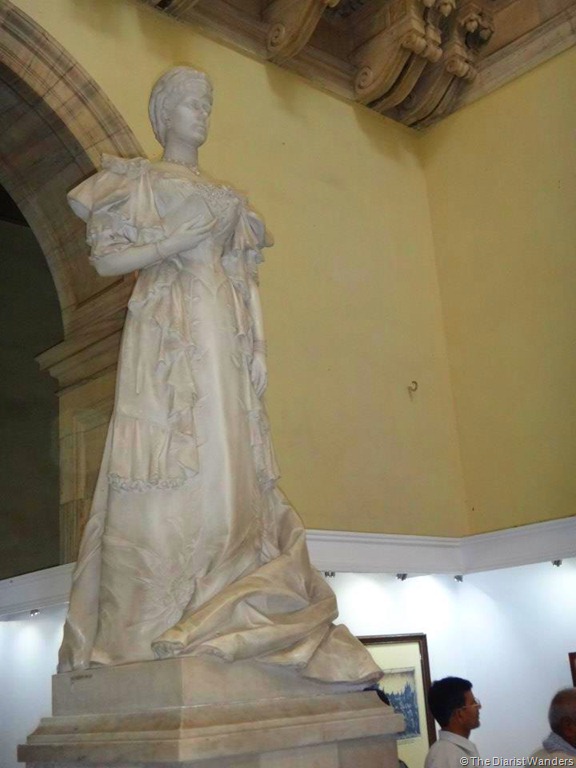
I am assuming that this statue is Queen Victoria, young version. It’s the only photo I have inside the halls
It was better after the first area by the entrance as the hall was bigger (I assumed it’s the center area, under the dome) and was again much better once I climbed up to the next floor. Not that there was much to see in the floor itself but because it gave you a view of the garden at the back. It made me feel like Elizabeth in Pride and Prejudice at Derbyshire with Mr. Darcy. (cheesy!!!)
View from the upper floor terrace. Beautiful, isn’t it?
After letting my imagination flow, I moved on to the back garden to enjoy a greener and more peaceful part of the grounds and see the Victoria Memorial at a different angle and perspective.
I liked what I saw. I mean, I liked it enough to recommend for you to visit it whenever you happen to be at Calcutta. Especially if you are interested in architecture. Apart from eating yummy Bengali fish curry, riding the trams and pulled richskaws, might as well add the Victoria Memorial to the list and enjoy the scenery and gardens and be transported to the time of royalties and majesties!
I miss Mumbai. There, I said it. I lived in Navi Mumbai (New Bombay, totally different twin city) and I would go to South Bombay (aka SoBo) whenever me and my friends would go out for dinner and drinks. Why SoBo and not in Bandra, the party/gimik capital of Mumbai? I think it’s mainly because it is more accessible and hanging out in Colaba has a more chill vibe. Not to mention, I personally find South Mumbai more pleasant to walk through, with more character and history than the upscale Bandra area.
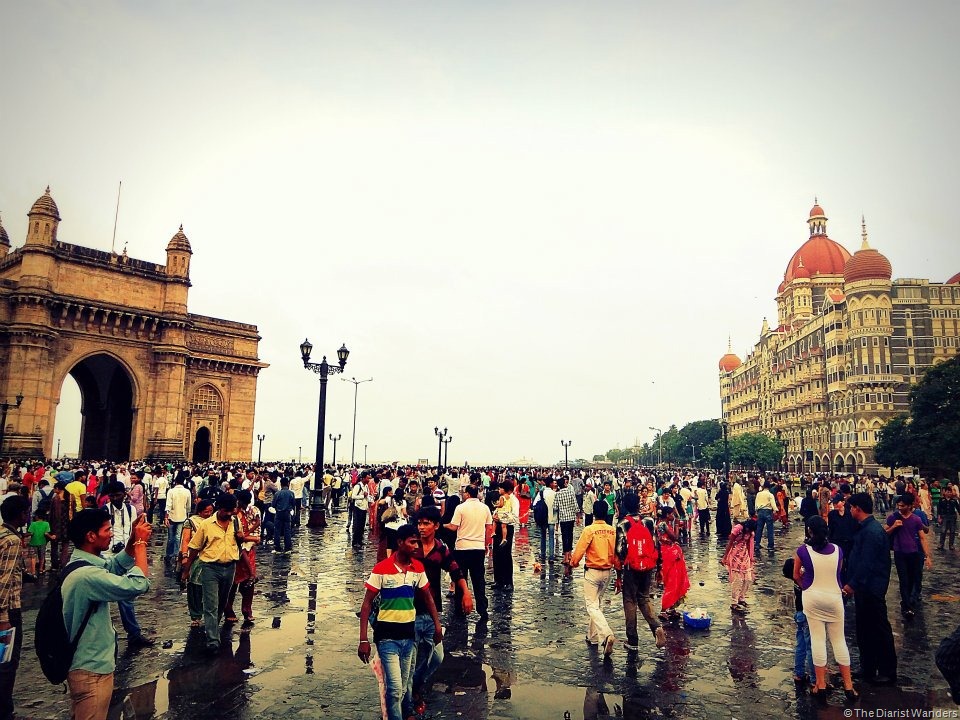
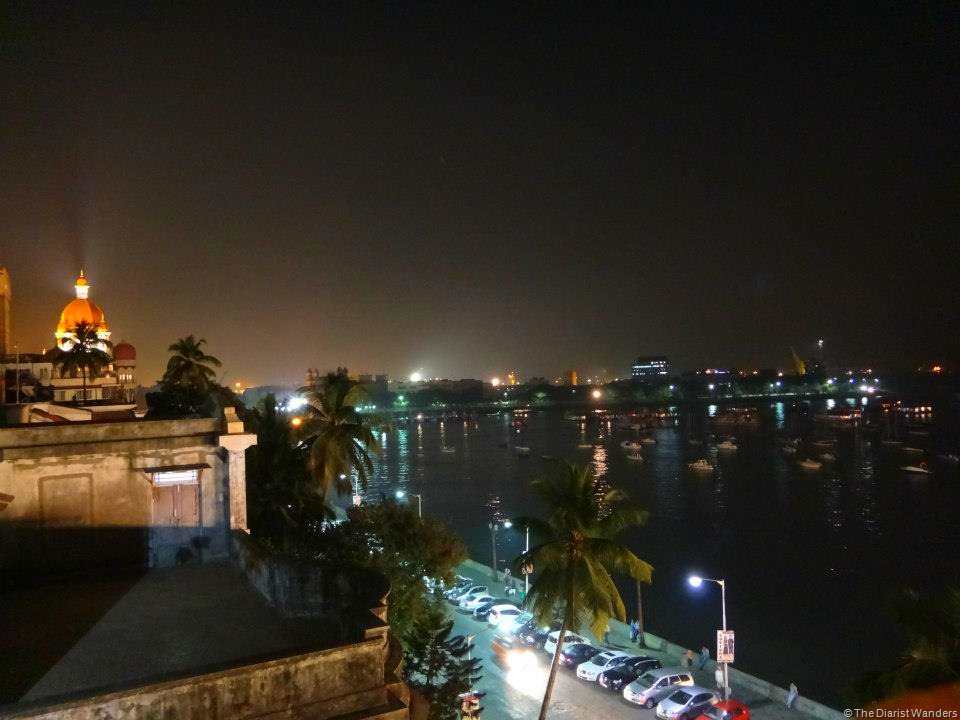
The Gateway of India and The Taj Hotel
Needless to say, South Bombay and Colaba is also the most touristy. But hey, when you live in the city, you don’t really mind the mix of the local and foreign crowd. You enjoy it. People-watching and all. Being a foreigner myself, though I am not as tourist as the newly-arrived ones anymore, I always find something new to discover in Mumbai.
Anyway, I am not in a talking (writing) mood much today. Unless I want to end up too nostalgic to function. Haha. Therefore, I would jus want to share with you the images of Colonial Mumbai. I always call South Bombay the British area, primarily because the structures you would see closely resemble what you would find in London. I think (as referenced to movies and TV series).
I’ve included here a series of photographs, showing these British colonial structures. I tried my best to put them in the walking order, although my memory might be messed up already since there were some turns during these several walkthrough of South Mumbai.
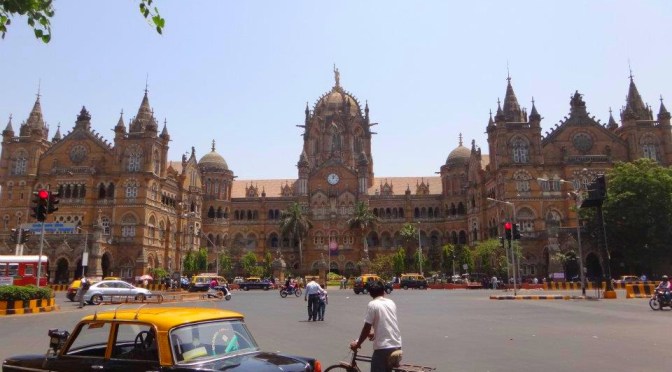
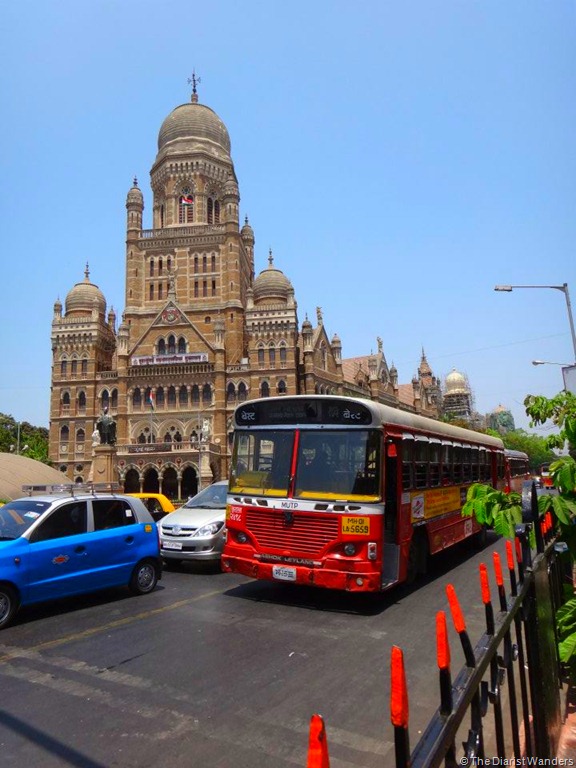
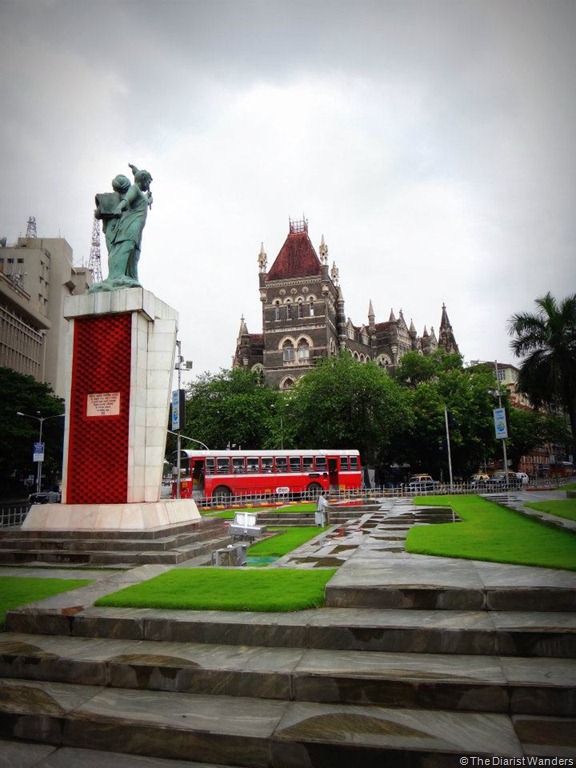
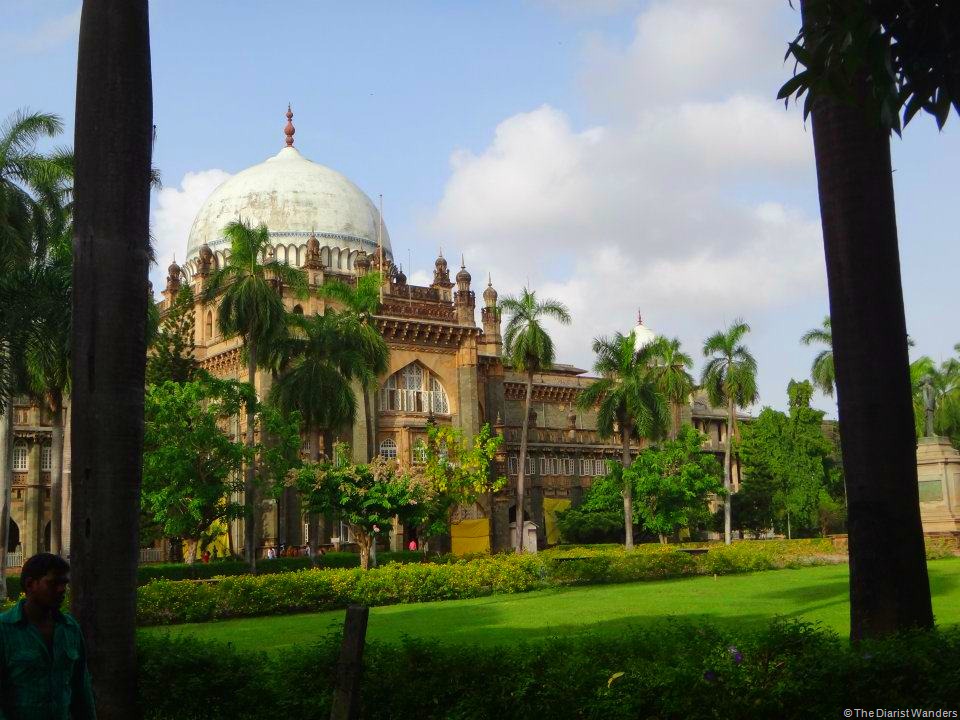
Chhatrapati Shivaji Terminus (CST, formerly known as Victoria Terminus) is a UNESCO World Heritage Site and the main railway terminal for local and inter-state trainsBirhanmumbai Municipal Corporation (BMC) serves as the City Hall (sosyal!). It’s on the left side if facing CSTI can’t be sure if this is still part of CST but it is behind the CST facade areaThese colonial buildings house modern establishments and banksSeveral unidentified sculptures form part of one building’s foundationsI am not sure if this is the Churchgate Railway Station. If it isn’t, then it must be the building across the roadHutatma Chowk (Martyr’s Square) is found at the center of South Bombay. Easily accessible from Churchgate StationThe Hutatma Chowk memorial, as far as I have heard, was to commemorate the lives of the martyrs during the Maharashtra and Gujarat separation (correct me if I’m wrong!)Flora Fountain, built in 1864, is one of the most photographed landmarks in South Bombay. Sorry, no more water flowing through. 😦University of Mumbai (Fort Campus) was established in 1857. It’s mong the oldest universities in IndiaThe Rajabai Clock Tower, completed in 1878, is called Little Ben as it was patterned to the Big Ben in LondonDavid Sassoon Library, built in 1870, is another main landmark in the Kala Ghoda area. I never entered the library.The Prince of Wales Museum (officially renamed as Chhatrapati Shivaji Maharaj Vastu Sangrahalaya) houses artifacts, sculptures, painting, china and other art collections. I think it’s under the patronage of the Tatas. (Entry Rs 300 for foreigners, Rs 50 for Indians. Camera fees apply)I don’t know who the statue is for or what is the building. But I’m sure this is after the museum and towards the Colaba areaThe Gateway of India (not to be confused with the India Gate in New Delhi). Built from 1911 (primarily to commemorate the visit of King George V and Queen Mary) to 1914, the Gateway of India is perhaps the most visited and photographed monument in Mumbai. The boats leaving for Elephanta Island is found at the back of the Gateway of India.The Taj Mahal Palace Hotel and Tower is on the left of the Gateway of India if arriving by boat. It is said to be the or one of the most expensive hotels in Mumbai.
I hope you enjoyed these virtual walking tour of South Bombay. Maybe you’ll get to walk through Colonial Mumbai someday too! I’ve heard several mixed reviews of being a tourist in Mumbai. Admittedly, the city can be unnerving and overwhelming but hey, give it more than a day or two and surely, you’ll get to know and feel it’s vibe too. If you need a walking guide (especially for couchsurfers), let me know and I might introduce you to a friend or two who may be able to show you around Colaba, South Mumbai and the rest of the city!
The illuminated dome of the Taj Mahal Hotel and the waterfront (Arabian Sea)
I first heard of Varanasi from a co-volunteer during my first week in India. He said that it is a must for him to visit Varanasi, the Hindus’ holy city. Varanasi is said to be the place where Hindus’ would like to die in, if they get the chance. I was told that it is believed that dying in Varanasi or having their remains sunk below or their ashes scattered across the Ganges River will either stop their reincarnation (maybe especially when they expect to rep bad karma in their next life) and/or go straight to heaven. Another reason for Hindu pilgrimage in Varanasi is the belief that you can be cleansed of your sins and cured of your illness once you drink from or bathe at the Ganges River.
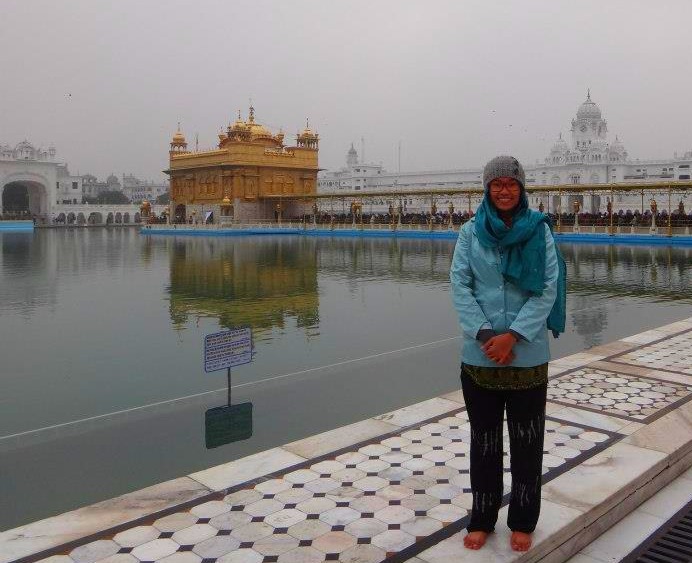
I spent the third day of the new year being awed and mesmerized (not to mention frozen) by the Golden Temple in Amritsar. While Amritsar is not the state capital, hundreds of thousands, possibly hundreds of millions, visit this city at India’s northwestern frontier as it is home to the Harmandir Sahib aka Golden Temple. The Harmandir Sahib is considered “heaven” among the Sikhs, followers of Sikhism. (most of us [especially Pinoy] know them as the people with the turban)
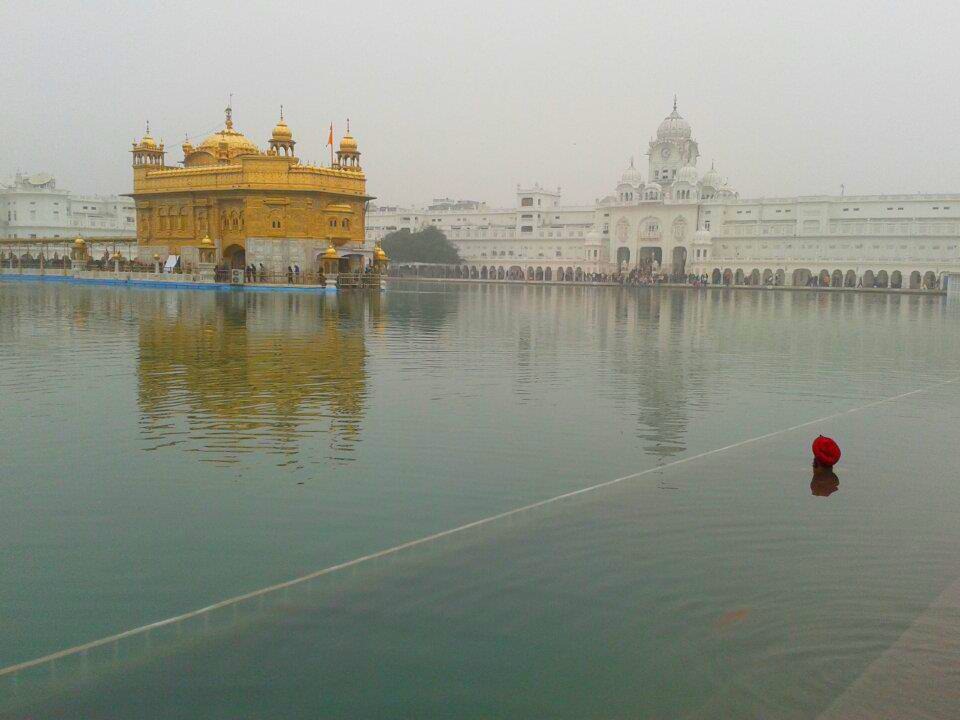
A devout Sikh dips into the sarovar (holy pool) even when it’s about 5 degrees cold
I first came to know of the Golden Temple via an article written by Mamu Rose, a Filipina co-volunteer, who toured the Sikh’s Holy City together with other VSO volunteers. Upon gazing at the picture, I told myself that I, too, shall see the Golden Temple for myself.
The Golden Temple is located in the middle of the holy pool
It took months before I was finally able to go but I was so glad that I did. Being at Harimandir Sahib, even though I was not a Sikh or a follower of Sikhism (though I like their teachings, the ones I heard of at least), gave me a certain feeling of calm and peace. The Golden Temple, unlike any other places I visited, I felt these even while I was just about to enter the complex premises.
One of the entrances, by the Langer (free kitchen). Covered heads and washed feet are required before entry
I don’t know but for some reason, I felt like I am really being welcomed. That I am being, uhm, ushered in. Alright, alright. You can say I am being dramatic. But that was really what I felt at the time. And mind you, I haven’t actually gone in the Golden Temple itself yet.
A bridge connects the pilgrims and visitors from the walkway area to the Harimandir Sahib
It probably was because of the long line of devotees and “curious” tourists waiting to get their chance to enter the Sikh “heaven” (although I think the entire complex kinda feels like that already) but also, more importantly, because I wanted to understand the essence of the Harimandir Sahib better.
Can you see the line just to enter the Golden Temple?
And that moment came later that night when my CouchSurfing kind-of host Sokirt met me at the Harmandir Sahib after the trip to the Wagah (Indo-Pakistan) border. Sokirt is a Sikh, and, I should say, probably as devout as my grand aunt were in the congregation.
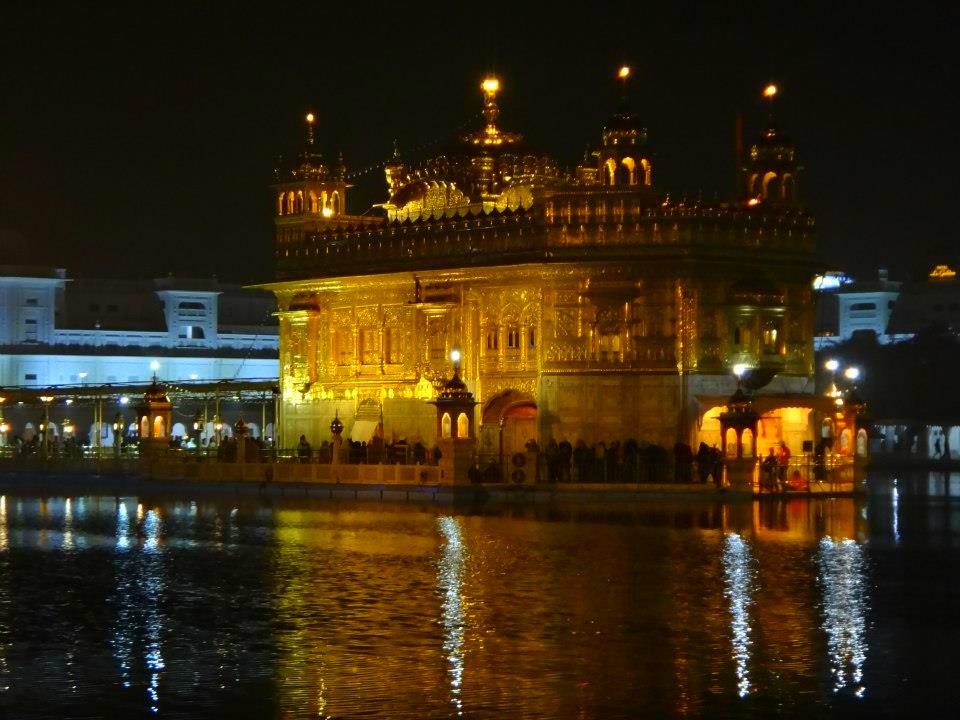
The Golden Temple and the lights are reflected by the sarovar during the day and night
How did I say so? Well, when we entered the Golden Temple complex, the first words out of Sokirt’s mouth, was “This is heaven.” And, though I may not share the same views as strongly as he does when it comes to religion, I gotta say, I was sold. I mean, you could hear it in his voice. There was so much faith and belief.
Pilgrims and visitors are highly encouraged to revel at the Golden Temple’s majesty during the day and the night
I haven’t met anyone like Sokirt who had that much reverence and awe for his place of worship. Or for the idea of having “heaven on earth”. Not even my late grand aunt. I probably would not convert to Sikhism but really, meeting a Sikh in their holy site and seeing and feeling how much they believe in the teachings of Sikhism, man, that is something that gets through you.
The Harimandir Sahib glows and radiates throughout the night
When asked about my favorite places or moments in India, the Golden Temple in Amritsar is definitely always mentioned. Not just because of the beauty of the Harimandir Sahib itself (which was built thrice already after being destroyed due to religious and political conflicts) but of what the temple and the surrounding structures represent. Of course, it might be different for you and me. But if you have the chance, I hope you’d get to visit the Golden Temple and see and feel for yourself how the Sikh’s “heaven” can be a refuge for you as well.
Sokirt said I was a brave girl for coming to Amritsar during winter. Well, at 5 degrees, I guess my 8-layered get-up can cope. 🙂
For general travel information on how to get to Amritsar and visit the Harimandir Sahib, please refer to Wikitravel. If you want to learn more about my experience at the Golden Temple and the other places in Amritsar (Langer [free kitchen], Wagah Border, Jalianwallah Bagh), please be patient for the rest of the entries or leave me a comment.
Life is short so take a leap of faith. Let’s wander, explore and discover. Come and journey with me.



















 for the rest of the entries or leave me a comment.

